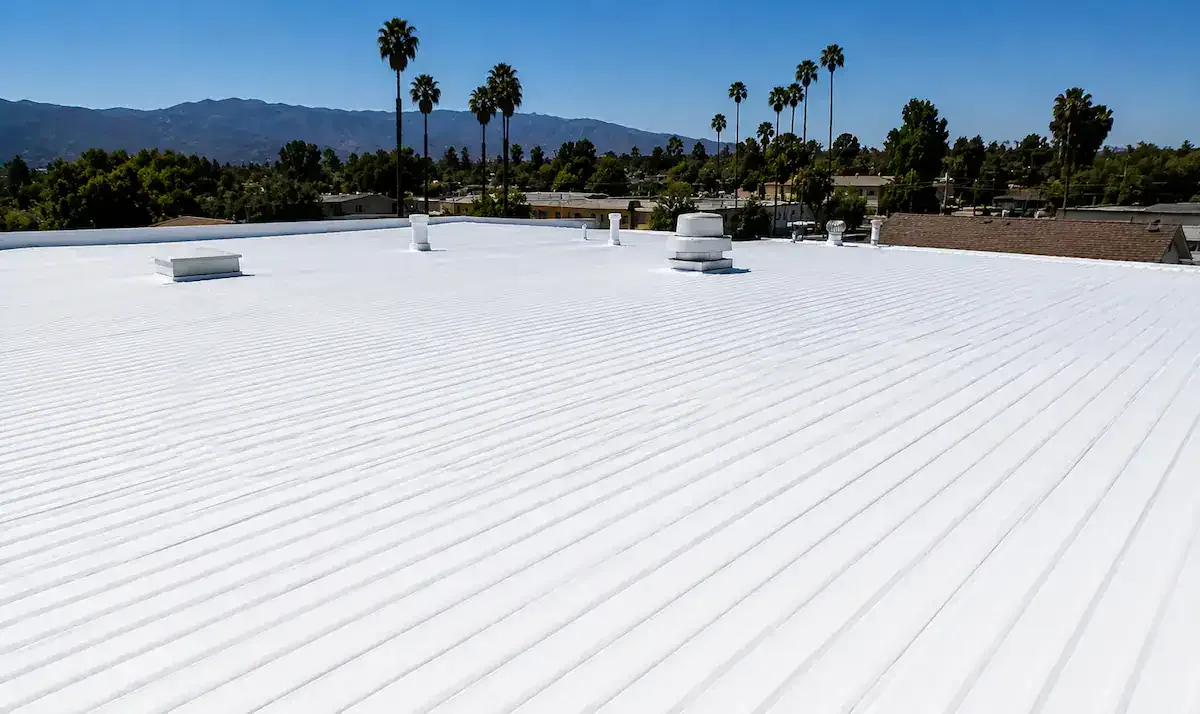
TPO Commercial Roofing
Welded membrane seams can hold a roof together only when the surface is clean, the weld is continuous, and the edge detail stays attached. In League City, wind-driven rain and tropical weather make those transitions worth checking along with curbs, drains, and perimeter metal. We inspect the existing assembly, test suspect seams, and map repairs before recommending a new TPO roof. League City Commercial Reserves lie along FM 646; the roof material and condition at any project still require direct verification.
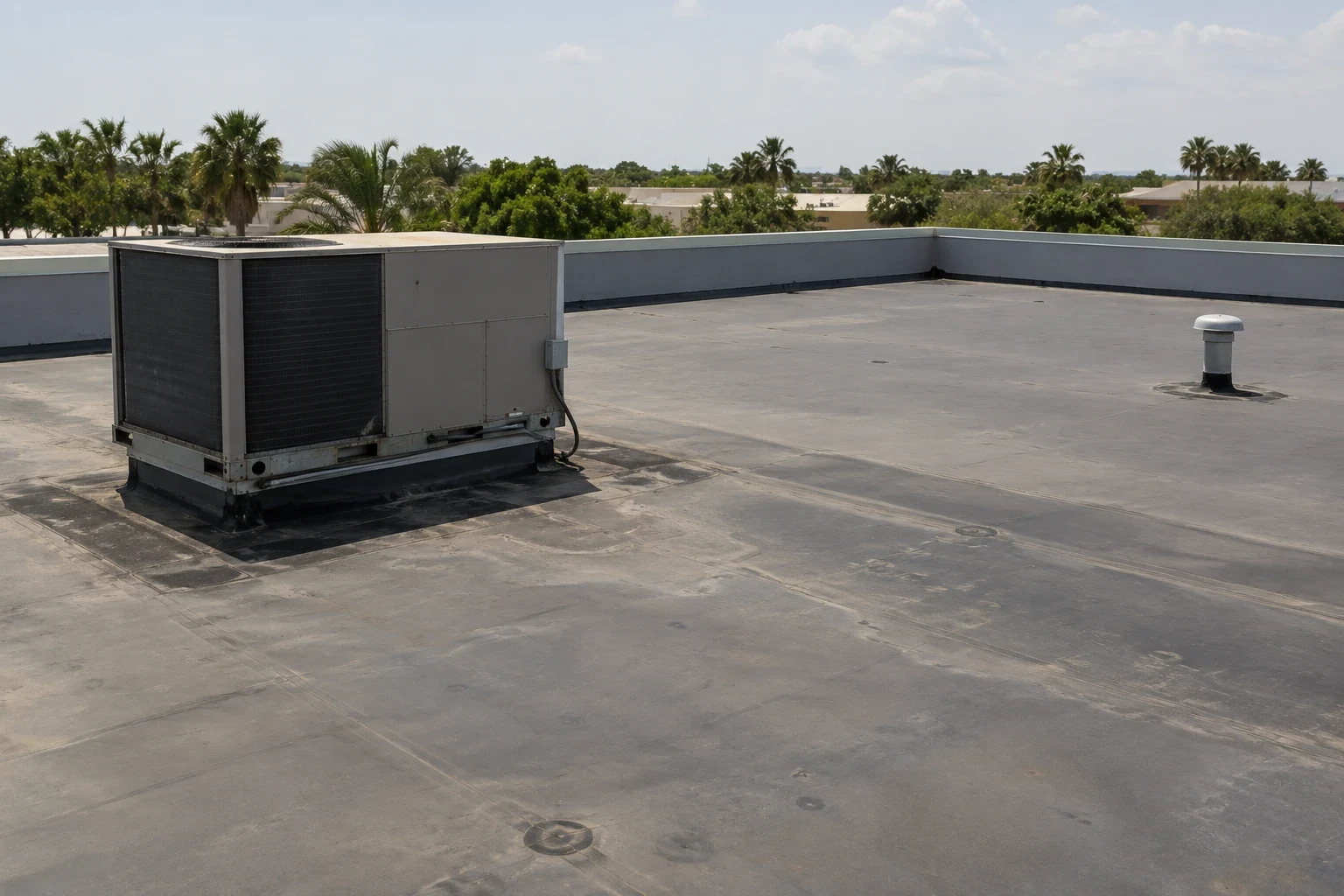
Build the membrane over a prepared substrate
TPO is a thermoplastic single-ply membrane installed over a roof assembly selected for the building. The assembly may include insulation, cover board, attachment, vapor control where specified, and flashing at walls and penetrations. We identify each layer and state which component is included in the proposal. A roof insulation plan coordinates board type, thickness, tapered layout, curb height, and edge transitions before the membrane is installed.
League City’s adopted commercial code set includes building and energy requirements that can affect an alteration or replacement. The project documents establish the applicable criteria and permit path. We review the roof plan, drainage, parapets, roof hatches, and equipment supports so the new TPO field does not end at a detail that is too low or difficult to maintain. If drawings do not match the field, we document the difference before material is ordered.
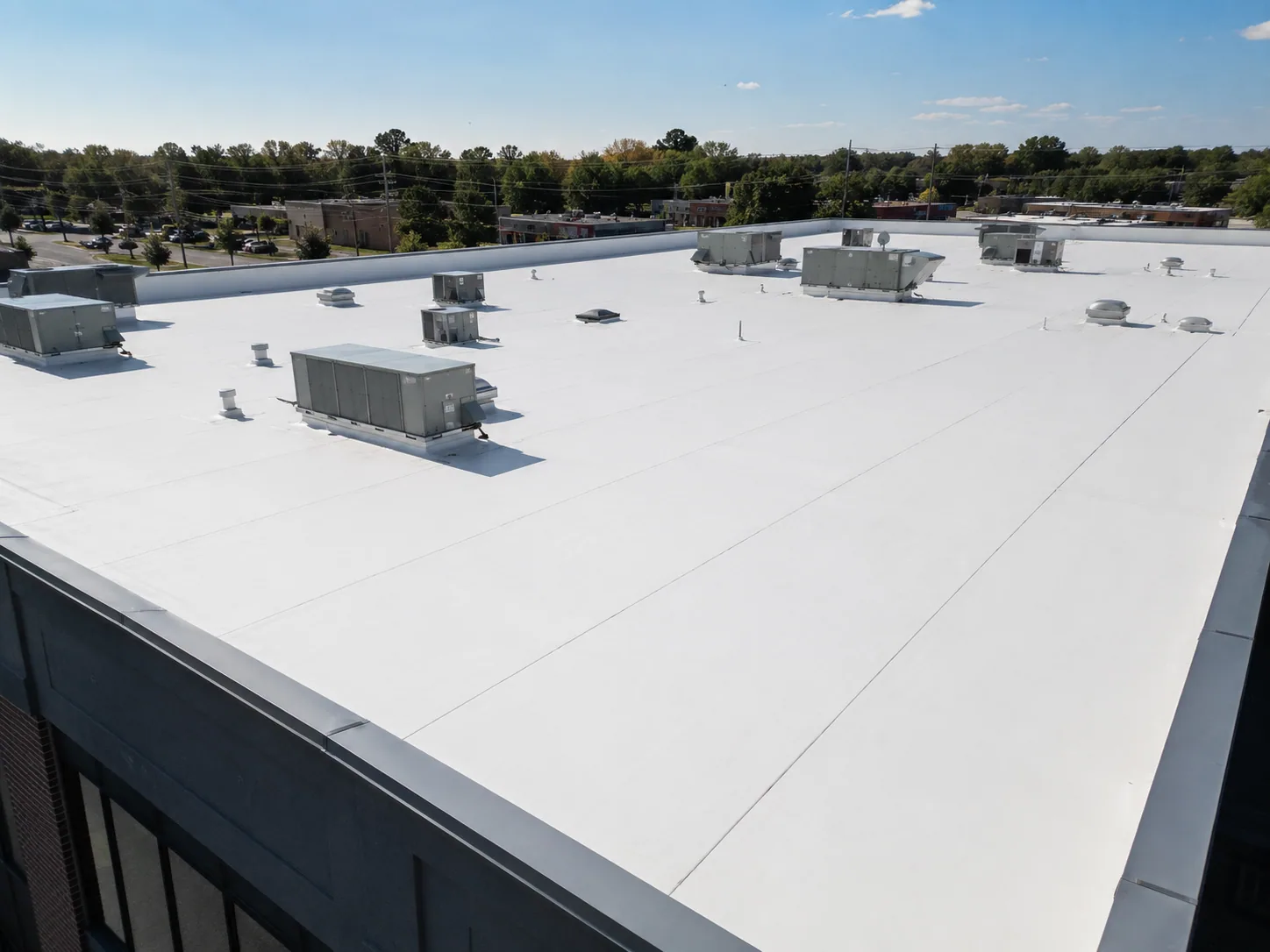
Inspect seams, welds, and the existing roof
A leak near a TPO seam may come from a weak weld, puncture, curb flashing, drain, or nearby transition. We inspect the reported water path, probe accessible seam edges, and photograph areas where dirt, moisture, or an older patch complicates evaluation. A hands-on roof inspection ties each finding to a roof zone and notes what was not reached. If moisture is suspected, an infrared survey can help choose a test opening; a core cut confirms the material condition at that point.
League City’s NWS tropical-cyclone record includes systems that have affected the upper Texas coast. That local weather context makes perimeter, wall, and equipment details relevant after a reported event, but it does not establish damage at a specific building. We document current movement or openings and distinguish them from prior repair or ordinary wear. The estimate follows those findings rather than treating a weather date as a roof diagnosis.
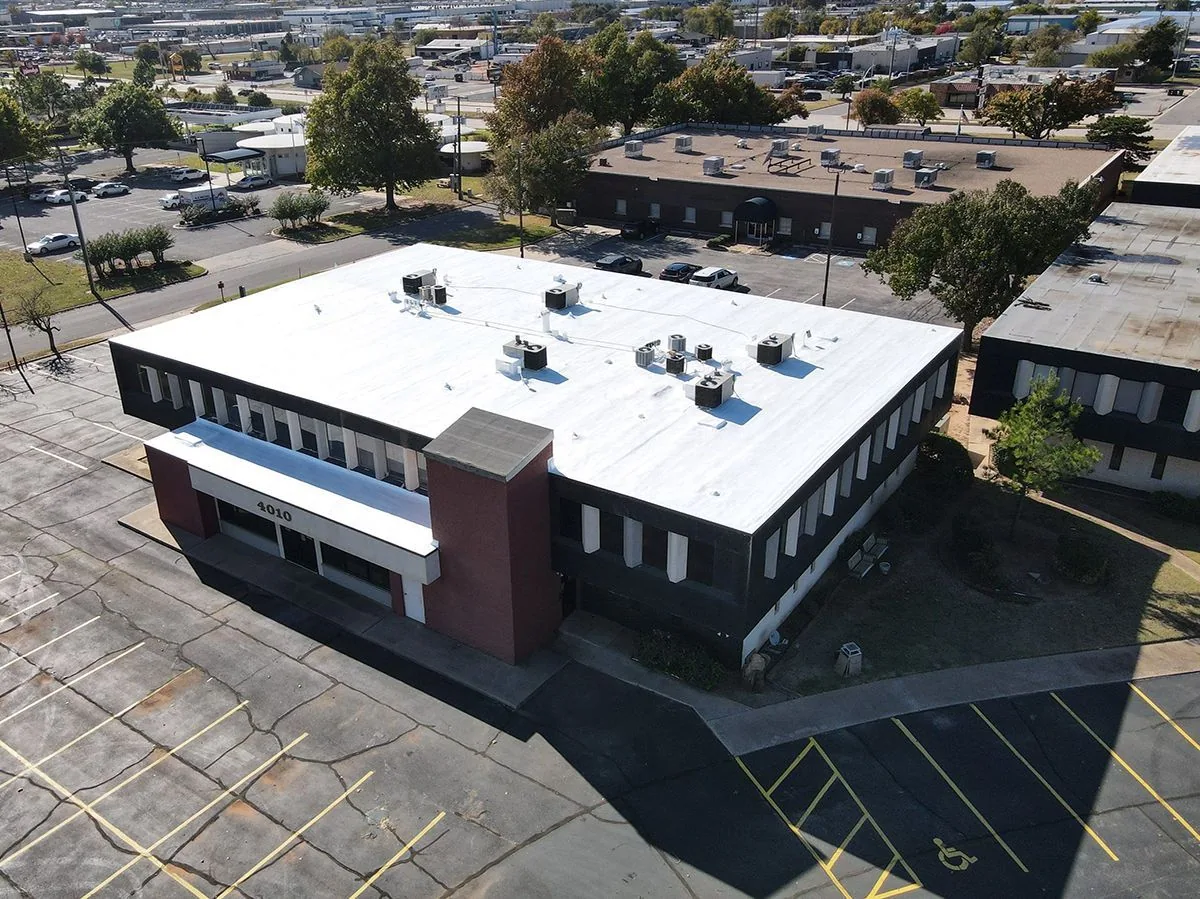
Set attachment and perimeter details
Mechanically attached, adhered, and other specified TPO assemblies require different substrate and edge preparation. The roof plan identifies attachment zones, fastener pattern or adhesive method, perimeter conditions, and the tie-in at roof transitions. League City requires commercial plans to address wind design through its applicable code review; the design professional confirms project criteria and attachment requirements. We list the approved assembly and identify any open design question before installation begins.
At the UTMB Health League City Campus, planned hospital expansion makes project phasing a relevant local example. It does not establish a roof system at the campus or another building. For an occupied medical facility, the site team confirms access, patient routes, equipment continuity, and work windows. Our sequence states how each roof zone will be opened, secured, inspected, and closed before the next area is released.
Install the field and close each daily tie-in
Installation begins after the substrate, insulation, and cover board pass the agreed checks. We stage membrane rolls and accessories so the crew can work within a daily limit and close the exposed edge before weather interrupts the shift. Seams are welded under the specified conditions, then checked as required by the project. Curbs, drains, corners, and wall transitions receive compatible flashing details. A phased reroof schedule identifies deliveries, access restrictions, interior protection, and reopening points when the property remains in use.
League City’s mixed commercial corridors include retail and medical uses near I-45 and FM 646. A delivery route or lift position can affect the work window, but the owner confirms the actual property rules. We mark laydown, dumpster, and crane locations, and identify the person who can approve a closure. If removal reveals wet insulation or damaged deck, the crew protects the opening and seeks approval before expanding beyond the measured scope.
Compare TPO with other roof systems
TPO is one option among single-ply and multi-ply assemblies. A PVC system or KEE membrane may be compared when project needs, substrate, detailing, and specified materials differ. A recover is considered only when moisture, attachment, layer count, deck, and code conditions allow another roof layer. A recover review can compare that path with full removal without assuming the existing assembly is suitable.
The decision also depends on penetrations, rooftop equipment, drainage, wind design, access, and expected maintenance. We describe the assembly, seam approach, flashing materials, and any incompatible existing detail in the estimate. No system name by itself determines lifespan or suitability. The owner receives a scope tied to observed conditions and documented requirements rather than a generic material preference.
Maintain seams and details after closeout
After installation, facilities staff should keep drains clear, limit unprotected foot traffic, and record service work around equipment and penetrations. A maintenance visit can look for punctures, seam damage, loose termination, debris, and changes at rooftop units. The maintenance plan can preserve roof-zone references and track repairs that remain open. We provide the installed system information and closeout photos so later crews can identify the membrane and avoid incompatible patches.
League City’s climate data includes local and regional heat context, while wind and heavy rain can expose weak transitions. We recommend follow-up timing based on the roof’s condition, project documents, and service history. The owner should keep inspections, repairs, and any product requirements together. If water appears, report the room, date, and roof zone so the next visit can compare it with the installation record.
Set quantities and approval points
Cost and duration depend on roof area, tear-off depth, insulation, attachment, perimeter details, equipment, staging, and occupied-area protection. We separate measured work from an allowance for concealed conditions and explain what triggers added removal. The proposal identifies material, seam checks, flashings, testing, closeout, and exclusions. A replacement scope can include TPO when the existing assembly calls for full removal and the selected design supports it.
Send the League City address, roof plans, leak history, access window, and project schedule. We will confirm the existing layers, define test locations, and compare TPO with other suitable assemblies. The estimate identifies the approval point for removal-dependent work and a daily tie-in plan, giving facilities staff a record they can use after the crew leaves.
Frequently Asked Questions
How can you tell whether a TPO seam needs repair?
We inspect and test the seam at the reported roof zone, then compare it with nearby flashing, penetrations, and interior evidence. The repair boundary follows confirmed material and visible conditions.
Can a TPO roof be installed over an existing membrane?
A recover is evaluated only after layer count, moisture, attachment, deck, drainage, and applicable requirements are reviewed. Core cuts and field conditions establish whether another layer is suitable.
What affects TPO attachment in League City?
Project wind criteria, building height, roof zones, deck, perimeter exposure, and the specified assembly affect attachment. The project design and approved details set the pattern.
How are curbs and rooftop equipment flashed?
Each curb receives a compatible transition tied to its height, support, and membrane detail. We coordinate equipment access and identify who supplies the curb and closes each opening.
What should be in the TPO closeout file?
Keep the system data, roof-zone map, seam and flashing photos, test records, approved changes, and deferred work. Those details support future repair and maintenance decisions.