Commercial Roof Condition Reports
A roof report is useful when another person can locate the observation, understand its basis, and see what decision follows. For a League City building, we organize photographs, roof-zone references, visible conditions, test results, and limits of inspection into a record the owner and general contractor can review. The report distinguishes a stain from a confirmed opening, a screening result from a verified moisture condition, and a maintenance item from a repair recommendation. It does not treat a local storm, building age, or single image as proof of a particular roof failure.
Tie each photograph to a roof location
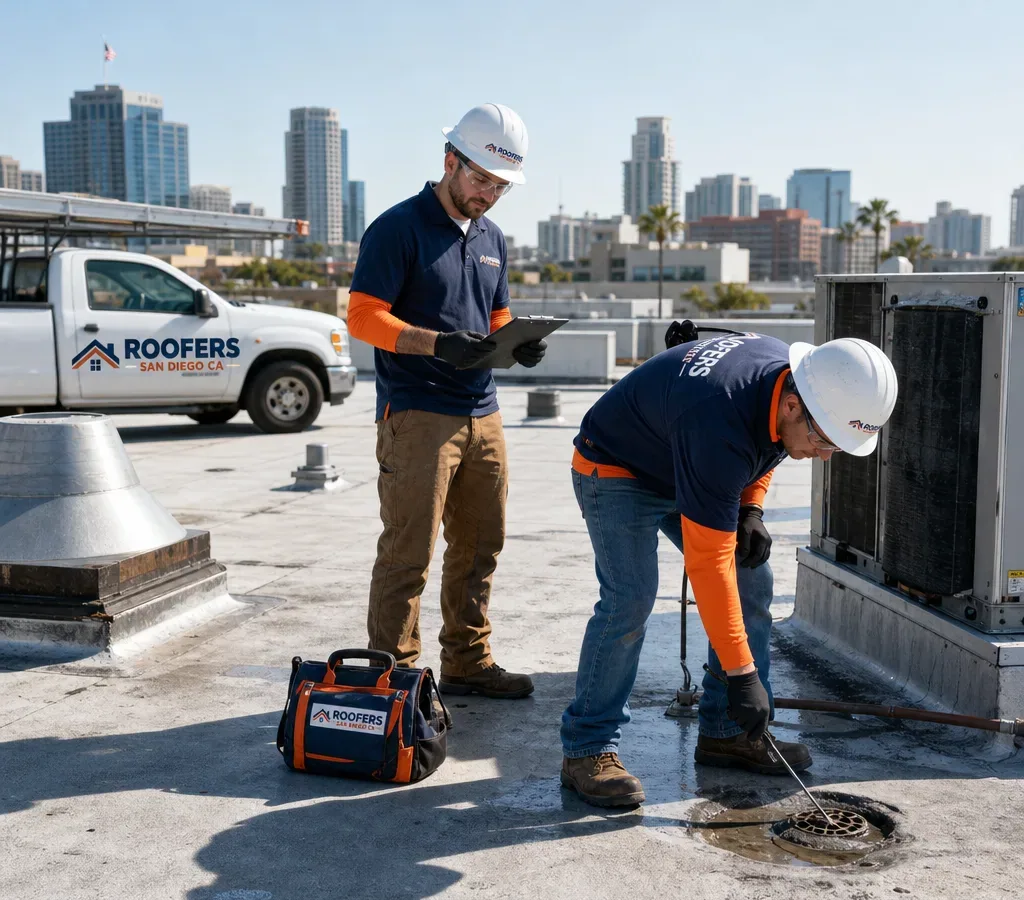
We establish a roof layout from available drawings or field references and label the areas inspected. Photographs identify the view, approximate location, date, and visible condition, with enough context to locate the detail again. We can document field seams, edge metal, penetrations, drains, curbs, rooftop equipment, and interior leak evidence. If a drawing does not match the field, the report notes the discrepancy and uses a marked sketch until a verified plan is available. A commercial roof inspection supplies the field observations; an aerial roof review can help cover areas where safe access is limited, subject to site and weather conditions. For buildings near I-45, a clear roof-zone reference helps facilities staff coordinate future visits among tenants and service vendors. At an institutional property such as UTMB's League City campus, the report can also name the authorized contact and access route, provided the actual scope is for that address. Victory Lakes Town Center sits at I-45 and FM 646; at each property, the facility contact confirms its own access route and work window.
Separate observations from conclusions
Each finding uses plain categories: observed condition, reported symptom, test result, interpretation, and recommended next action. A ceiling stain is recorded as an interior observation; the water-entry path remains unresolved until the roof review or testing supports it. A loose fastener is visible; whether adjacent attachment has failed may require further inspection. We avoid converting an image into a repair quantity when the edge of damage is concealed. If moisture is suspected, a moisture survey may identify an area for verification, but the report states whether a test opening or other confirmation was completed. A flashing assessment can describe a curb or edge detail in greater depth, while a seam review addresses a suspected open lap. These are distinct report paths, not conclusions based on the name of the finding. We identify the source and date of any owner-provided plan, warranty, or prior work note so that old information is not mistaken for current field evidence.
Show repair priorities and unresolved tests
The recommendations should help an owner act without overstating certainty. We identify immediate water entry, temporary protection, repair candidates, maintenance items, and conditions that need additional testing. Each next step names the reason, location, and approval required. When a repair quantity depends on a roof opening, the report identifies the test area and asks for approval before additional removal. An emergency roof response record remains separate from a permanent repair recommendation. A broader roof asset record can carry the report's open actions into future inspections. If an owner is comparing a localized repair with replacement, the report can document the condition evidence and assumptions needed for that decision, without treating the comparison as a bid. League City's tropical-system history includes Ike, Harvey, and Beryl. After a reported event, we inspect the actual roof, mark affected zones, and separate observed conditions from tests still needed.
Prepare the report for the project team
Owners, property managers, and general contractors need a report they can use to coordinate access and approvals. We include contact roles, restricted areas, roof access notes, hours, tenant or equipment concerns, and any conditions that limited inspection. If the roof is occupied by active operations below, the report can identify rooms or work areas mentioned by the site contact without presenting them as verified roof damage. League City's commercial corridors connect to Houston and Galveston through I-45 and include busy retail and institutional properties; actual delivery paths and work windows come from the subject site's manager. We note whether a lift, escort, fall-protection arrangement, or weather window is needed for a return visit. A multi-site reporting program can standardize document naming and review steps, while keeping roof findings tied to each location. If the report supports a repair, it can feed a defined repair scope with separate quantities for confirmed work and allowances for concealed conditions.
Deliver a dated baseline that can be revisited
A complete report includes an inspection date, property address, roof areas reviewed, available plans, photographs, observations, tests performed, access limits, recommendations, and unresolved questions. It records whether temporary protection was installed and what should trigger another visit. If no roof plan was available, the field sketch remains labeled as approximate. If weather or access prevented inspection of a section, that limit is stated rather than filled with assumed conditions. A condition report records field observations. For a future League City project, the design professional and permitting authority confirm the adopted commercial code path, design wind criteria, and permit requirements. We can provide a concise executive page plus detailed roof-zone findings for facilities and procurement teams. To request a League City report, share the address, concern or planned transaction, available drawings, access window, project timing, and existing roof records. We will align the visit with site coordination and return a dated document with specific next steps.
Frequently Asked Questions
What is included in a commercial roof condition report?
The report can include address and inspection date, roof-zone references, photographs, visible observations, tests performed, limitations, recommended actions, and unresolved items. Its scope states which roof areas were not reviewed.
Does a roof report certify that the entire assembly is dry?
No. A report describes the areas inspected and tests performed. Concealed conditions remain unconfirmed unless suitable testing or an approved opening provides evidence.
Can you prepare a report for an acquisition or refinance?
Yes. Share the transaction timing, requested scope, available roof plans, access requirements, and any lender or owner format. We will state the inspection limits and evidence collected.
How do you handle areas that were inaccessible?
We mark them as not inspected, explain the access or safety limit, and identify what is needed for a return visit. The report does not assign a condition to an unseen area.
Can the photos support a repair proposal?
They can document locations and visible conditions for a later scope. Quantities and concealed materials are still confirmed through measurement, testing, or an approved opening when required.