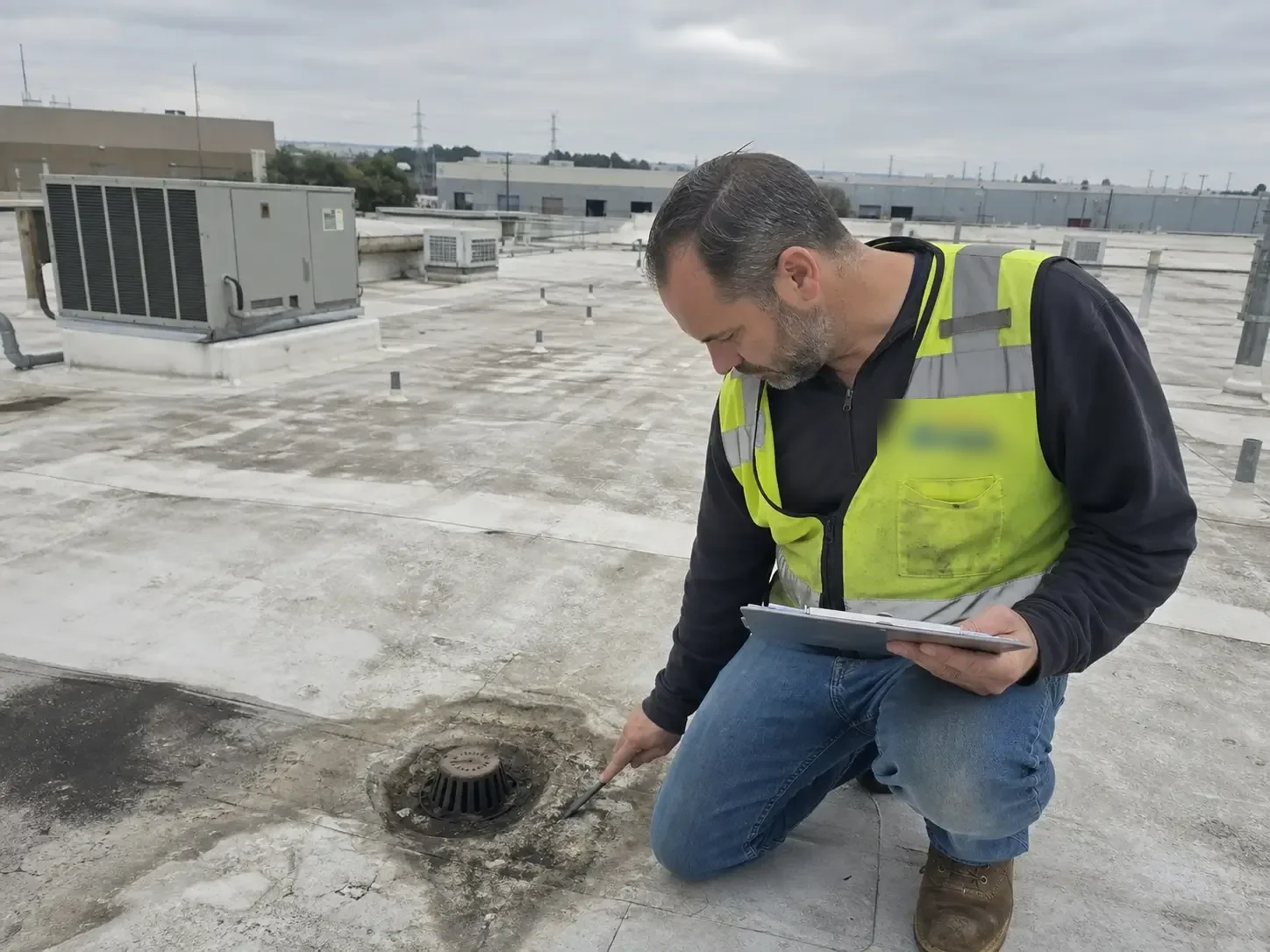
Commercial Roof Inspection
A roof inspection should leave the owner with a map of conditions, not a general note that the surface was checked. In League City, wind-driven rain, heat, hail, and tropical weather make seams, edges, penetrations, and drainage useful inspection points. We identify the assembly, mark roof zones, photograph defects, and state which areas could not be reached. A UTMB Health League City Campus expansion is planned in phases, a local example of how institutional projects can involve multiple schedules; the inspection record for any building still begins with its own plans and access release.
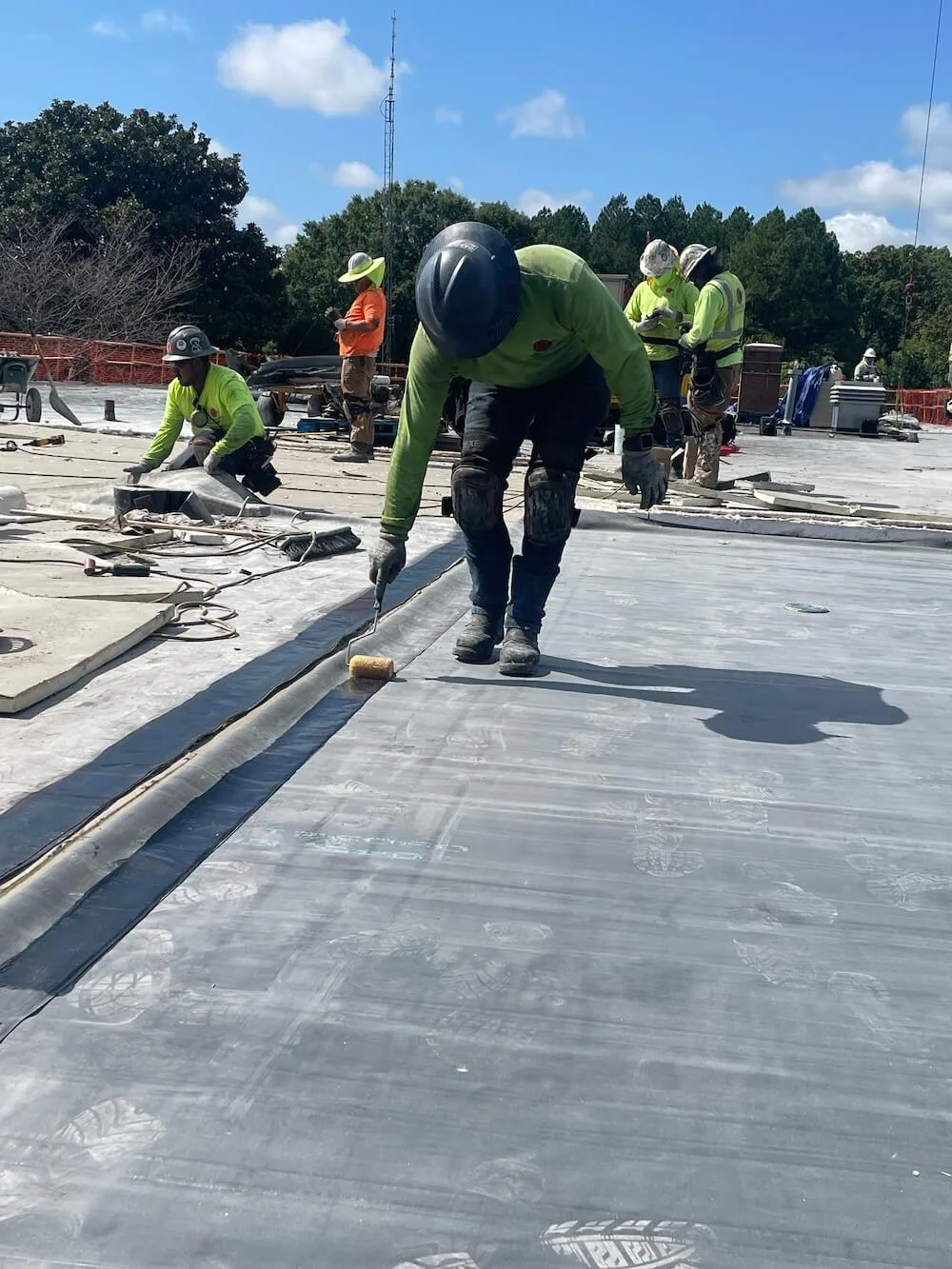
Survey the roof by zone and assembly
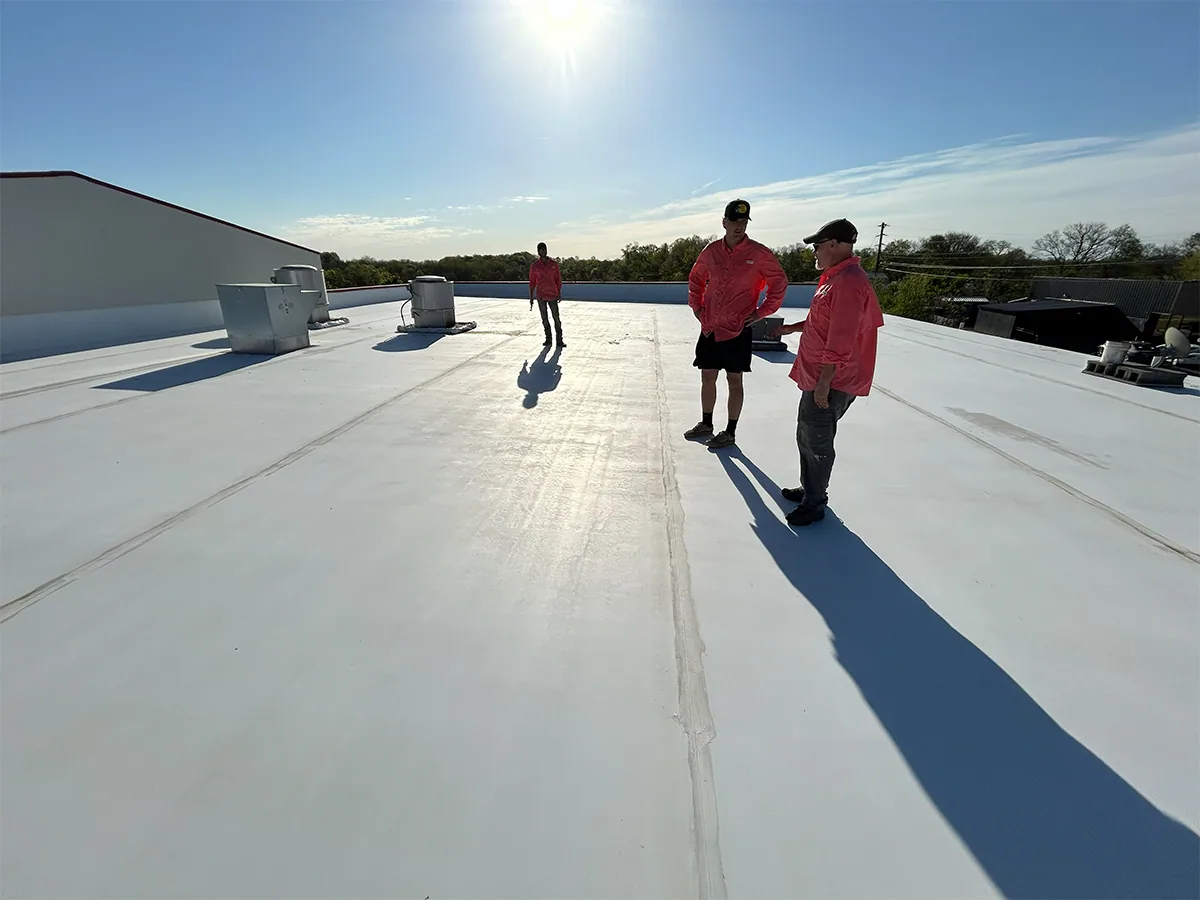
We begin by checking available drawings, prior repairs, leak calls, and equipment changes. On the roof, we identify membrane or panel type, slopes, drains, curbs, penetrations, seams, edge metal, and transitions. Each observation is tied to a roof zone so a facility manager can locate it later. The condition report distinguishes visible wear from a suspected failure and records whether a closer test is needed before repair quantities are set.
Access limits matter. Solar arrays, mechanical equipment, ponded areas, fragile skylights, or locked hatches can block part of a survey. We record the section not reached and the reason, rather than extending findings into an unobserved area. The report can show photographs with orientation and reference points, helping a maintenance team compare the same curb, seam, or drain on a return visit. That keeps the field record useful even when the building has several roof elevations.
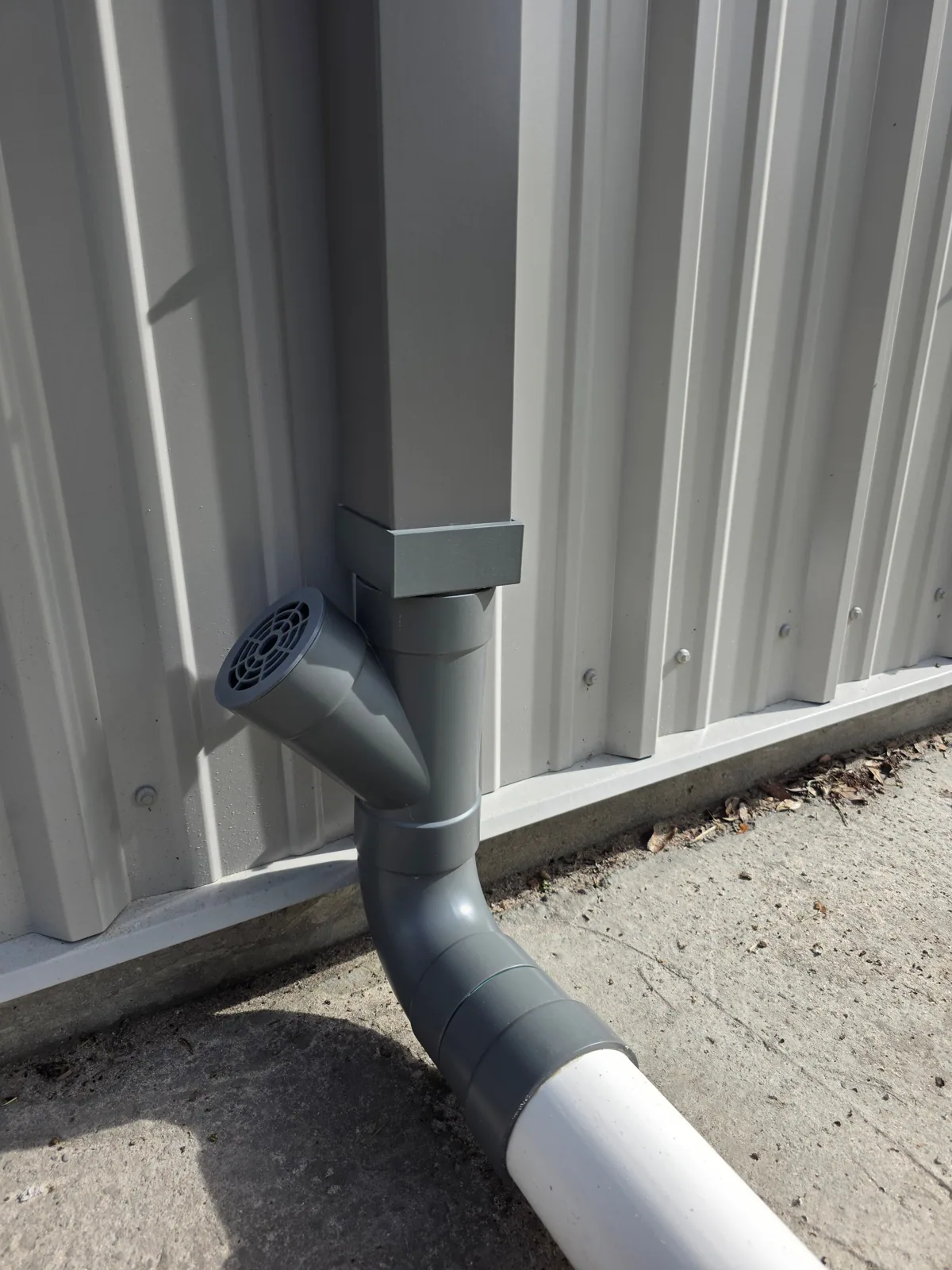
Check details exposed to local weather
League City observers recorded gusts up to 52 mph during Hurricane Beryl in July 2024. In October 2004, a severe League City storm brought golf-ball-size hail, damaging wind, and an F0 tornado. An inspection checks edge attachment, exposed fasteners, panel laps, membrane seams, penetrations, and rooftop equipment, then records current findings at the subject address.
We look for loose or displaced material, open laps, punctures, aged sealant, blocked drainage, and signs of prior patching. Where a defect could admit water, we note the nearby insulation or deck condition only when it is visible or confirmed through testing. A wind review can document movement, while a hail assessment separates impact evidence from other wear. Dates, photographs, and test limits keep the conclusions tied to the roof.
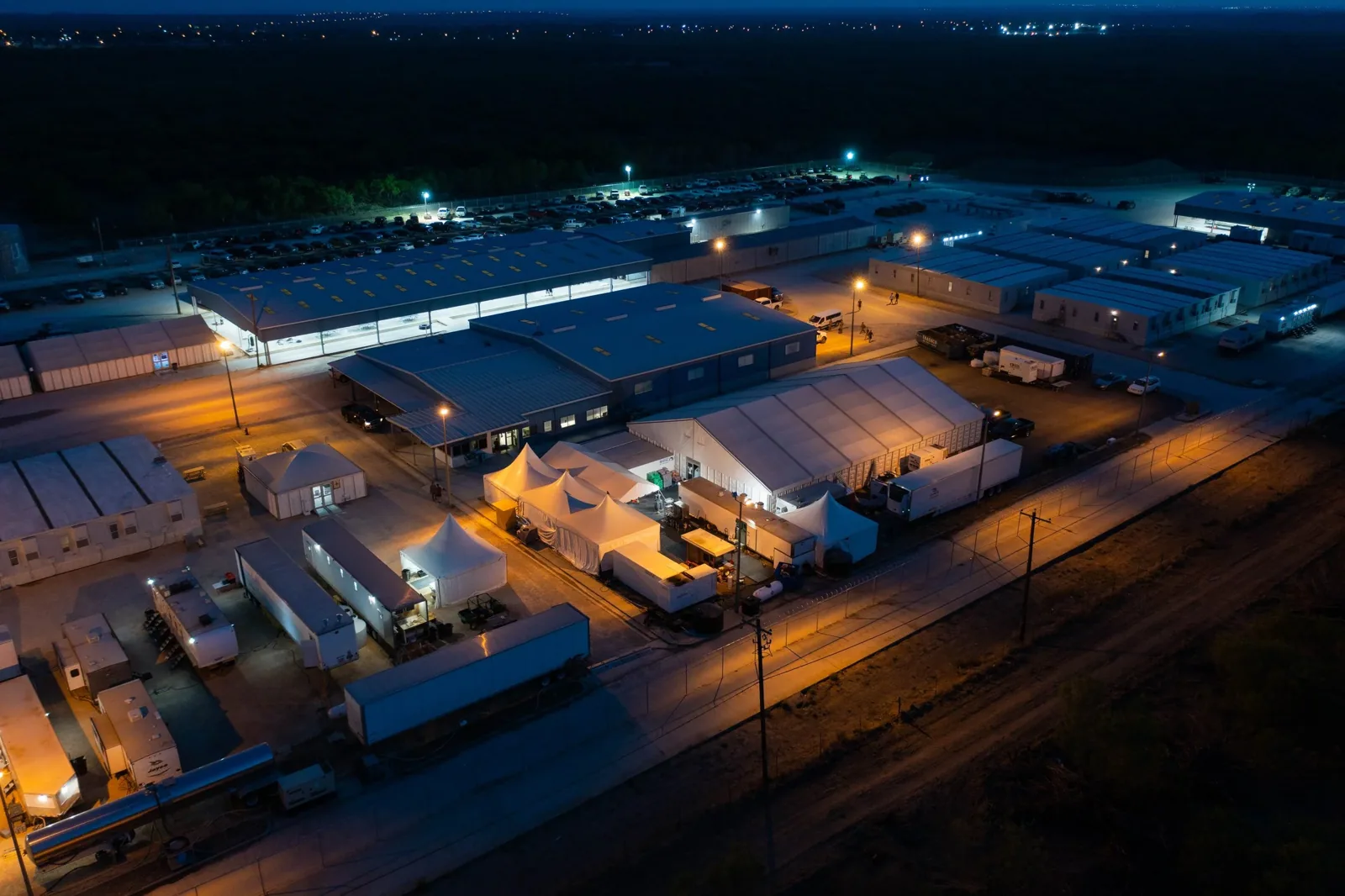
Prioritize findings by risk and next action
Inspection findings should tell staff what needs immediate attention, what can be scheduled, and what needs more information. We rank active openings, loose components, drainage problems, and deteriorated transitions separately from routine maintenance. If moisture is suspected, an infrared moisture survey can guide selected test openings. If insulation is confirmed wet, we mark the measured area and identify what remains untested so the owner can decide whether to expand the investigation. The report also distinguishes a condition that needs prompt protection from a maintenance item that can be scheduled. We state why each action is prioritized, what evidence supports it, and whether a follow-up test is needed. That gives the asset manager a basis for sequencing work across a budget cycle without treating every photograph as an emergency or delaying an active opening. We identify the responsible contact and suggested return interval when the report calls for another look. Roof access and safety constraints remain visible alongside each recommendation, so a deferred item does not disappear from the next facilities review.
For a multi-tenant building, the report can connect roof zones to rooms, service areas, loading doors, or sensitive equipment below. At Victory Lakes Town Center, the concentration of retail and medical uses at I-45 and FM 646 illustrates how one property’s operating schedule may differ from another’s nearby. We confirm each site’s hours, roof access, and contact rather than treating the district as a single operating condition. Priorities follow the individual asset and owner’s use.
Plan repair, maintenance, or capital work
A single failed flashing may need a targeted repair; repeated seam issues, wet insulation across tests, or widespread attachment concerns may call for a broader comparison. The inspection report lists each observation, supporting photo, test status, and suggested next step. A repair scope can use the measured boundary, while a replacement assessment can address areas that no longer support local work. We separate immediate protection from long-term capital planning so the owner can approve work in order.
League City adopts the 2021 International Building Code and 2021 International Energy Conservation Code for its commercial code framework. For a planned alteration or replacement, the project design team confirms applicable code requirements against the proposed scope. We record the current assembly and project questions; the applicable review determines the requirements for planned work. For repeat inspections, the maintenance program can carry forward zone references, open issues, and scheduled checks rather than rebuilding the roof history from scratch.
Coordinate roof access and the visit record
Before mobilization, we confirm the safe entry point, escort or keyholder, roof hatch, fall-protection needs, and any operating restrictions. The site contact identifies rooms or areas that cannot be photographed and tells us where equipment or tenants create access limits. If the inspection must happen before deliveries or after clinical operations, we build that access window into the visit. The written record notes the inspection date and conditions so future staff understand what the photographs represent.
Send the League City address, roof plans, known leak locations, prior repair notes, access window, and the person who can release each area. We will return a zone-based condition report with photographs, limits, and next actions. When the roof is difficult to approach safely or spans disconnected elevations, a drone survey may provide a broad visual record to complement the hands-on findings.
Frequently Asked Questions
What does a commercial roof inspection report include?
The report identifies the assembly, roof zones, visible conditions, photographs, access limits, test locations, and recommended next actions. It separates observations from conditions that need opening or further evaluation.
Can an inspection confirm hidden wet insulation?
A surface walk cannot verify every concealed layer. Infrared readings can help select core cuts, and the opening confirms material condition at the tested point.
Will one damaged area mean the entire roof needs replacement?
Not by itself. We compare the tested section with adjacent seams, attachment, insulation, deck, and prior repairs before presenting local repair and broader options.
How should we prepare for the inspection visit?
Provide drawings, leak reports, roof access information, known restricted areas, and a contact who can release the building. We confirm the visit window and photographable zones in advance.
Can you inspect a roof with multiple elevations?
Yes, when each elevation is accessible and can be identified on the site plan. The report lists areas not reached and can pair hands-on findings with separate visual imaging.