
Commercial Roof Capital Planning
A capital request should explain what is known about the roof, what remains hidden, and which approval releases the next cost. For League City owners, that means tying a budget year to inspection evidence and the property's operating schedule instead of applying a portfolio-wide age assumption. We organize current leaks, maintenance, repairs, restoration, and replacement as separate decisions. Any quantity that depends on opening the assembly remains an allowance until the owner approves testing or removal. The plan can then show near-term protection and repair alongside longer-range work without presenting a screening observation as a construction scope.
Set the budget baseline from property records
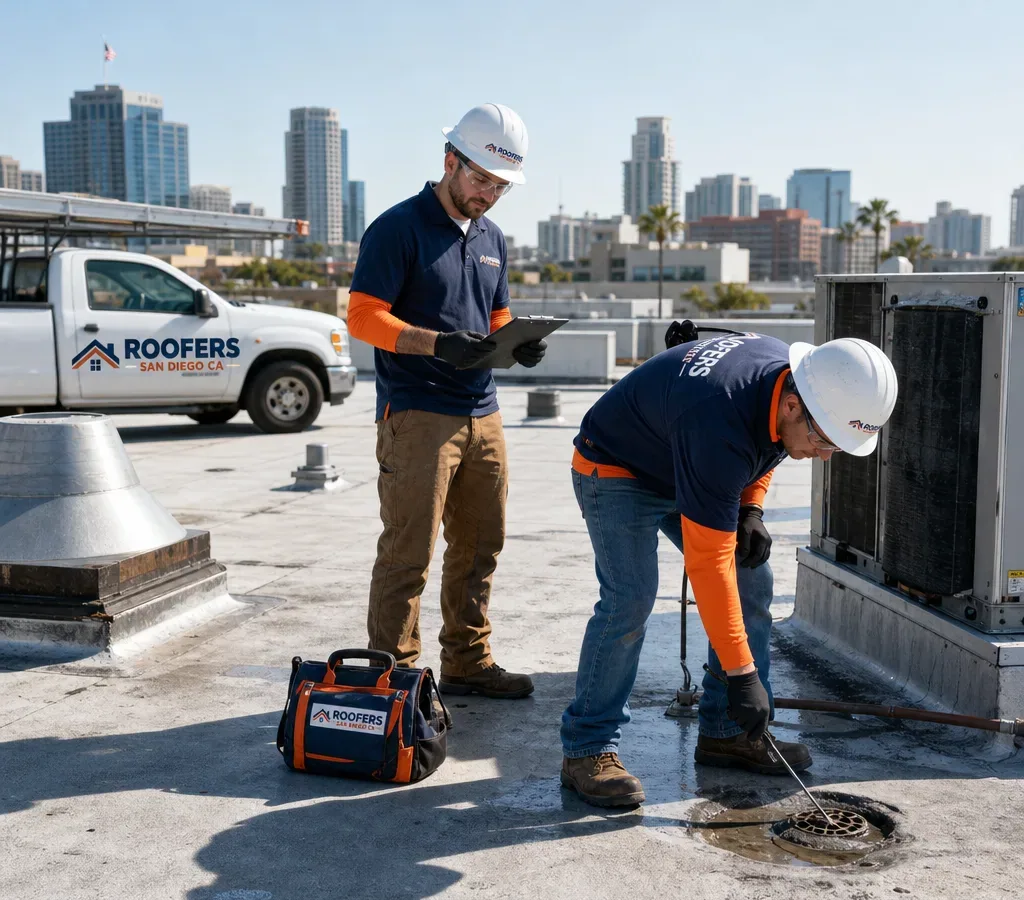
We begin with building addresses, roof plans, system records, prior proposals, repair history, warranty documents, and the owner's planning horizon. Each available record is checked for date, location, and relevance. If the roof plan is incomplete or the last condition report is old, we identify that gap and schedule a field check before treating quantities as current. A photo-based condition report can document the baseline; a commercial roof inspection can verify visible details and mark areas that need testing. On a property near I-45 or FM 646, we also record tenant hours, truck movements, roof access, and material staging limitations that may affect labor and phasing. Sites around Victory Lakes Town Center illustrate the retail activity along that corridor, while the UTMB League City campus represents an institutional setting with its own coordination needs. Those locations are context only; each capital line item must tie to the actual address and observed condition. We identify the records and site contacts that confirm each input, along with decisions and tests still pending.
Compare options on the same scope boundary
A useful budget compares repair, restoration, recover, and replacement without changing assumptions between alternatives. We identify the roof zones included, the system assumed, access and protection needs, measured quantities, and items dependent on testing. A repair option may address a confirmed leak path, while coating restoration requires suitable substrate and preparation. A recover option and replacement plan require their own code, attachment, load, drainage, and assembly review. The comparison should say what is excluded, what could change after opening, and whether temporary protection is a separate cost. We do not convert broad condition labels such as “fair” or “poor” into a replacement quantity without supporting observations. If insulation moisture is suspected, the owner sees the proposed test area and its cost before it becomes a removal allowance. Costs for staging, tenant protection, lift access, and disposal are tied to the applicable phase, not buried in a single roof-wide figure. This format helps the owner evaluate first cost, timing, and unresolved risks on comparable terms.
Place work in a realistic approval sequence
Budget timing depends on more than roof age. We consider leak urgency, safety, weather exposure, maintenance needs, access windows, procurement lead time, and how an opening can be kept watertight. A current leak may require an immediate temporary response and a later permanent repair, each with a separate approval. Other properties may need a documented maintenance visit before a capital choice is ready. We record who can authorize testing, concealed removal, material substitution, and added work after the roof is opened. If a property has several buildings, the multi-site program can group procurement and reporting while preserving distinct scopes for each building. League City's 2024 employer list includes Clear Creek ISD, H-E-B, UTMB, city government, American National Insurance, and INEOS. The site contact confirms each facility's operating hours and restrictions before sequencing work. A plan should show the phase, estimated decision date, dependencies, and consequence of deferral so a budget holder can prioritize the next review rather than simply rank roofs by age.
Separate planning allowances from firm quantities
When the deck, insulation, attachment, or prior repairs are concealed, the proposal identifies the uncertainty directly. A test opening may confirm a localized repair, reveal additional wet material, or change the tie-in detail. We state the test location, restoration method, and approval needed before proceeding. Budget tables distinguish measured areas from estimated quantities and carry a written basis for each allowance. If the owner chooses to defer testing, the plan names the residual risk and the date or event that should trigger another review. League City's upper-coast setting and recorded tropical systems, including Ike, Harvey, and Beryl, support a defined post-event inspection process. The city adopts the 2021 International Building Code, energy and property-maintenance codes, and design wind criteria; the design professional and permitting authority confirm requirements for each proposed scope. A roof asset register keeps assumptions and completed work current across budget cycles. If the owner plans a full scope after testing, warranty management can capture applicable maintenance and submittal obligations without implying coverage before terms are checked.
Deliver a decision-ready capital schedule
The final plan should identify each property, roof zone, evidence date, recommended action, budget range or allowance, timing, dependencies, and approval owner. We attach relevant photos, plans, test results, prior repair records, and assumptions. A deferred item remains visible with its reason, next review date, and any interim maintenance action. Owners can compare annual spending across League City properties while preserving each building's actual condition record. If a roof is selected for construction, a detailed scope still confirms measurements, material, staging, and work sequence before purchase or mobilization. The planning schedule sets decision dates and dependencies; an approved construction scope and contract set the work commitment and price. To start, send the property list, available budgets and timing, roof records, active leak locations, operating constraints, and any planned refinancing or renovation milestone. We will identify which inputs are ready, where a field inspection is needed, and which costs depend on test results. The result is a sequence the owner can review with facilities, finance, and the project team.
Frequently Asked Questions
How do you decide which roof should receive capital first?
We weigh active water entry, safety, condition evidence, repair history, operating constraints, testing needs, and the owner's timing. The resulting priority includes the reason and next decision, not an age-only ranking.
Is a capital budget the same as a construction quote?
No. A planning range can include allowances while concealed conditions remain unknown. A construction scope confirms current quantities, materials, access, exclusions, and approval points before work is released.
Can a League City roof plan include several buildings?
Yes. Properties can share a schedule and reporting method while retaining address-specific roof maps, condition evidence, and separate work scopes.
What happens when testing changes the expected cost?
The plan identifies the test-dependent quantity and the approval required before opening. If findings change the scope, we document the result and return a revised option before proceeding beyond the approved boundary.
What should I provide for a first capital review?
Send the property list, roof plans, prior proposals, repair and warranty files, active leak reports, operating restrictions, budget timing, and any renovation or financing milestones.