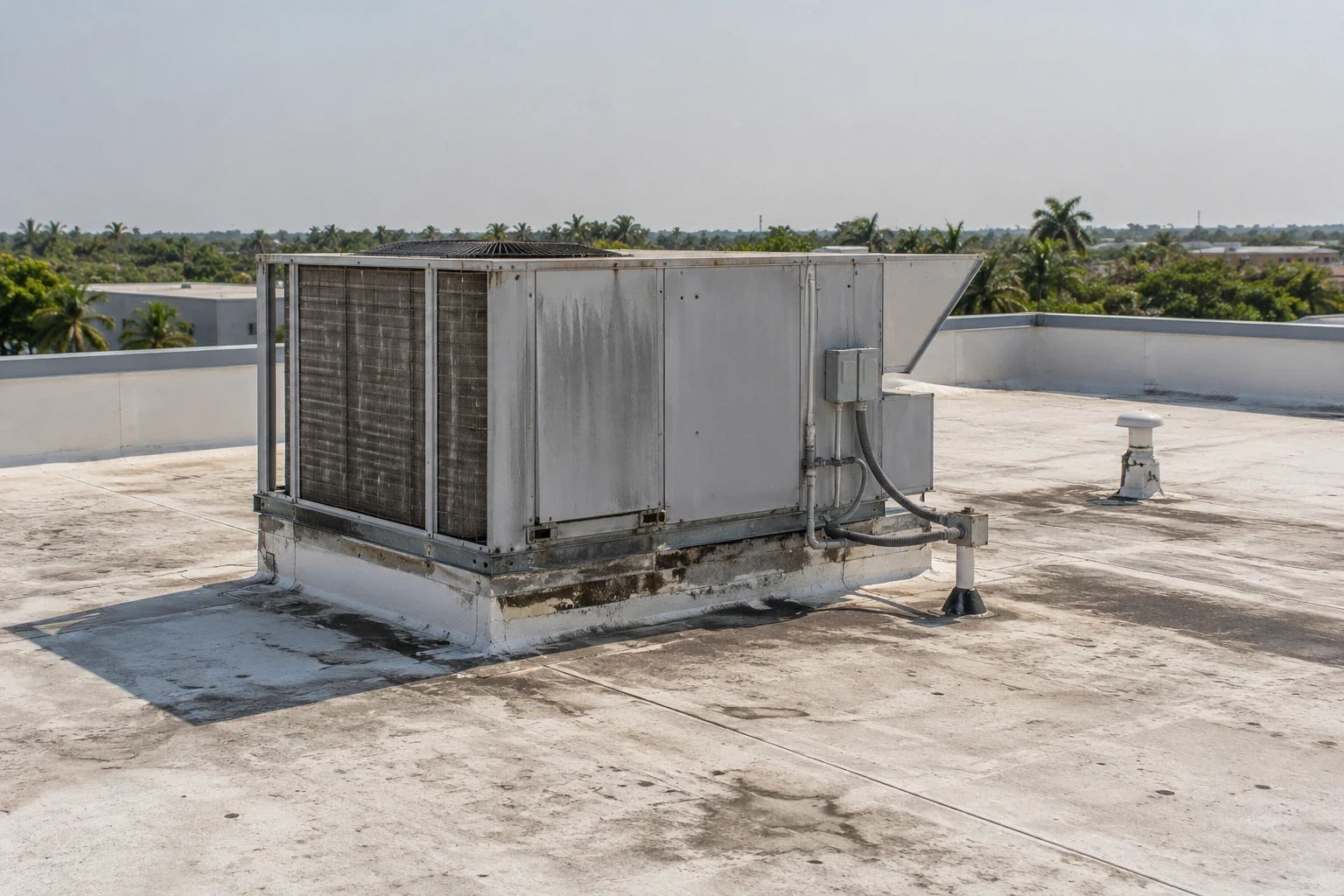
Commercial Roof Leak Repair
Ceiling water near a light, drain stack, or exterior wall does not identify the roof opening by itself. In League City, wind-driven rain can reach seams, curbs, perimeter metal, and drainage details during the same weather window. We begin with the room report, then follow the water path across the roof and mark what can be tested. The League City Historic District includes historic homes and commercial buildings alongside museums, parks, boutiques, and restaurants. At each address, field evidence sets the leak repair quantity.
Trace the report from room to roof zone
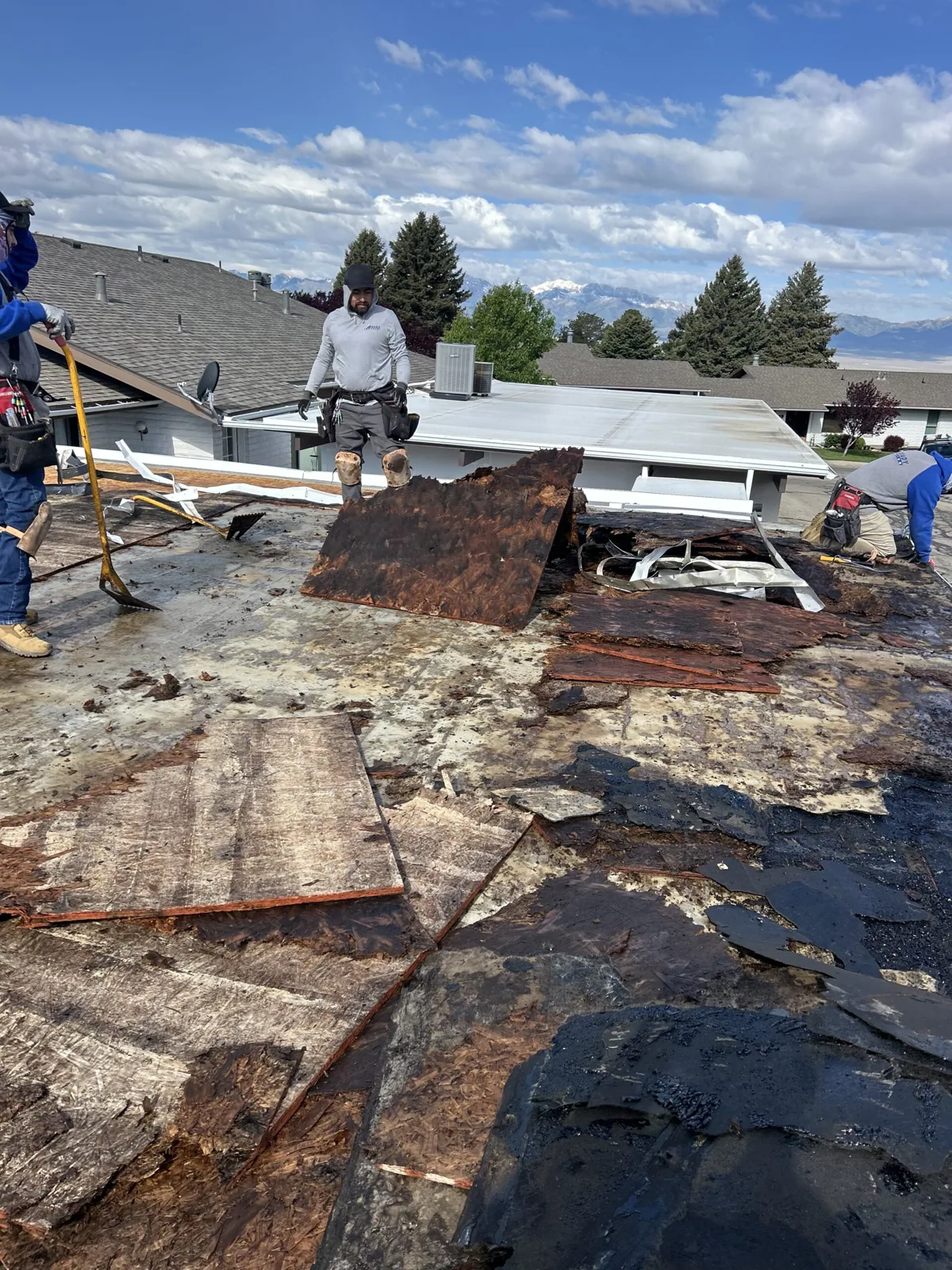
We ask where the water appeared, when it began, whether it changes with wind direction, and what equipment or finish sits below. A ceiling stain may sit several feet from the entry because water can travel over a deck or along a seam. The roof inspection maps the room to a roof zone and checks nearby penetrations, curbs, seams, drains, walls, and prior patches. Photos show the visible condition separately from any suspected path.
The city describes the Creekside District around the Historic District and Main Street, with museums, parks, shops, and local restaurants. That mix includes active public and commercial uses where interior access and operating hours can influence the inspection sequence. We confirm the actual building contact, roof access, and affected room before scheduling. A place name helps orient coordination, but the report records the building address and the path tested so another team can follow the same evidence later.
Test the likely entry without widening the scope
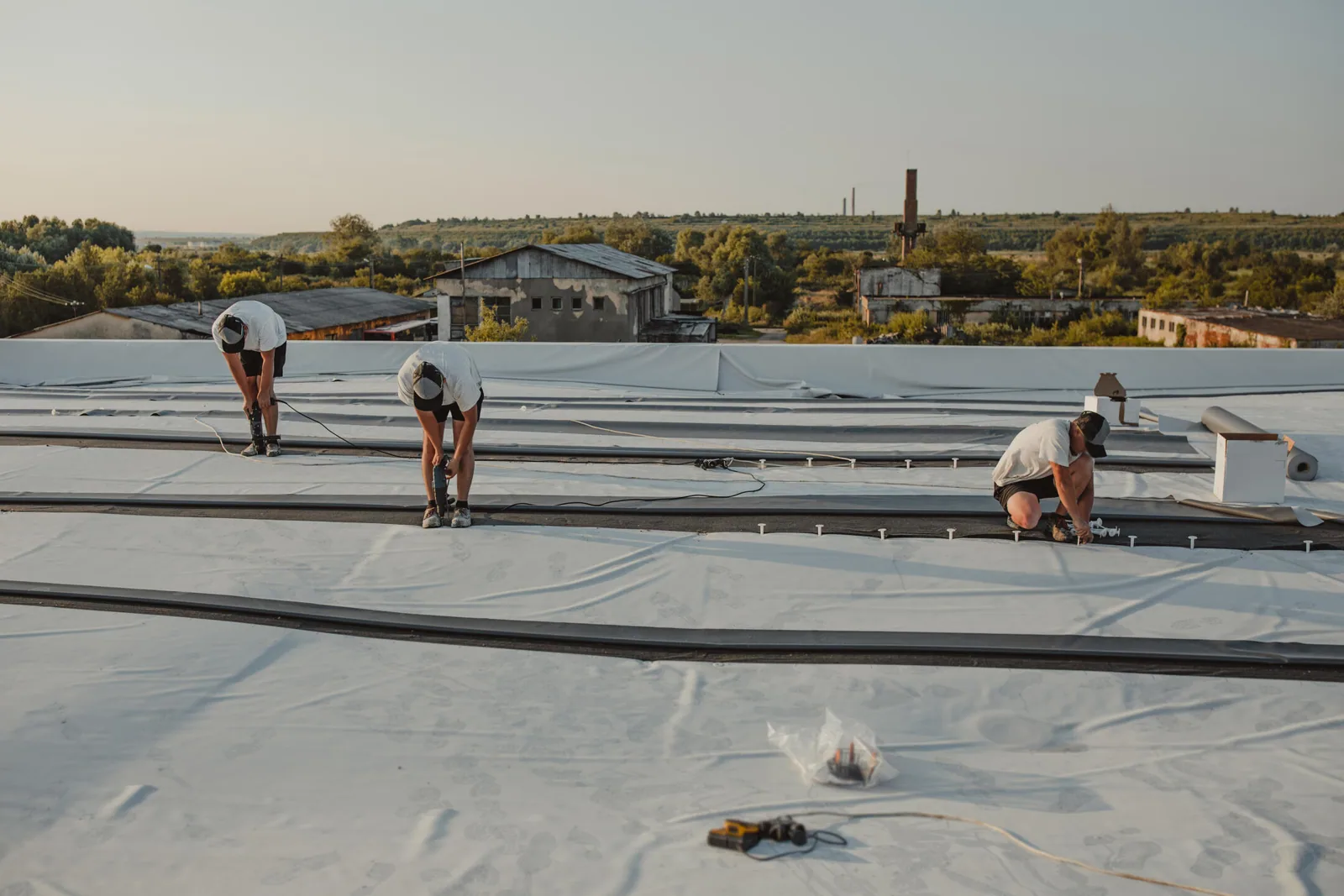
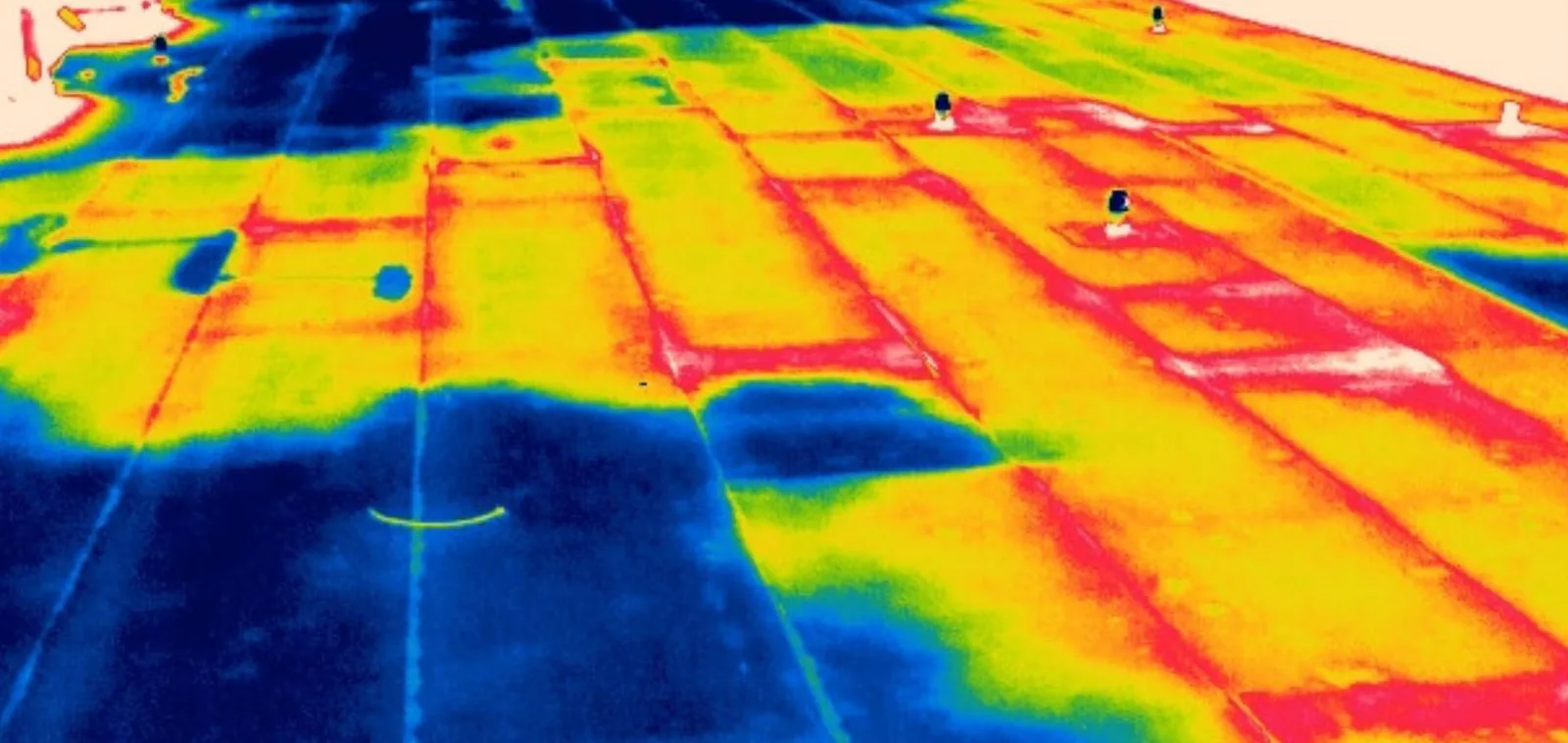
At the roof, we inspect seams, laps, fasteners, penetrations, curbs, wall flashing, drains, and the nearest change in slope. We note loose material, open laps, punctures, blocked outlets, and signs of earlier repair, then compare those details with the room report. If readings suggest wet insulation, an infrared survey may help choose a test opening. A core cut confirms the assembly at that point; it does not establish the condition of every connected section.
League City recorded a severe storm in October 2004 with golf-ball-size hail, damaging winds, an F0 tornado, and roof damage in the area. A storm date can guide where to look, but weather history cannot identify the cause of today’s leak. We record impact marks, moved metal, wet insulation, or an open transition only when observed at the property. If damage mechanisms differ, a hail inspection can keep impact findings separate from a seam or flashing repair.
Stabilize water entry before permanent repair
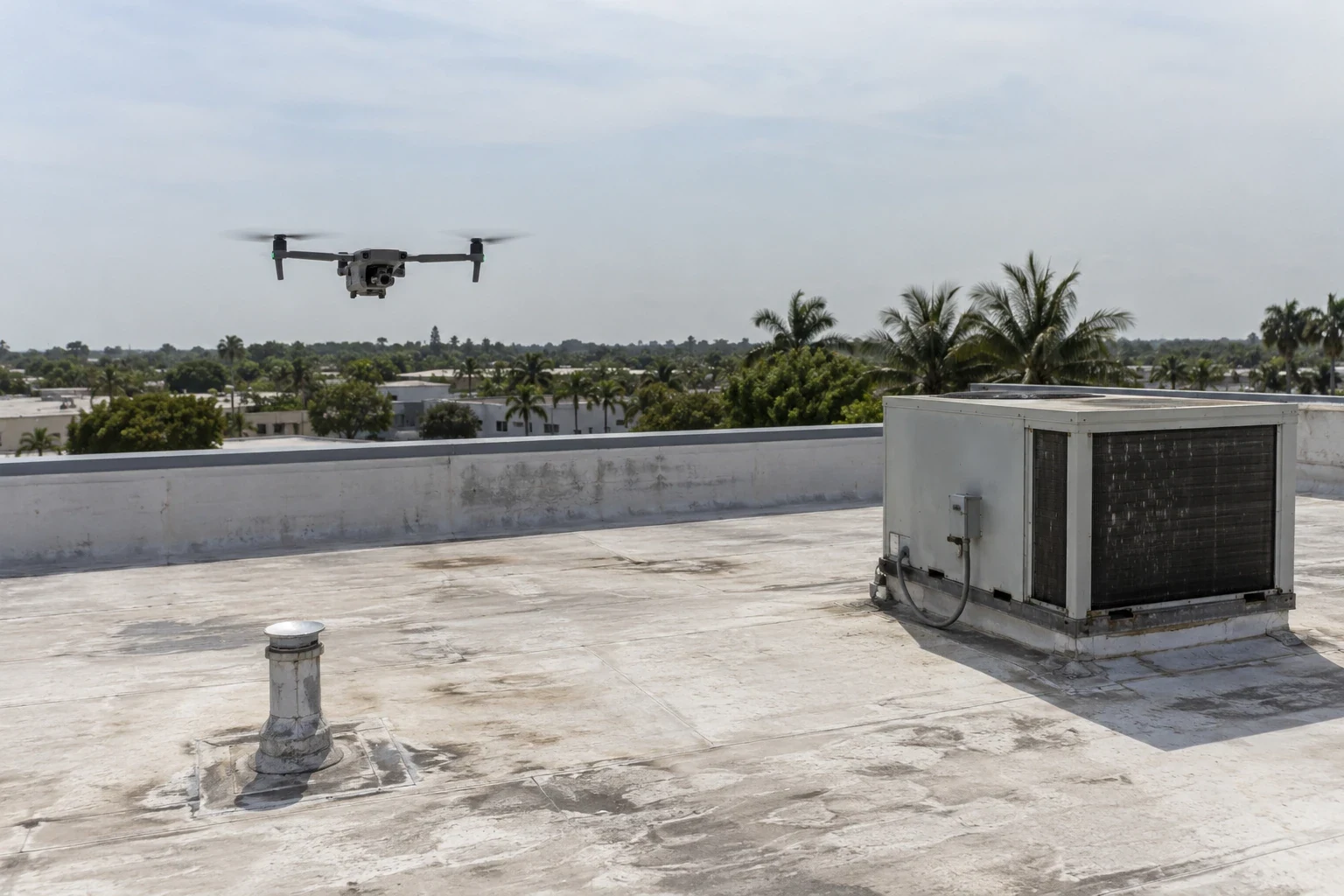
Active entry may call for temporary cover, interior protection, or a safe shutdown of the affected area before diagnosis is complete. We define the dry-in boundary, identify where the cover attaches, and record what conditions could limit it. The temporary measure protects the opening while the assembly is evaluated; it does not prove that concealed material is dry or set the final repair scope. For urgent openings, an emergency response can separate immediate stabilization from permanent work.
Access must be safe before anyone approaches a wet roof or exposed electrical equipment. The property contact identifies restricted areas, occupied rooms, sensitive equipment, and the route for materials. A phased work plan can specify overhead protection, room closures, daily tie-ins, and reopening checks when the repair affects an active business. We report which rooms remain out of service and which roof areas could not be reached, giving facilities staff a useful status instead of an assumed all-clear.
Repair the confirmed source and adjacent detail
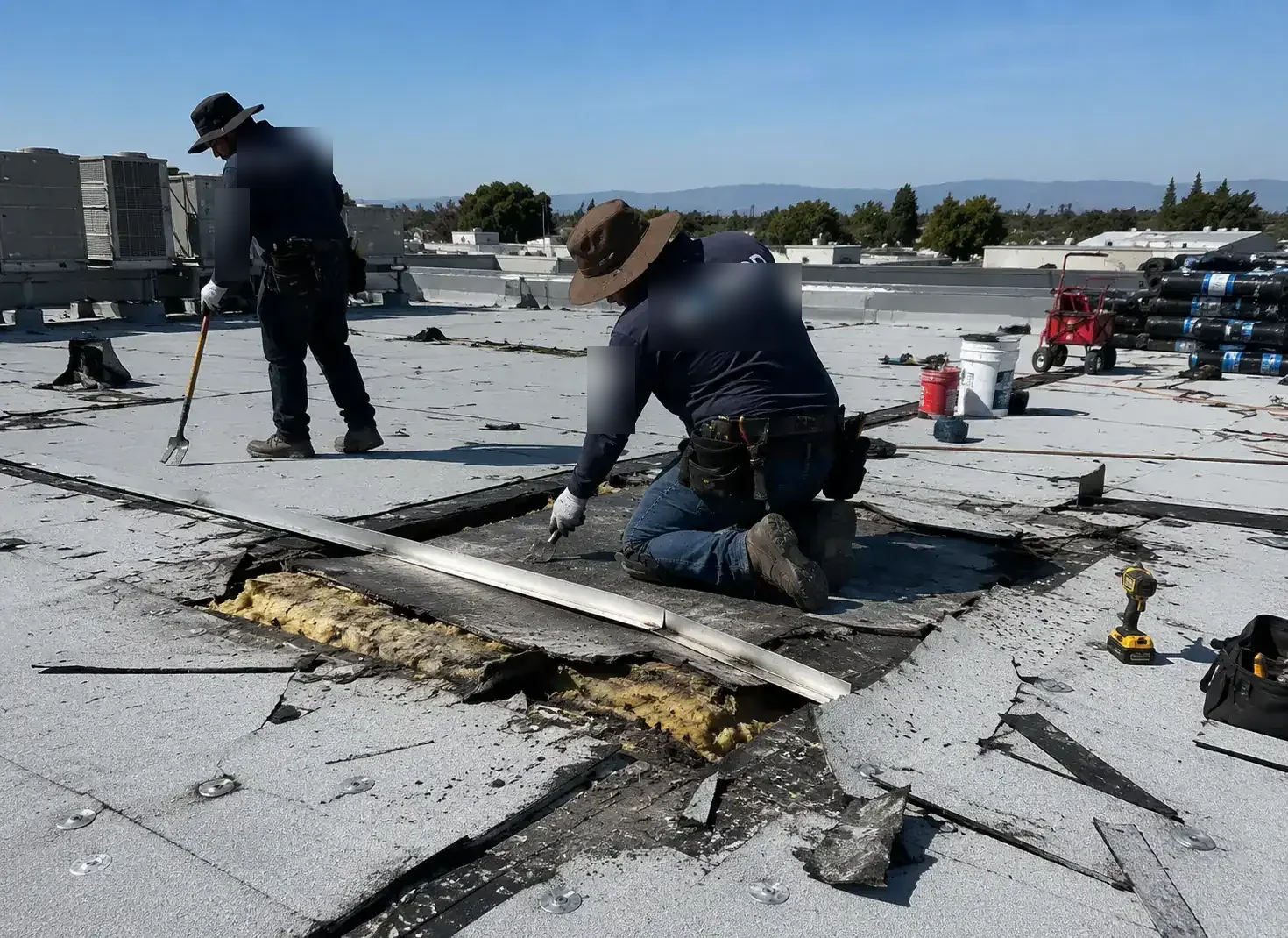
A membrane patch needs sound, prepared material and a compatible tie-in around the defect. Metal work may involve a panel lap, fastener, closure, or flashing that allows water past an otherwise serviceable field. We describe the repair method, area, preparation, and verification step, then identify any additional removal that depends on conditions below the surface. A measured repair scope keeps the confirmed work distinct from adjacent maintenance that does not share the same water path.
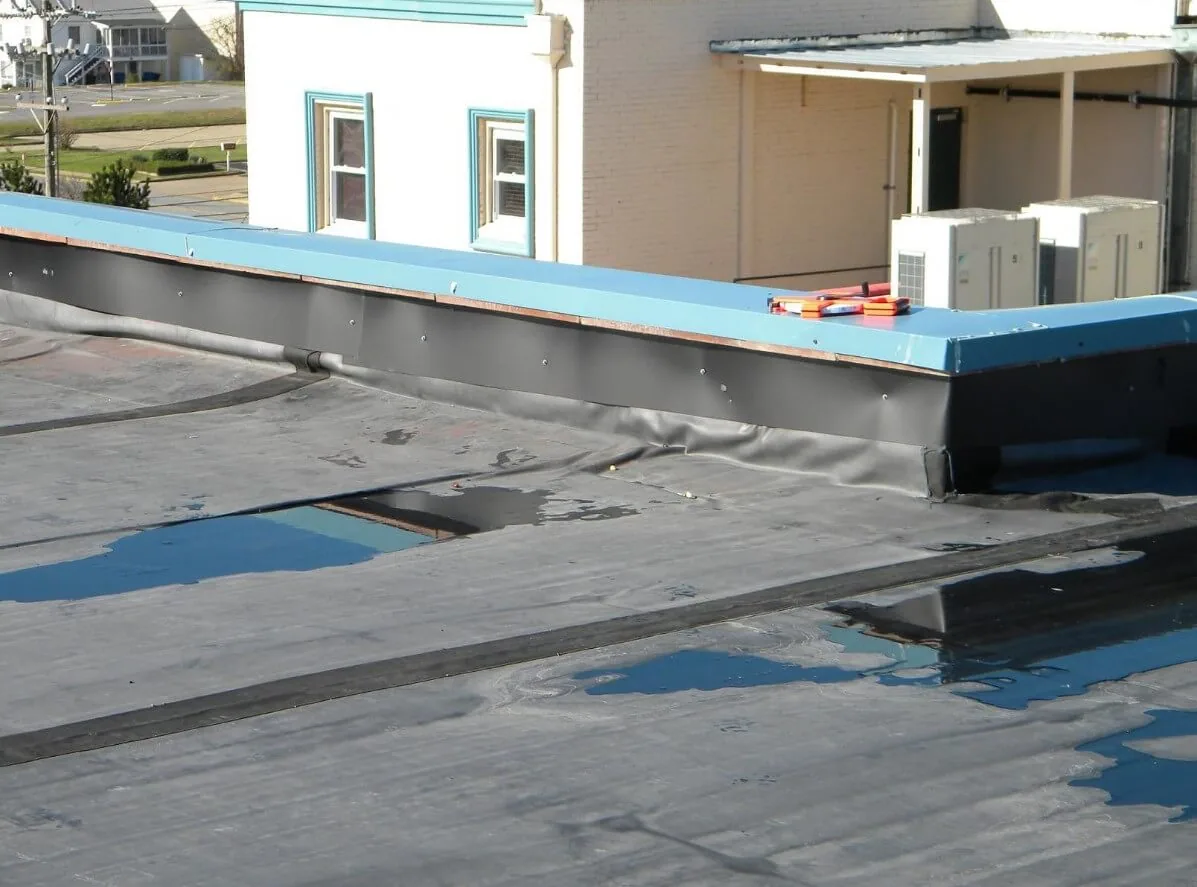
Drainage can also be part of a leak route. We check whether water reaches the outlet, whether debris or a damaged bowl blocks flow, and whether the roof slopes toward the drain. A drain and scupper check can be included when that detail relates to the tested area. The report states the result rather than assuming a roof leak comes from a membrane seam simply because the water appeared after rain.
Set the approval point for concealed conditions
Repair cost depends on safe access, roof height, material, preparation, repair dimensions, wet-material removal, disposal, and whether temporary protection remains necessary. We price the tested work and state the limit of the initial opening. If removal exposes more wet insulation or a damaged deck, we document the boundary, protect the area, and request approval before expanding. The estimate should say whether interior finishes, electrical work, or structural evaluation are outside the roofing scope.
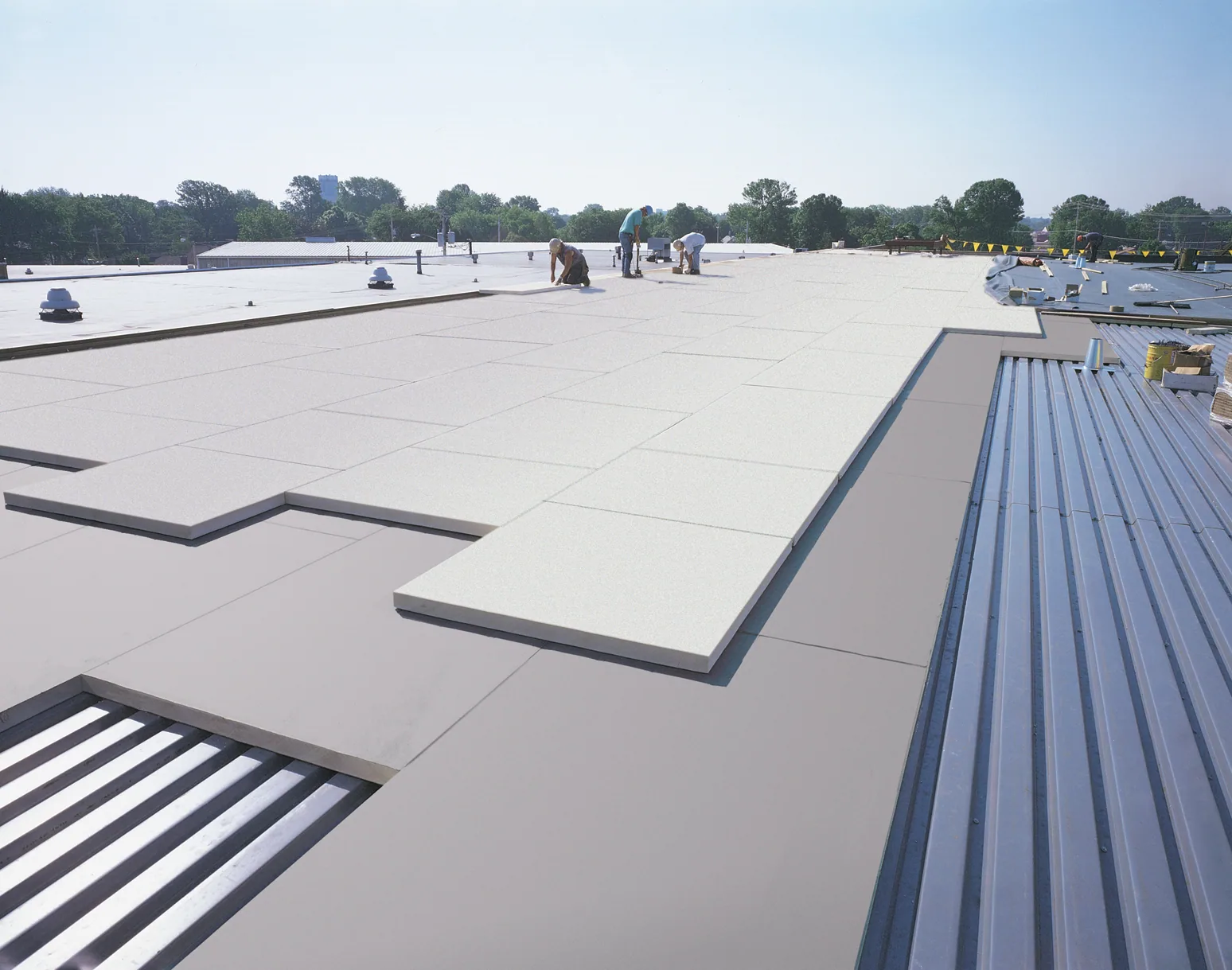
League City’s adopted commercial code references the 2021 International Building Code and requires plans to address city requirements, ultimate design wind speed, and Texas Department of Insurance requirements. That is relevant when a small leak leads to a larger repair or replacement detail; project documents determine the applicable design. The proposal can compare a repair with a replacement assessment if testing shows broader system failure, while retaining the immediate leak boundary as a separate line item.
Record the path, repair, and follow-up
The closeout record ties the interior symptom to the roof zone, test point, repair detail, and photographs. We note material, dimensions, weather conditions, and any areas held for later access. A date and location let facilities staff compare a future report with the current finding without assuming that every new stain shares the same source. If a roof plan is available, we mark the test boundary and any section that remains uninspected.
Send the League City address, room location, time of entry, access contact, and any roof plans or prior repair records. We will identify the likely route, protect active openings, and state what additional testing would change the repair quantity. When the roof is clear but the cause remains uncertain, the next visit can target the unresolved seam, drain, or transition rather than repeating the entire inspection.
Frequently Asked Questions
Why can water appear far from the roof opening?
Water can move along a deck, seam, or insulation before reaching the ceiling. We compare the room report with roof slope, transitions, and test points before naming an entry location.
Can you stop an active leak before the full repair is known?
Temporary protection can stabilize a confirmed opening when roof access is safe. We record its boundary and limitations, then measure permanent work after the assembly can be tested.
Will infrared scanning show exactly where the roof leaks?
Thermal patterns help select test locations, but they do not confirm wet material or identify the entry by themselves. Core cuts and visible roof details establish what belongs in the repair scope.
What if the same room leaks after a repair?
We compare the date, weather, room, roof zone, and completed detail with the prior record. A repeat symptom may follow another path, so the follow-up visit tests the new evidence.
How do you protect an occupied area during leak work?
The site contact sets the room boundary and access route. We list interior protection, overhead hazards, closure timing, and the reopening check before starting roof work.