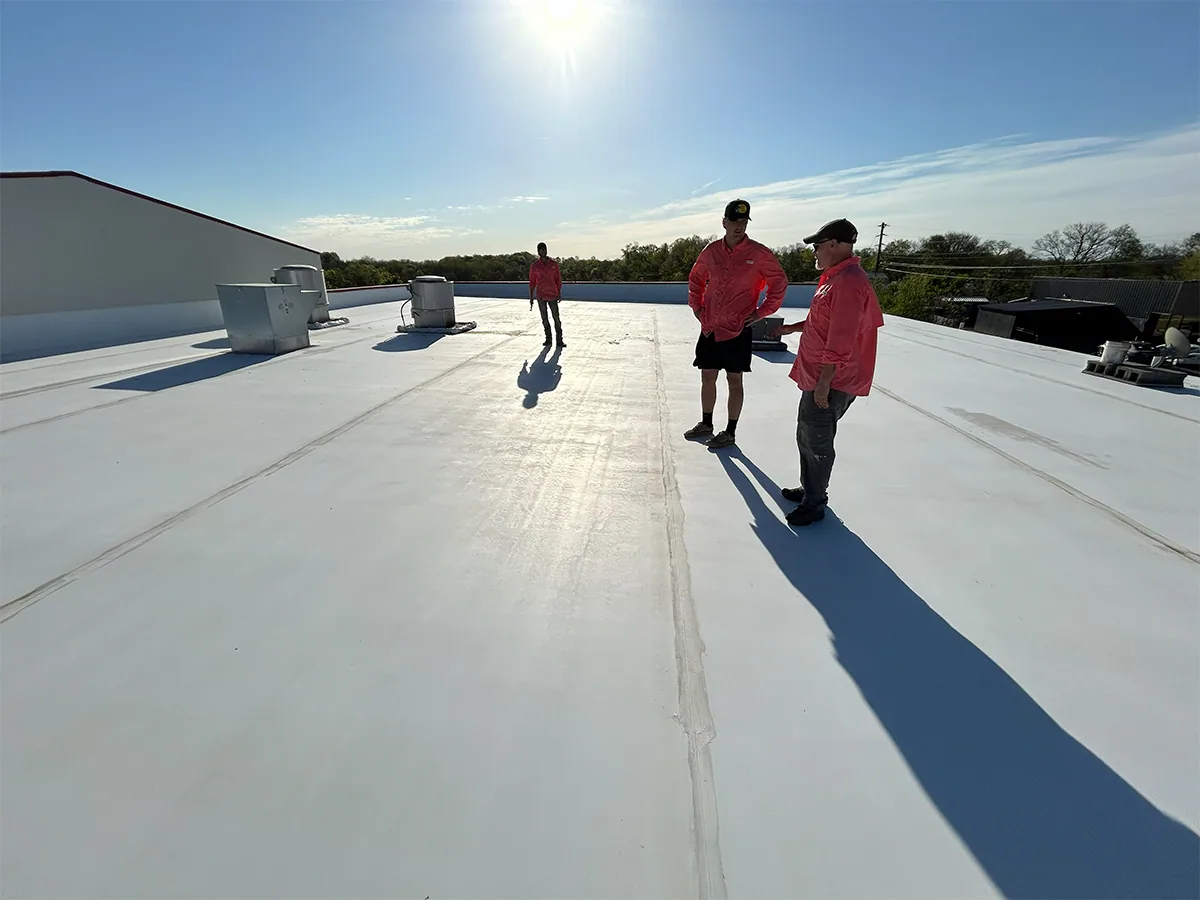
Emergency Commercial Roof Repair
Loose edge metal, a torn membrane, or a roof opening needs a safe boundary before anyone sets a repair quantity. League City observers reported gusts up to 52 mph during Hurricane Beryl, alongside more than six inches of rain at a gauge northeast of the city. In a live event, the first call is to secure access, protect people and contents, and locate the opening that can be reached safely. Our emergency line runs nights, weekends, and holidays, with temporary stabilization separated from permanent roofing work.
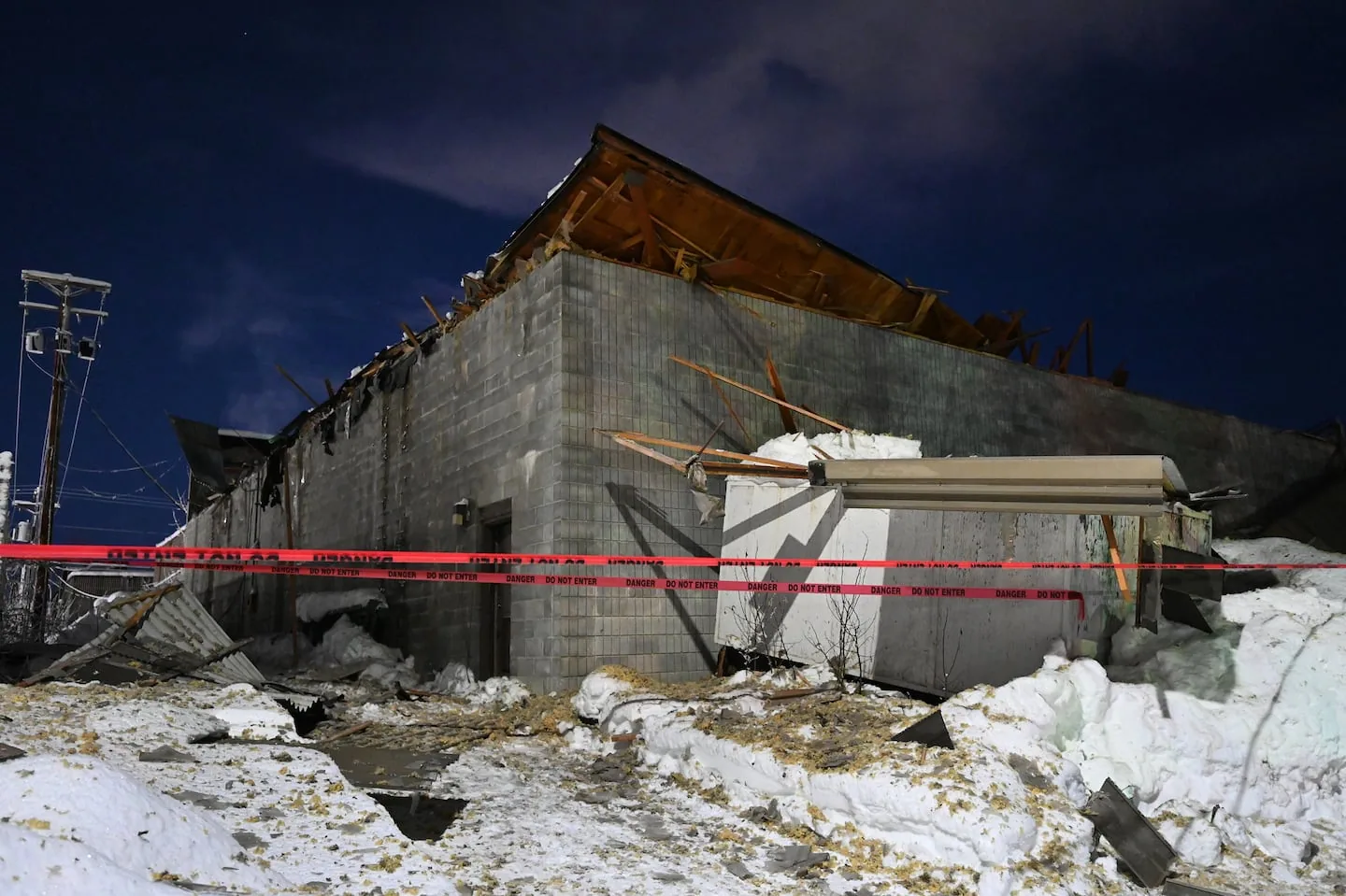
Dispatch around access and immediate hazards
We need the address, water-entry location, current access status, affected rooms, and a site contact who can release the work area. The team confirms whether emergency personnel, building staff, or utility crews have restricted any roof or interior zone. Wet electrical equipment, unstable deck, falling debris, and loose panels can keep a section off limits. The initial roof assessment records what can be seen and what must wait for a safer access window.
League City’s medical, education, retail, and industrial employers operate different buildings and hours. UTMB Health League City Campus is one local example of an active medical facility, where the property contact controls access and interior continuity. Before dispatch, the site representative identifies the crew escort, affected rooms, approved entry route, and areas that must remain open. Those decisions belong in the dispatch notes before tools or cover materials move onto the roof.
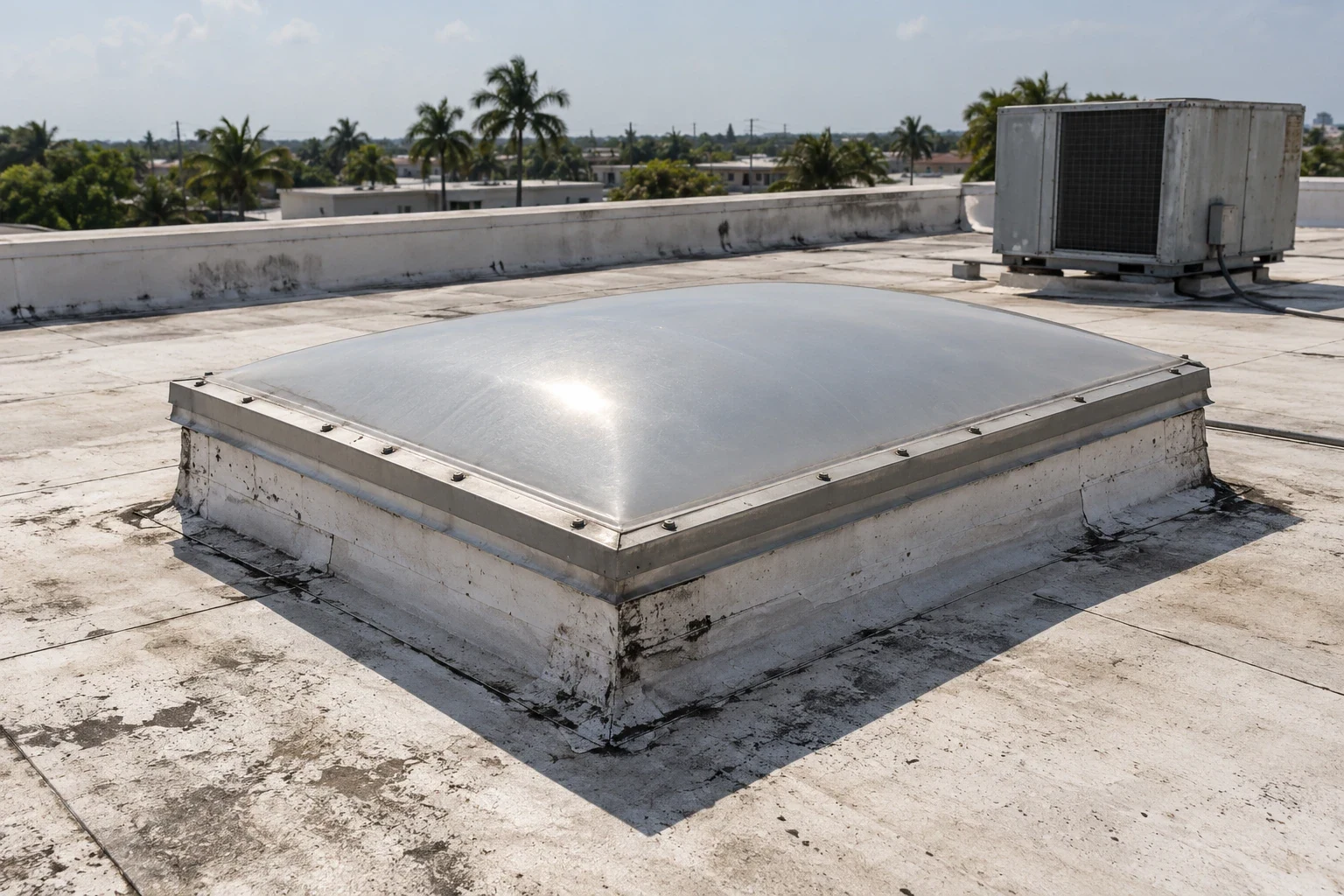
Protect occupants and exposed property
Inside, we identify the rooms, equipment, inventory, and public paths under the damaged area. The property contact directs any evacuation or restricted access; the roofing crew records the boundary and protects contents where it can be done safely. Outside, we mark falling-object areas and keep people clear of loose metal, broken skylights, or debris. A work-zone plan can coordinate temporary closures and reopening checks if the building remains in use during stabilization.
The roof opening receives only the temporary work that the assembly and conditions allow. We remove loose material when safe, place an appropriate temporary cover, and record where it is attached and what it protects. Heavy rain, saturated substrate, wind, or restricted access may limit a dry-in detail. After temporary cover, we inspect the underlying insulation and deck at approved test points and complete a permanent tie-in once the assembly is ready.
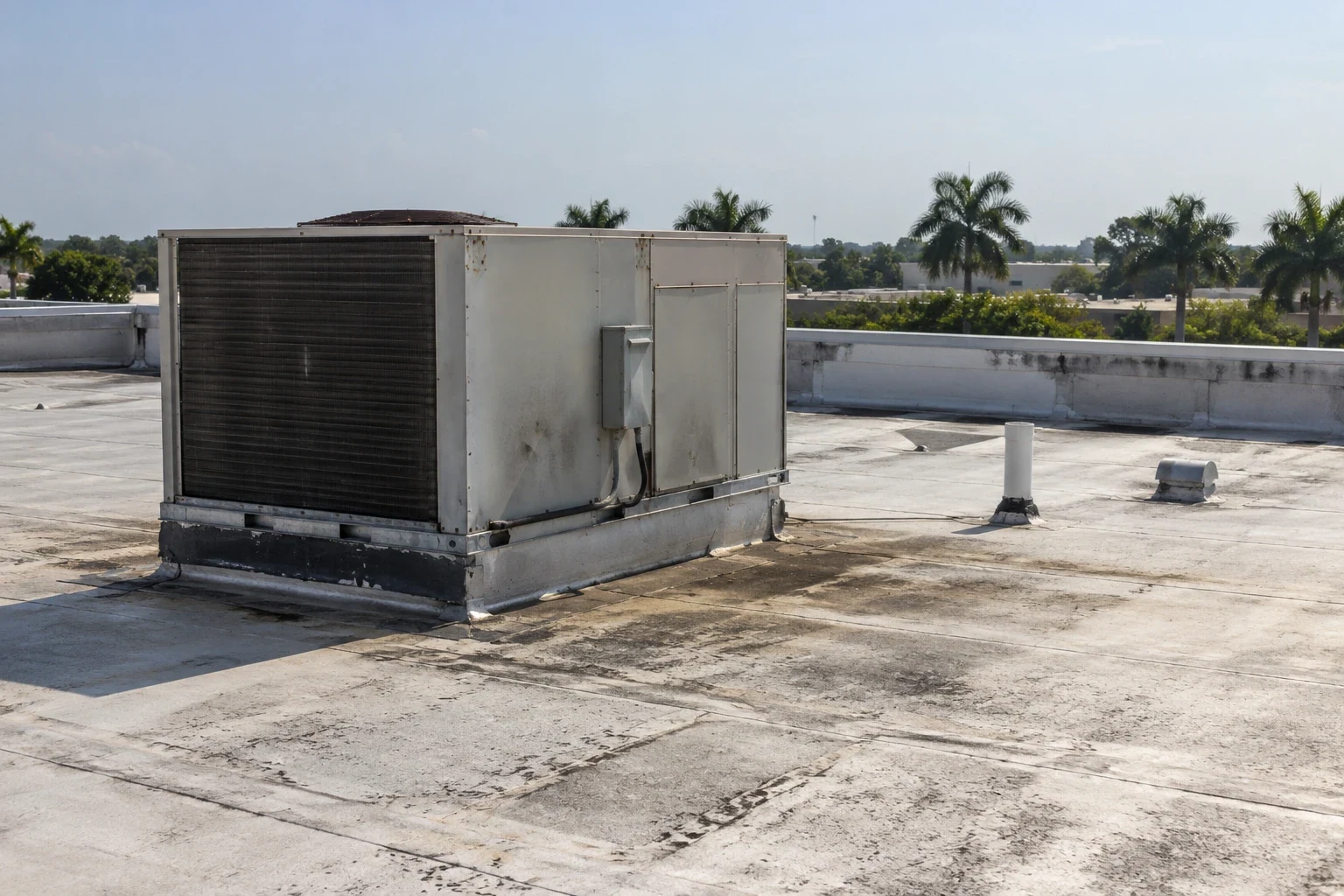
Stabilize only the section that can be secured
League City’s upper-coast setting brings tropical systems and wind-driven rain. Hurricane Beryl’s reported gusts and rainfall provide a local event reference, while the 2004 League City storm also brought damaging wind and hail. We photograph the current opening, displaced edge, puncture, or ponded area and state whether each finding is visible, tested, or still inaccessible. That makes the initial record useful for both building decisions and later repair planning.
We set a safe stopping line for each shift. The crew records what remains open, what received temporary cover, which rooms were protected, and what weather or access could affect the next visit. If the damaged edge runs into adjacent roof sections, the map shows the next area for evaluation without treating it as included work. An event damage assessment can later distinguish wind movement from older repairs or ordinary wear once close inspection is safe.
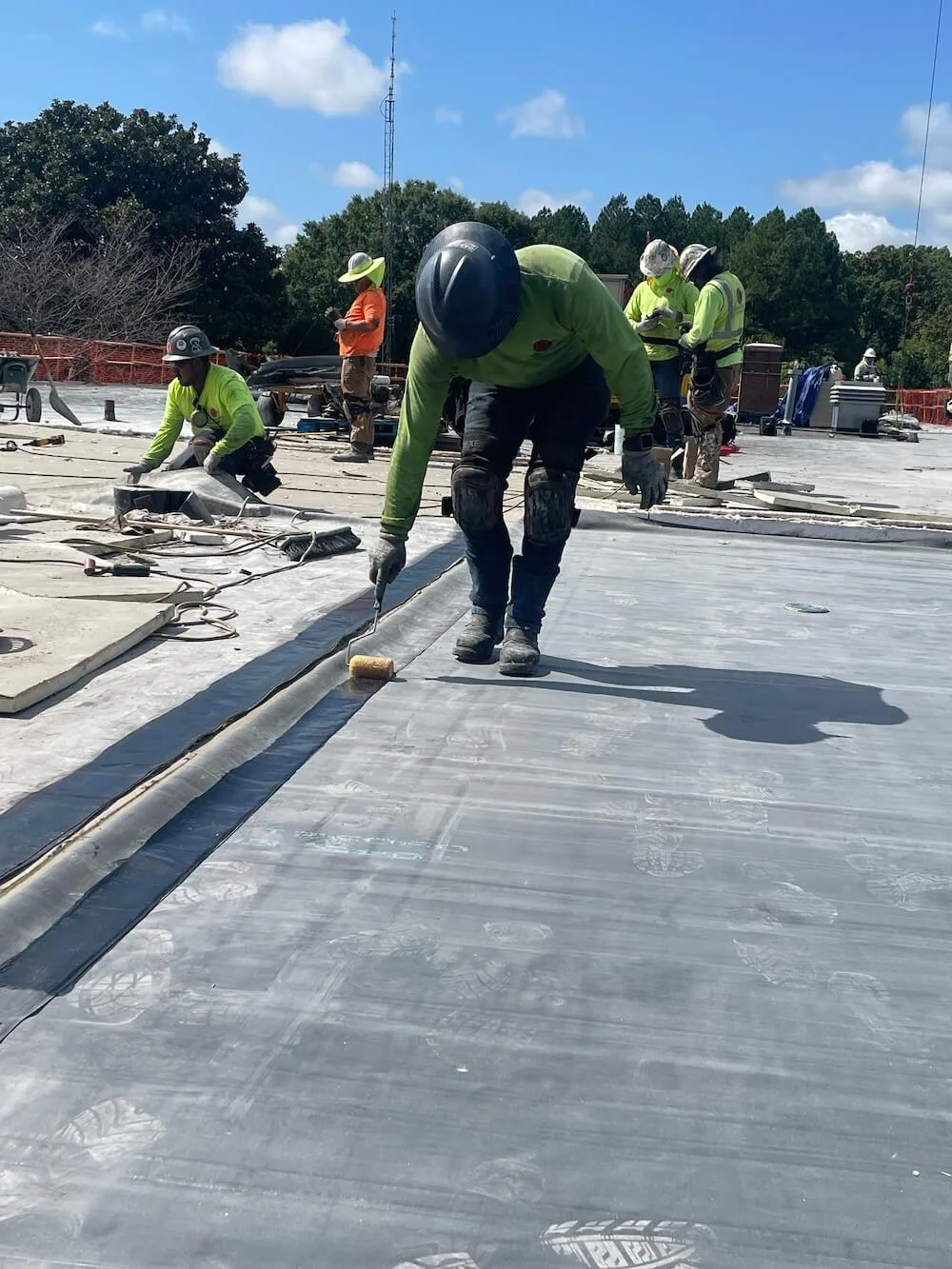
Document findings before permanent scope grows
Emergency photographs need a location and scale. We identify roof zone, opening size, nearby seam or penetration, temporary attachment, and the interior area below. When insulation appears wet, we note whether material was confirmed at a test opening or only suspected from surface conditions. An infrared survey may help target testing once safe access returns, while core cuts confirm the layer condition at selected points. Each method answers a different question.
The condition report separates stabilization from diagnostic work. It also names areas not inspected because personnel, weather, or roof condition prevented entry. For a complex roof with several elevations, drone imaging may help document broad visible conditions from above, but it does not replace hands-on confirmation of attachment, moisture, or structural stability. The owner receives a short status stating what is protected, what remains uncertain, and the next decision required.
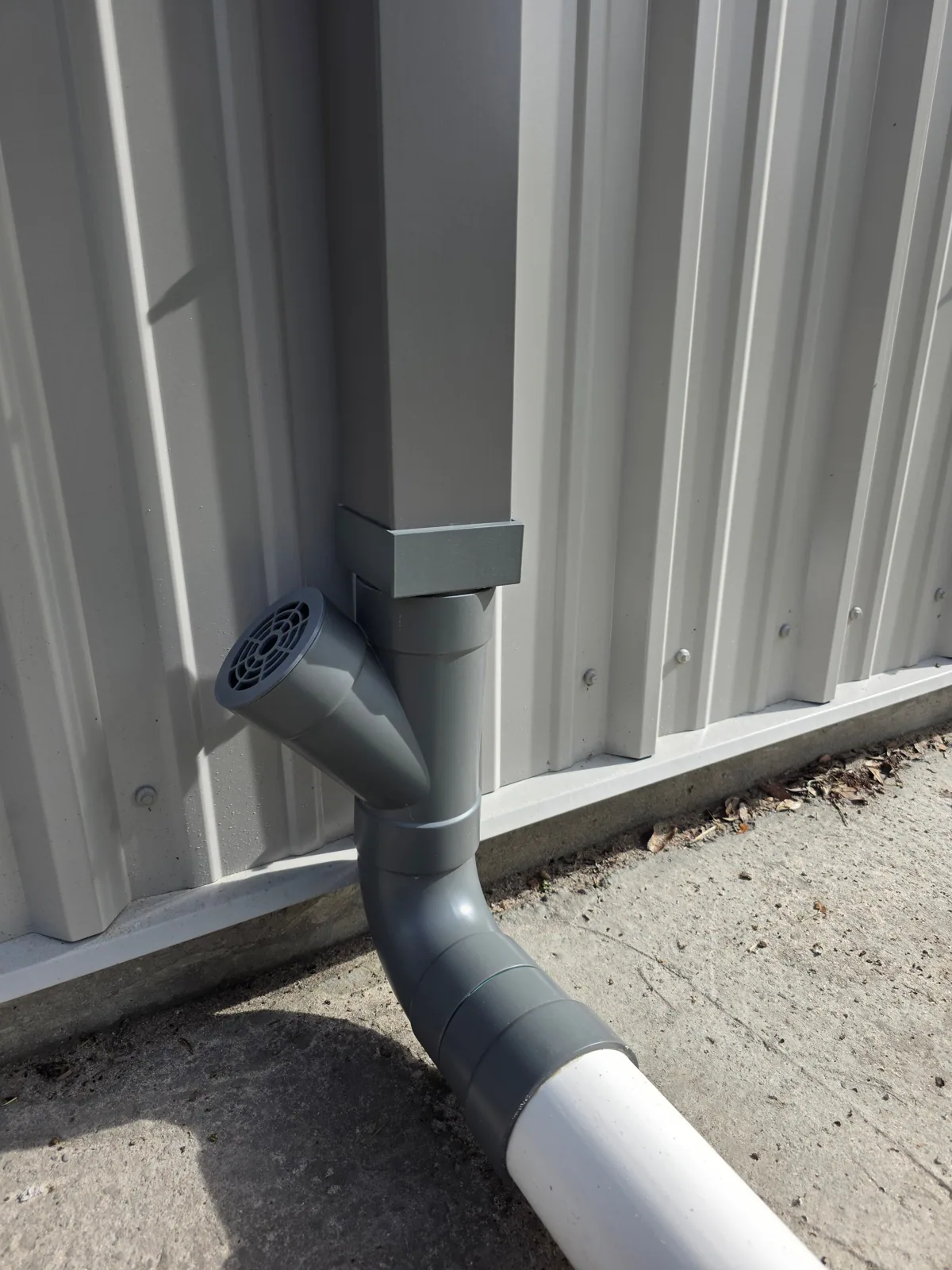
Plan the permanent repair after release
Permanent repair begins when the damaged section can be safely accessed and the surrounding assembly is ready for a reliable tie-in. We compare the opening with nearby laps, fasteners, curbs, edges, and drainage, then test any material that may need removal. The repair scope identifies compatible materials, dimensions, preparation, and closeout checks. If testing shows damage across several zones, a replacement review can compare broader work without folding it into the emergency visit.
Cost and timing depend on access, roof height, material availability, removal depth, weather, and whether the building can release enough area for a continuous tie-in. The proposal lists measured work separately from concealed conditions and states who approves any added quantity. A temporary cover remains a separate line with its attachment limits and follow-up interval. That gives facilities staff a clear record of what was done that night and what still needs permanent attention.
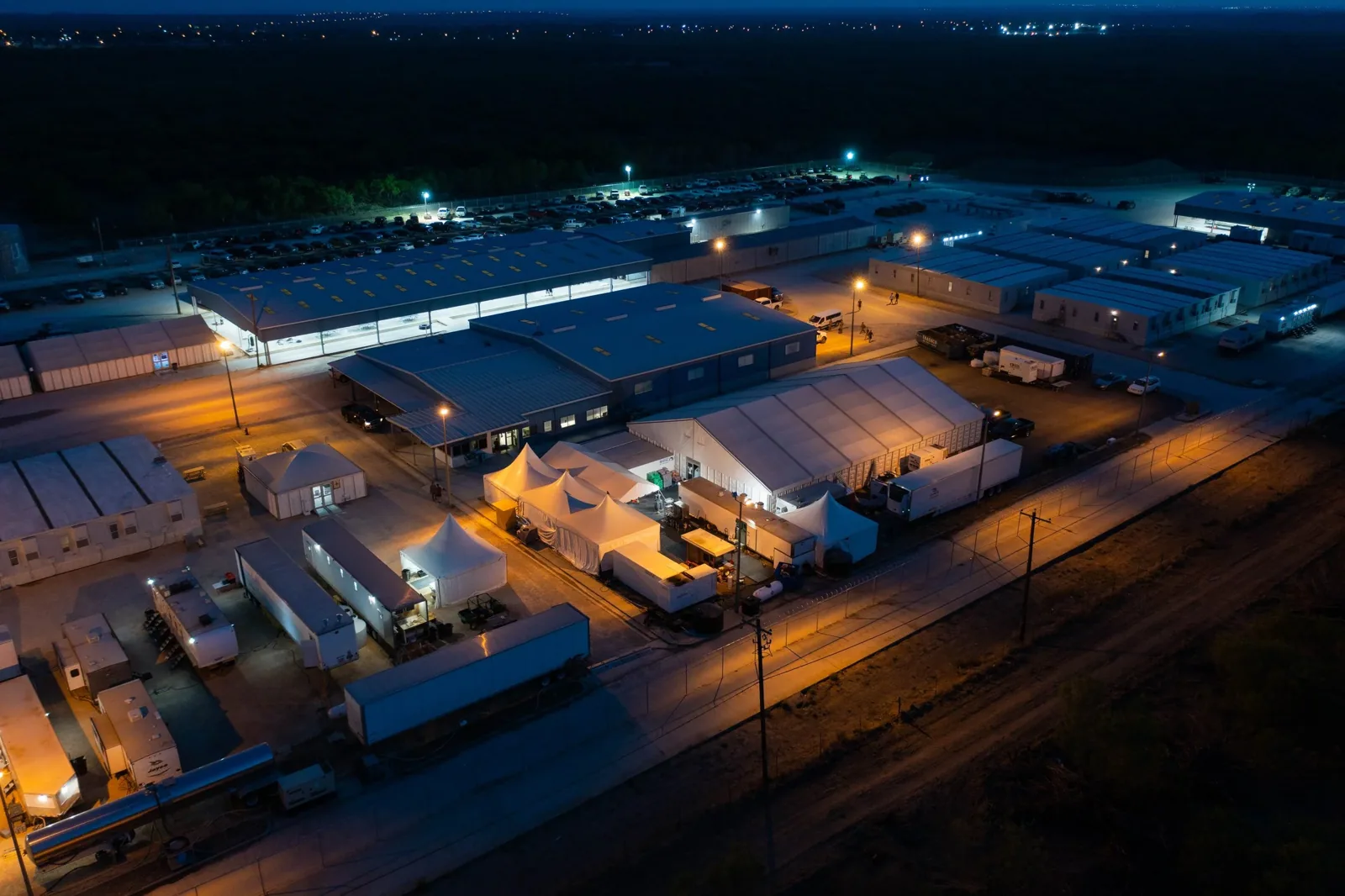
Hand off a clear condition and next step
Before leaving, we confirm which rooms can return to use, which route remains closed, where temporary protection sits, and when the owner should check it. The site contact receives photographs and a list of deferred areas. If the building needs another trade to inspect electrical, structural, or interior conditions, that coordination is stated separately. Emergency stabilization should leave the property with a known boundary and a named next action, not an assumption that a tarp closed every issue.
Call with the League City address, active leak location, access contact, affected rooms, and any known roof plan. We will coordinate the immediate response, document the safe-to-access conditions, and identify what needs testing before permanent repair. A follow-up leak trace can connect the interior report with the repaired roof zone after the property is ready for inspection.
Frequently Asked Questions
Can emergency crews come after normal business hours?
Yes. The response line is available nights, weekends, and holidays. We coordinate entry with the authorized contact and document the roof areas that are safe to reach.
Will a tarp count as a permanent roof repair?
No. Temporary cover limits immediate exposure within its attachment and weather limits. We record its boundary and return to inspect the assembly before pricing permanent work.
What information should I provide during the first call?
Give the address, water-entry point, current access status, affected rooms, site contact, and known roof records. Those details help us plan safe entry and protect the right interior area.
Can you inspect the whole roof during an emergency visit?
The first visit addresses hazards and accessible damage. Weather, roof stability, or active restrictions can limit the inspection, so the closeout identifies areas for a later safe return.
How do you decide whether the building can reopen?
The property representative controls building use. We report completed protection, known hazards, and areas that remain restricted so the owner can make that decision with the right parties.