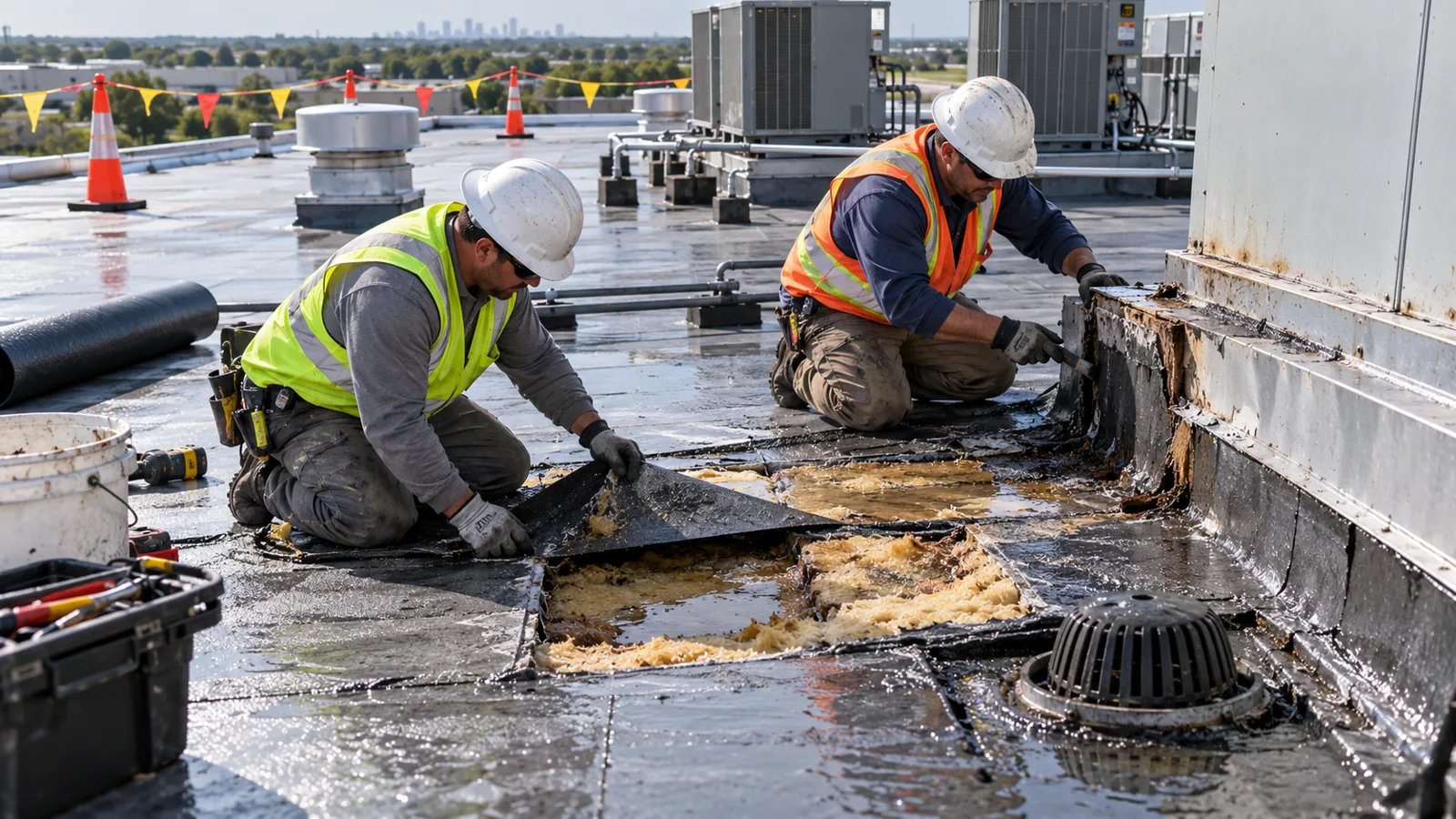
Commercial Roof Flashing Failure Repair
A roof leak at a wall, curb, or equipment base often turns on a small flashing detail that has to manage movement and wind-driven rain. League City lies on the upper Texas coast, where tropical weather can test parapets, metal edges, and roof-to-wall transitions. We inspect the named junction, compare it with the interior water path, and define whether the correction belongs to roofing alone or needs another trade before any metal or membrane is removed.
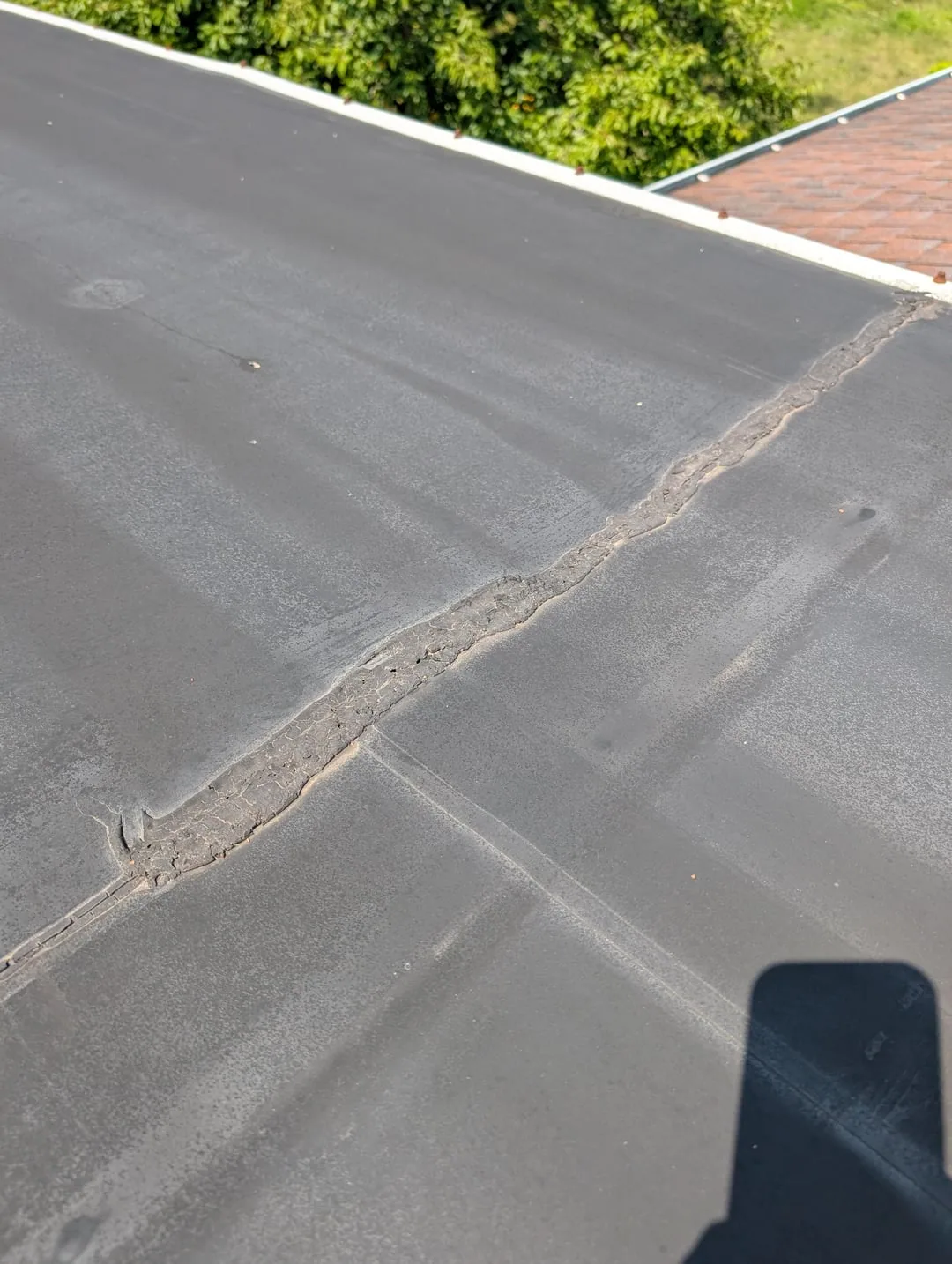
Find the transition that no longer sheds water
We inspect counterflashing, base flashing, reglets, terminations, curb corners, pipe boots, and roof-to-wall connections. A sealant bead can hide an open lap, loose metal, or a membrane edge that has moved. We photograph the detail from more than one angle and note how the roof assembly meets the wall, equipment, or drain. A commercial roof inspection can mark the transition and identify what can be repaired from the surface.
Water can travel along a deck, insulation joint, or wall cavity before staining an interior finish. We compare the reported leak with roof slopes and adjacent penetrations, then identify any test needed to confirm the entry. If the existing flashing is concealed by another trade's cladding or equipment, the scope calls out the access dependency. A seam-failure review can distinguish a split membrane lap from a wall-transition defect when both appear nearby.
League City's regional tropical climatology includes Ike, Harvey, and Beryl. Those storms are context for inspection, not proof that a particular flashing failed. We check for separation, corrosion, fastener movement, cracked sealant, and damage to the substrate at the actual property. The Texas City port district provides industrial and waterfront context, but access and repair-material decisions depend on the specific property and roof details.
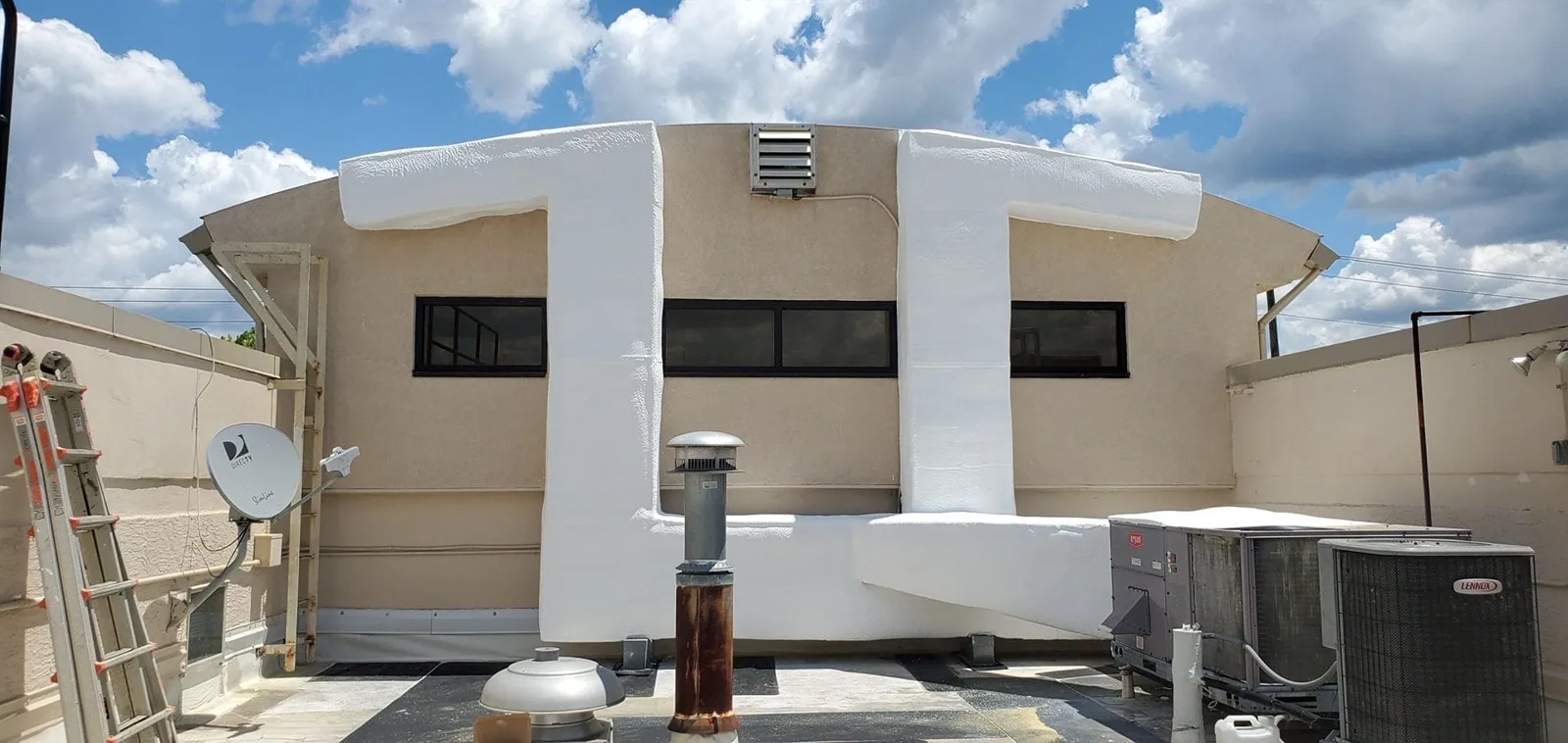
Assign each part of the repair detail
A flashing repair may require roofer work, wall work, mechanical access, or a structural review. Before starting, we identify who removes and reinstalls cladding, disconnects equipment, or approves a new opening. The roof scope sets the limits of our work and the tie-in detail, while the owner or general contractor coordinates adjacent trades. This keeps a roofing repair from being treated as authority to alter wall systems, wiring, or equipment supports.
For an occupied building, the contact identifies rooms or equipment below the work, access routes, and times when a lift or ladder can be set. Temporary protection covers the roof opening before the crew leaves. A phased occupied-building sequence can align access and dry-in checks with the tenant schedule. When loose edge metal appears with a flashing failure, a wind-related detail review can record those separate conditions.
League City reported gusts up to 52 mph during Hurricane Beryl in 2024. The reported number is an event measurement and does not establish damage at a building. It does make the repair detail's attachment and temporary cover relevant during scheduling. We compare forecast conditions with the available work window and secure any exposed section before another weather shift.
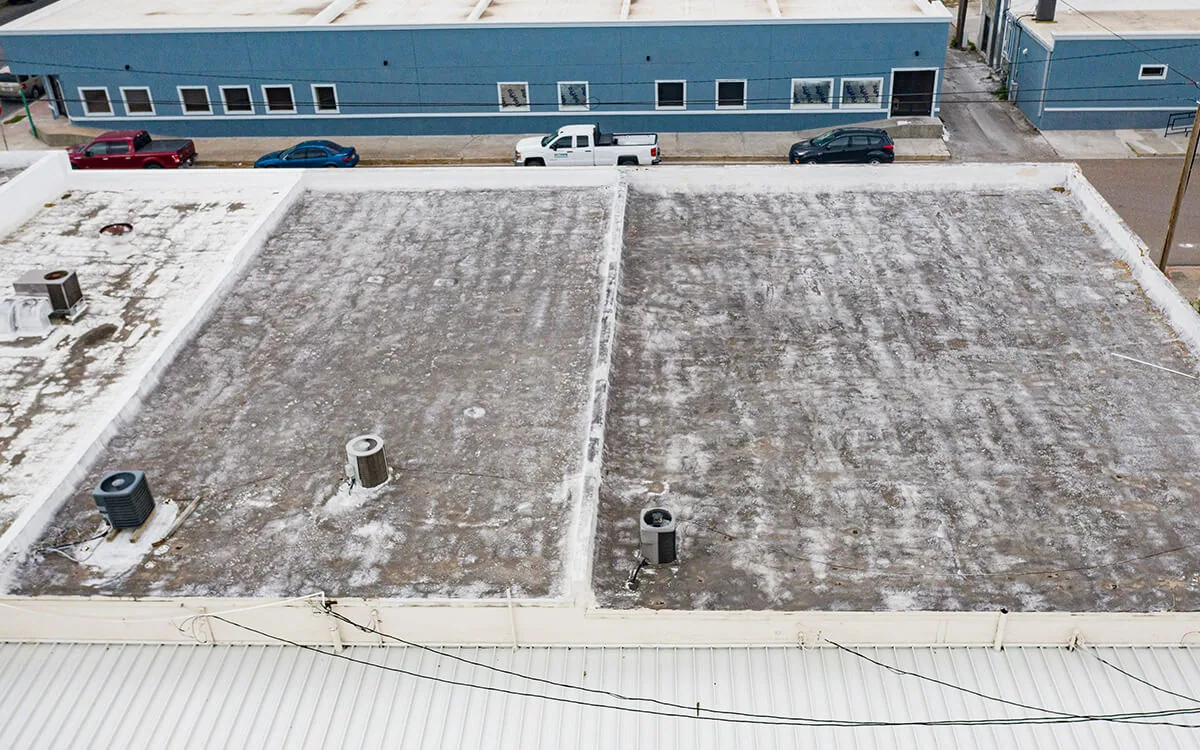
Repair the detail without hiding the assembly
A localized repair may involve new compatible membrane, formed metal, counterflashing, fasteners, or sealant, depending on the existing roof and wall detail. We remove only what is needed to inspect and rebuild the failed transition. If the substrate is wet, corroded, or unstable, the report describes the finding and pauses for approval before the work expands. A commercial repair proposal should state preparation, materials, attachment, termination, and the final water-shedding check.
Coating over a loose flashing edge is not a substitute for correcting its attachment. Recover or replacement scope may need to carry the transition into a larger roof area, particularly where multiple details have moved or repeated patches are present. The proposal separates confirmed work from test-dependent removal and identifies any wall repair assigned to another trade. The owner can then compare a contained repair with broader renewal.
Different wall and curb conditions require different terminations. A formed metal counterflashing may lap over base flashing, while a membrane transition needs a compatible bonded or mechanically secured edge. We confirm which detail is present rather than carrying a standard sketch to every property. If the existing metal cannot be reused, fabrication and attachment must match the approved transition and leave the water path directed outward.
Price depends on height, access, metal fabrication, roof assembly, cladding removal, equipment clearance, testing, and the amount of material needed to tie into sound work. Schedule also changes if the wall system or mechanical equipment must be released by another contractor. We identify those dependencies before mobilization so a short repair does not start without the people or approvals needed to finish it.
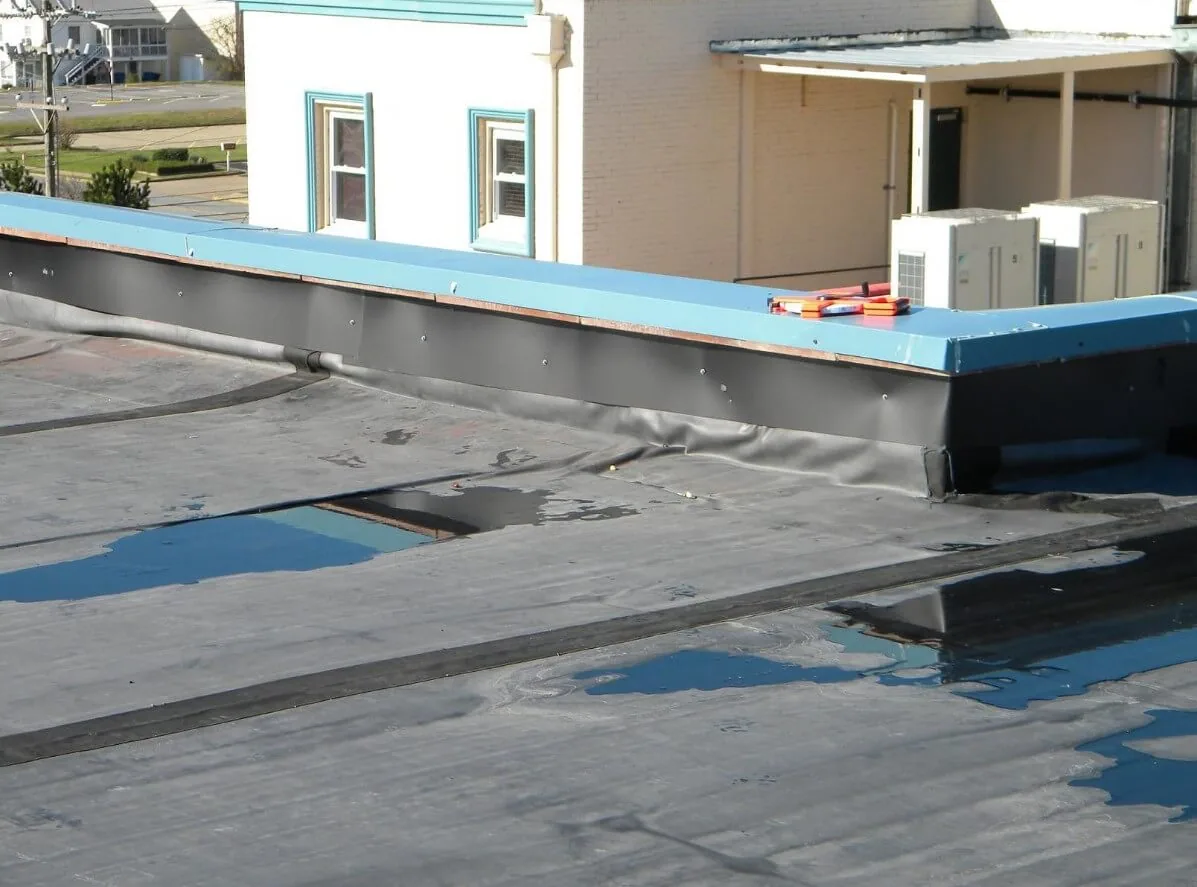
Document the completed junction
Closeout photographs should show the repaired flashing, its tie-in to the roof, adjacent wall or curb, and the repaired area after tools are removed. We record the materials, preparation, fasteners, tested locations, and any condition left for another trade. The closeout identifies the exact wall or curb transition for future comparison. A roof condition report can retain the detail for later inspections and planned maintenance.
The Texas City port channel links Galveston Bay with the Gulf and its district includes warehouses, rail, oil, and chemical docks. That regional industrial setting is useful context for planning roof access and delivery routes, not a claim about a specific property's exposure. A Texas City port-area assessment starts with the requested building and its current roof details.
Send the address, roof and wall drawings, leak location, photos, and access requirements. We will identify the flashing transition, note testing or trade dependencies, and return a defined repair scope. If several similar details appear, each receives a separate mark so the owner can see where the work starts and ends.
Frequently Asked Questions
What roof details are considered flashing?
Flashing includes transitions at walls, curbs, penetrations, drains, and terminations where roofing meets another surface. We identify the exact detail and assembly before selecting a repair method.
Can sealant alone fix a leaking wall transition?
It may be part of the repair, but it cannot replace loose metal, an open lap, or a failed substrate. We inspect the attachment and water path before specifying preparation and materials.
How do you find the entry point when water travels inside?
We compare the interior report with nearby seams, slopes, curbs, and wall connections. If the detail remains concealed, we identify a test opening and request approval before removal.
What if another trade owns the wall or equipment?
The scope records the roofing boundary and names the access or handoff needed from that trade. We do not alter adjacent systems until the owner or general contractor approves the sequence.
What should be in flashing repair closeout?
Keep before-and-after photos, material details, fastener or termination notes, tested locations, and any remaining wall or equipment work with the building record.