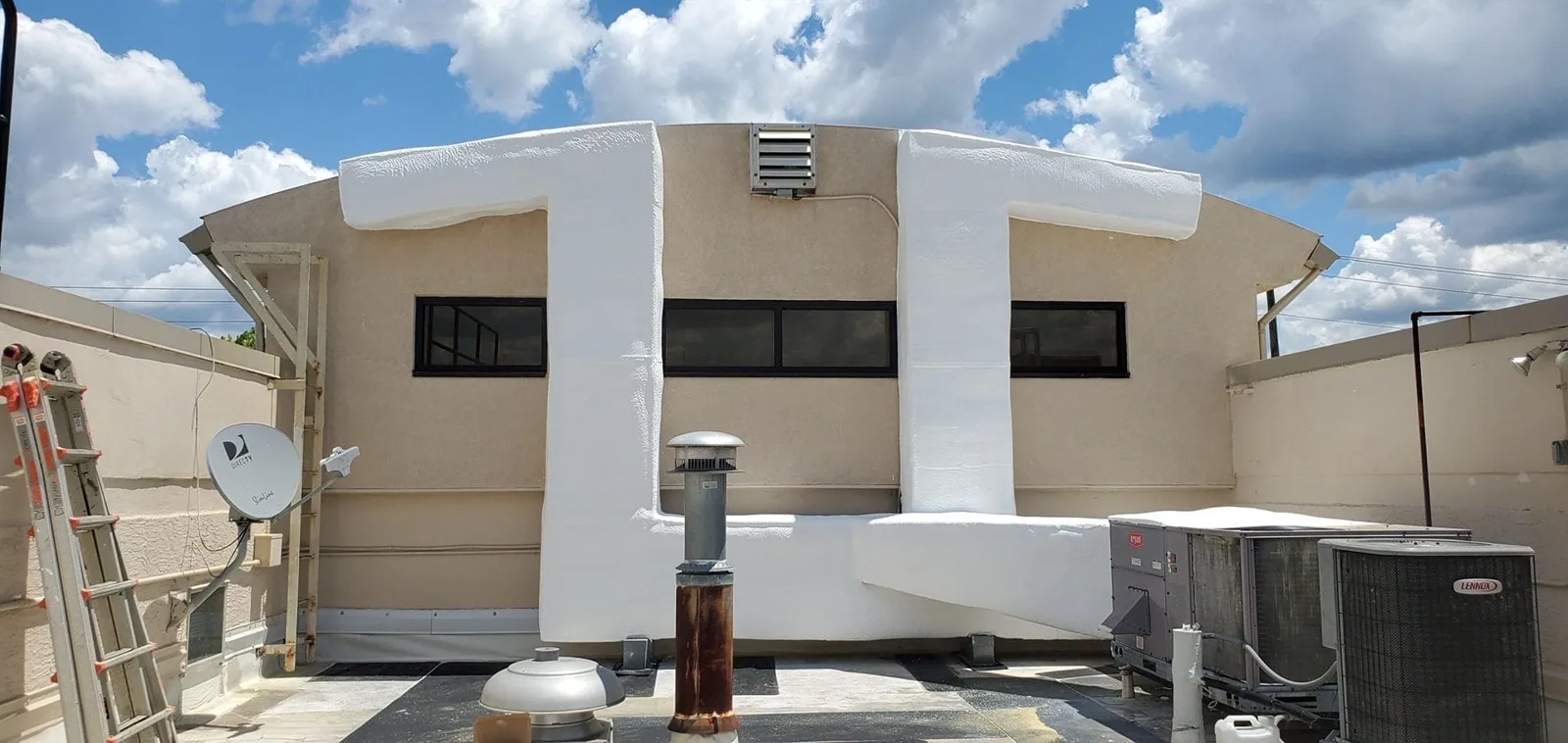
Commercial Hail Damage Roof Repair
After hail passes, the roof check should distinguish a mark on the surface from a defect that affects water control or attachment. A severe-weather event in League City in October 2004 included golf-ball-size hail, damaging wind, an F0 tornado, and roof damage in the area. That history makes a local post-storm inspection relevant, but it does not establish damage at any present-day property. We identify the roof system, photograph affected zones, and separate visible impacts from conditions that need testing.
Read impact marks by roofing material
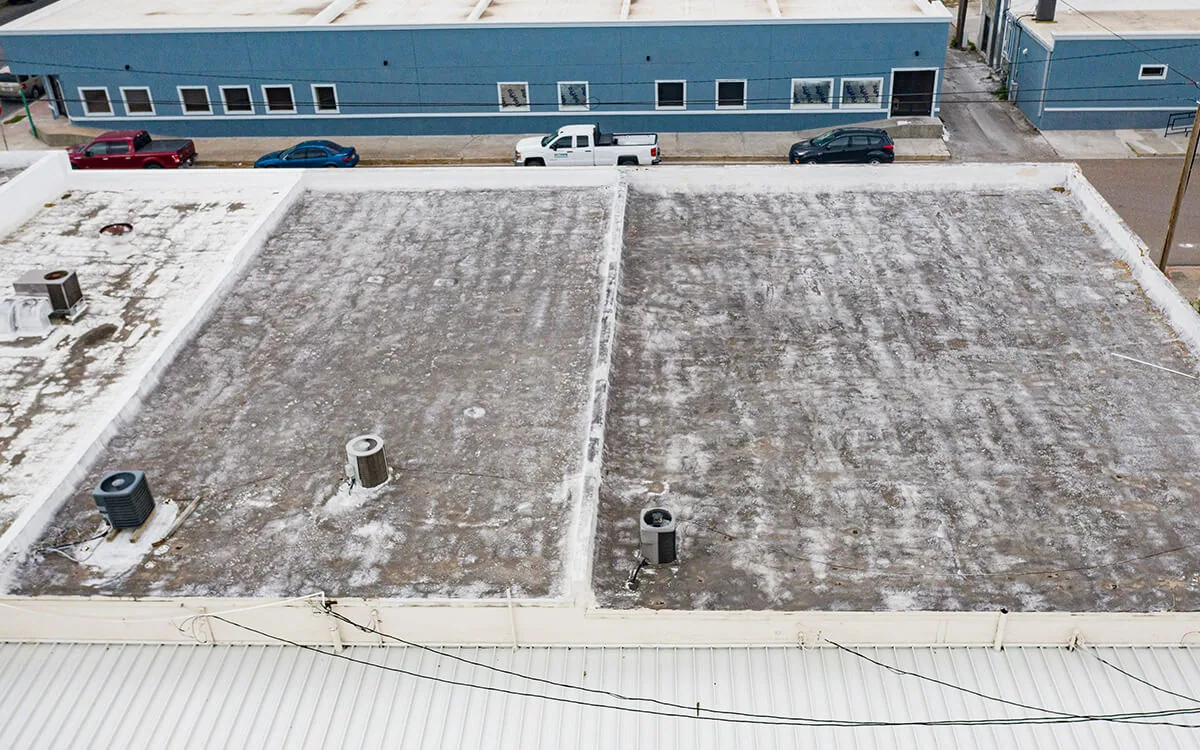
On a metal roof, we inspect panel dents, seams, fasteners, coatings, ridge details, and edge attachment. On a low-slope membrane, the review covers punctures, splits, displaced seams, damaged flashings, and impacts near curbs or drains. Coated or surfaced systems may show impact marks that require a closer look before the owner decides whether repair is needed. A commercial roof inspection can map the locations, photograph the surface, and record areas hidden from safe access.
Interior stains, debris, and reported leaks are compared with roof slope and nearby details; they are not treated as proof that every marked area is open. Infrared readings may help select a test location, but a thermal pattern alone does not confirm wet insulation. We state what was observed, what was tested, and what remains unknown. A selective opening needs an owner-approved location and protection plan before removal starts.
Victory Lakes Town Center sits at I-45 and FM 646, while UTMB maintains a separate medical campus in League City. Those local properties illustrate distinct operating settings, not known hail impact. A Victory Lakes roof survey would begin with the requested building and its access contact, even when hail reports prompt multiple tenants to call at once.
Protect exposed sections while evidence is gathered
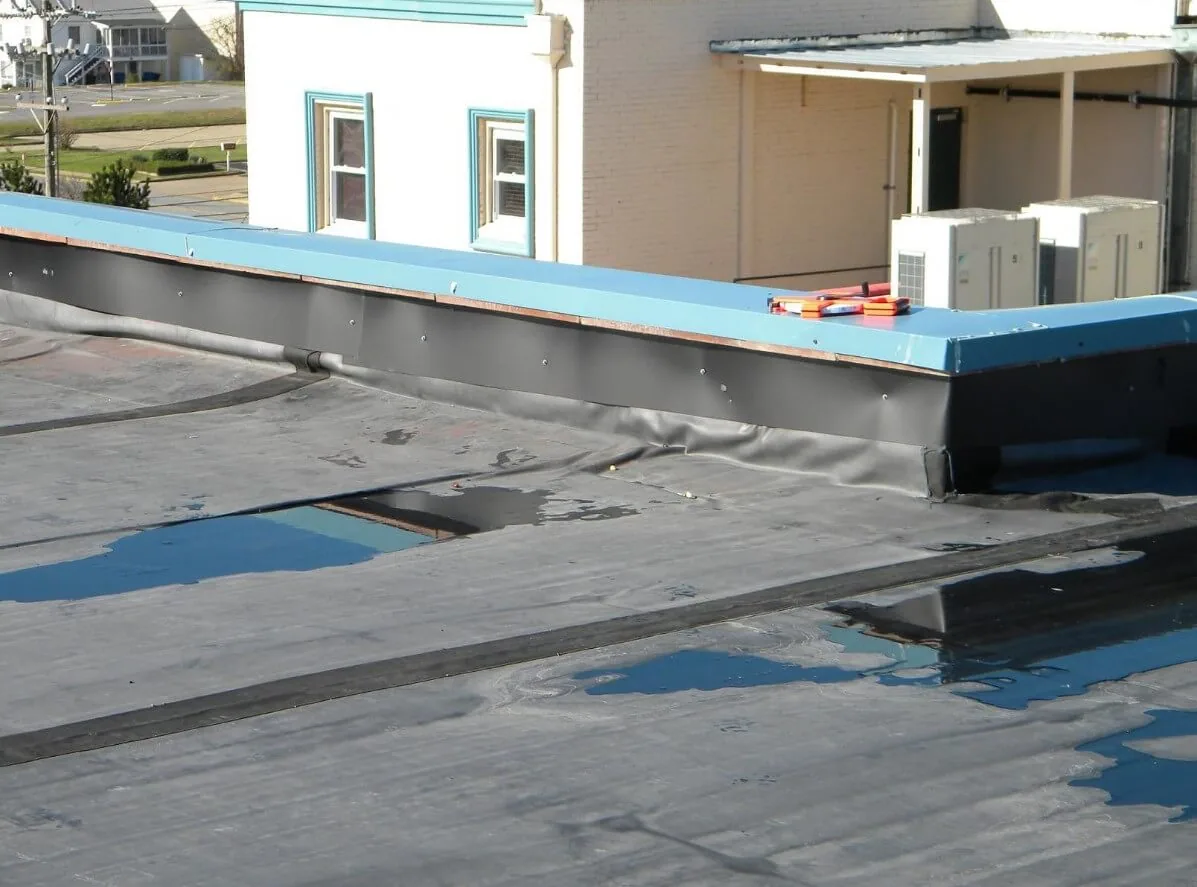
If hail punctured a membrane or opened a flashing detail, the immediate task may be temporary water control. We identify the exposed location, cover method, area below, and next check before leaving. On an occupied building, the manager sets access, interior protection, and any temporary closure. A 24-hour emergency roof response can stabilize a leak after hours or during a holiday when the site is safe and access is released.
We keep temporary protection separate from the permanent repair. If a puncture appears near foot traffic, equipment, or loose material, a membrane puncture review can determine whether the affected spot needs a compatible patch and whether nearby material was also disturbed. If wind moved perimeter metal during the same event, a wind-damage inspection records that issue as a separate roof detail.
Weather conditions influence when the surface can be prepared and sealed. The roof must be dry enough for the selected material and protected before another storm. We set an opening limit, monitor the forecast, and document which sections are complete versus deferred. The owner receives a clear status for every affected zone rather than a single statement that the roof is repaired.
Measure repair needs without overcounting
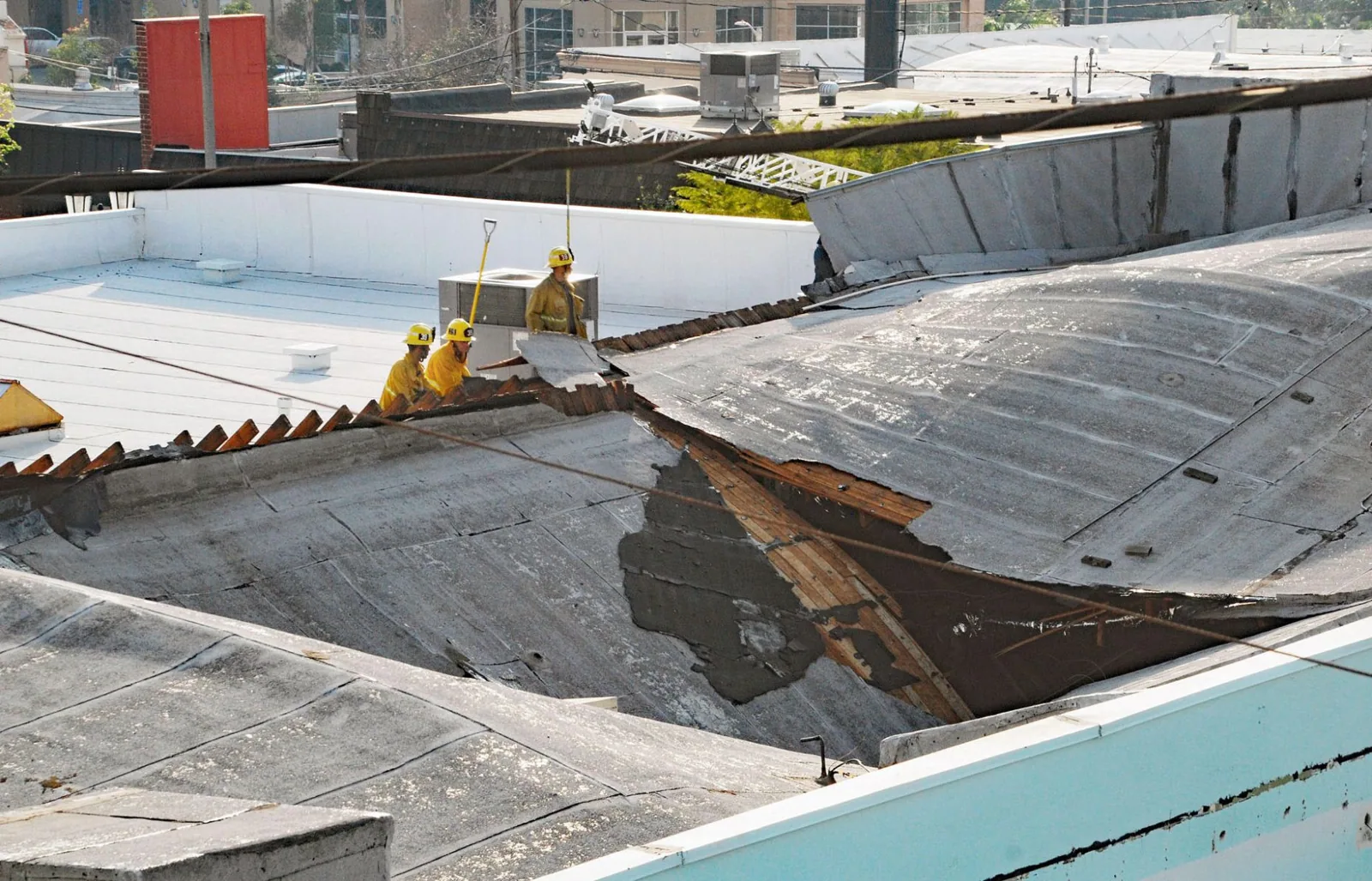
A small puncture or broken flashing may be repairable if adjacent material remains intact and compatible. Multiple impacts, broad coating fracture, damaged attachment, or confirmed wet insulation may justify a wider review. We define each repair boundary and list test-dependent removal separately. A measured hail repair scope can identify preparation, materials, tie-ins, and the field check without implying that all visible marks need replacement.
We also separate impact observations from conclusions about hidden layers. A dent in a metal panel may be cosmetic, while a torn coating, loosened fastener, split seam, or displaced flashing can change the water path. On a membrane roof, the inspector checks whether an impact reaches the reinforcement or substrate and whether nearby seams remain bonded. Where the surface alone cannot answer that question, the report identifies a test location and the access needed to examine it. This keeps a repair allowance tied to evidence instead of counting every visible mark as a replacement area.
For multi-tenant sites, the inspection record should map each affected roof zone to the space below it. That lets the manager prioritize active leaks, protect inventory or equipment, and schedule follow-up without treating every tenant report as the same condition. We note any temporary protection separately from permanent work and document what still needs verification after the roof dries.
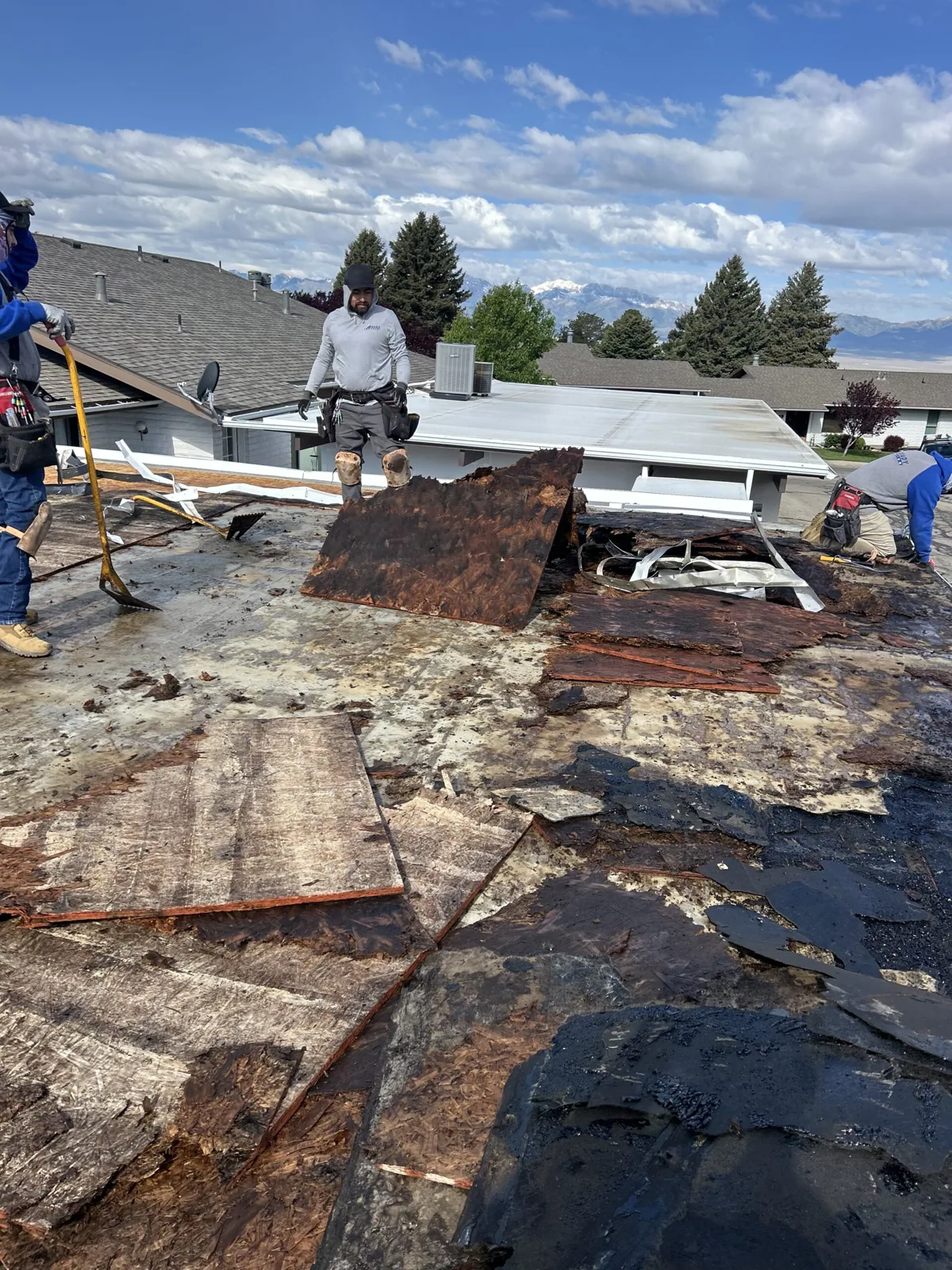
Recover, coating, and replacement options need an assembly review. A new surface cannot correct wet insulation or a loose edge. If replacement is proposed, the scope lists tear-off, insulation, perimeter details, equipment protection, disposal, and temporary cover. The proposal also notes whether hail-related work shares access or sequencing with other repairs.
Cost and schedule depend on roof material, number of test areas, height, access, staging, repair length, material availability, and work windows. For claim documentation, we can provide dated images, marked roof zones, and measured work areas. A roof claim record supports the owner's review, but coverage and settlement remain decisions for the insurer and policyholder.
Preserve the inspection trail
Closeout should show the original impact area, test location, repair materials, and final condition. We can include a roof map, photos, inspection date, temporary measures, and open questions. A photo-based roof report can help the facilities team compare future inspections and avoid confusing an old mark with a new defect.
League City's regional economy includes retail, health, petrochemical, education, and public-sector activity. Each building's roof assembly and operating restrictions still need to be confirmed individually. A Texas City industrial-area inspection concerns a different location and owner; its findings should stay separate from a League City property file.
Send the address, event date, roof plans, leak history, photographs, and access rules. We will identify visible impact, testing needs, and repair limits, then return a scope the owner can compare with available records. If multiple buildings are involved, each receives its own photos and decision log.
Frequently Asked Questions
Does every hail mark mean the commercial roof needs repair?
No. We inspect whether the mark affects membrane continuity, coating, fasteners, flashing, or water control. The report separates surface observations from defects that require repair or testing.
How do you inspect hail damage on a metal roof?
We check panel dents, seams, fasteners, edge attachment, coating, and penetrations. The detail and roof assembly determine whether a mark is cosmetic or affects a functional connection.
Can hail damage be documented for an insurance review?
We can provide dated photographs, measured repair locations, inspection notes, and test results. Those records describe roof conditions but do not decide policy coverage.
What if the roof is leaking after the storm?
We coordinate safe access, protect the interior, and identify a temporary water-control step. Permanent repair follows after the roof system and concealed conditions are reviewed.
How soon should the roof be checked after hail?
Schedule an inspection when access is safe and practical, especially if leaks or displaced components appear. We record the visit date and conditions so later decisions have a clear reference point.