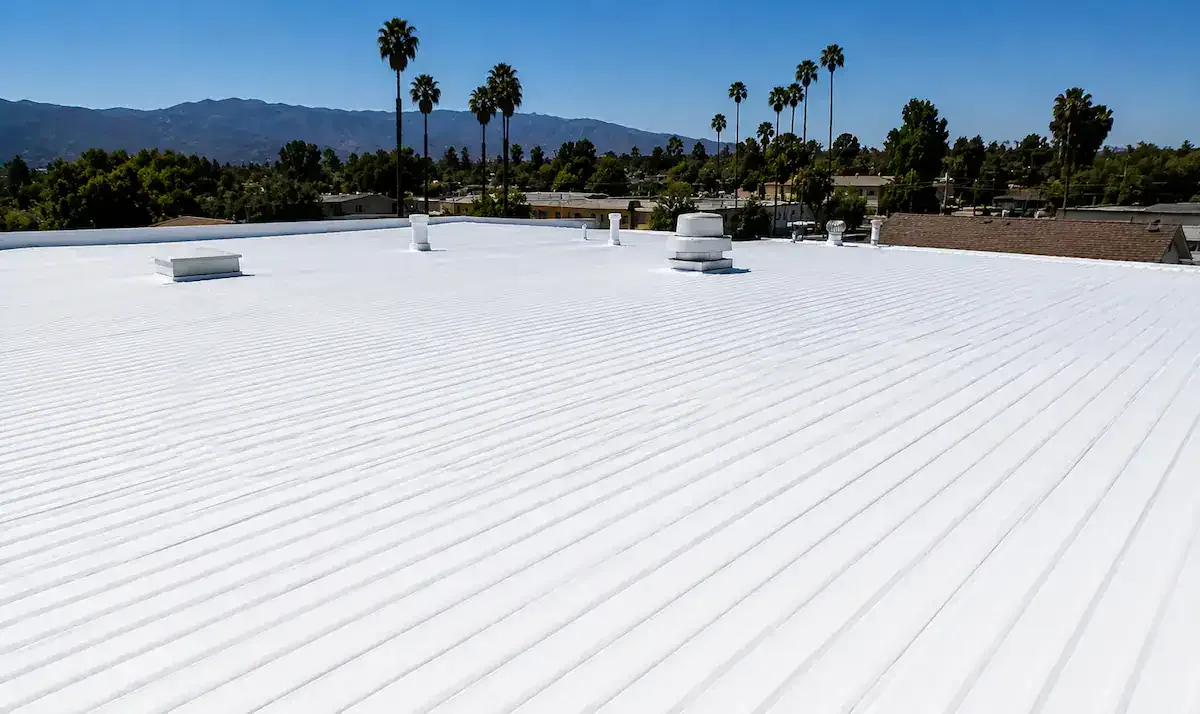
PVC Commercial Roofing
Cooking exhaust, rooftop equipment, and a poorly prepared seam can change how a single-ply roof performs. PVC is a thermoplastic membrane with heat-welded seams, and the full assembly has to match the building’s exposure and use. In League City, restaurants, medical facilities, and industrial properties share the same service market but require different roof details. Pinnacle Park includes restaurant and retail tenants, a useful local example of mixed commercial uses without implying a particular roof system at any tenant.
Select PVC for the assembly and exposure
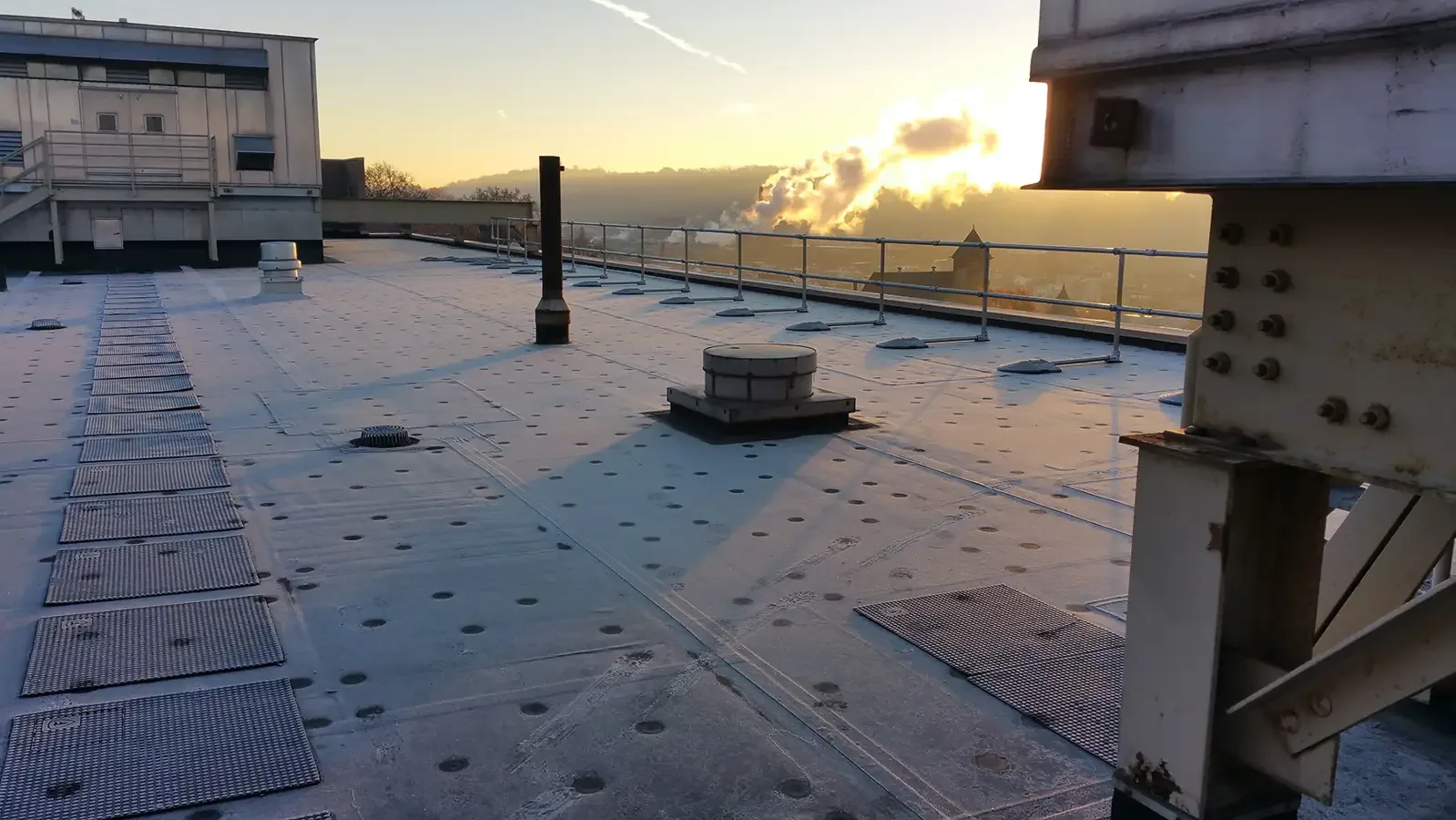
PVC membranes are selected for their material properties, seam welding, and compatibility with the roof’s expected exposure. We identify the manufacturer’s specified membrane, reinforcement, attachment, insulation, cover board, and flashing accessories as a complete assembly. A TPO option or KEE membrane can be compared where project requirements differ. We do not pick a product from a material name alone; the roof plan, conditions, and documents control the comparison.
Commercial kitchens and process areas may exhaust oils, grease, or chemicals toward rooftop surfaces. The owner identifies the equipment and maintenance history, and we locate exhaust discharge against seams, curbs, and drains. In the Texas City industrial and port district, petrochemical, refining, distribution, and marine operations form part of the regional business context. Those industries make exposure review relevant, but each building’s actual process and roof condition must be confirmed at the site.
Inspect the substrate and existing details
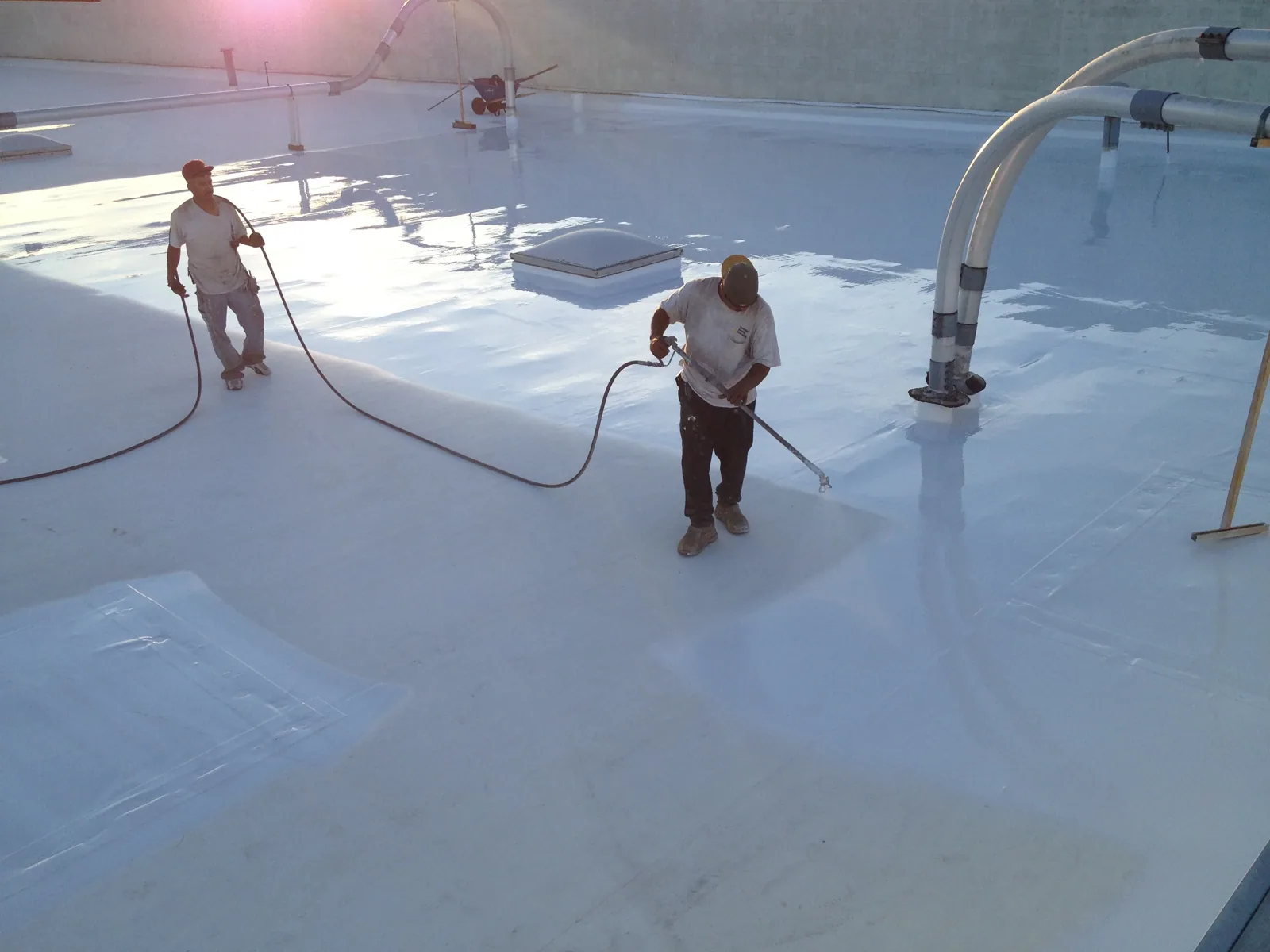
We record the existing membrane or metal, roof layers, slope, drainage, curbs, penetrations, edge metal, and earlier repairs. At a leak, we trace the water path and test seams or flashings near the report before pricing a PVC replacement. A hands-on inspection maps visible conditions by zone and identifies areas blocked by equipment. If moisture is suspected, core samples can confirm the insulation and deck at selected points, while an infrared scan helps target those tests.
Old sealant or an incompatible patch can interfere with a welded tie-in. We identify the material and prepare the surface according to the selected system instructions. Where the existing assembly is uneven or contaminated, the work plan may need removal or additional preparation before welding. The estimate distinguishes a confirmed repair area from concealed insulation or deck conditions that need an opening and an owner approval.
Prepare and test the welded seams
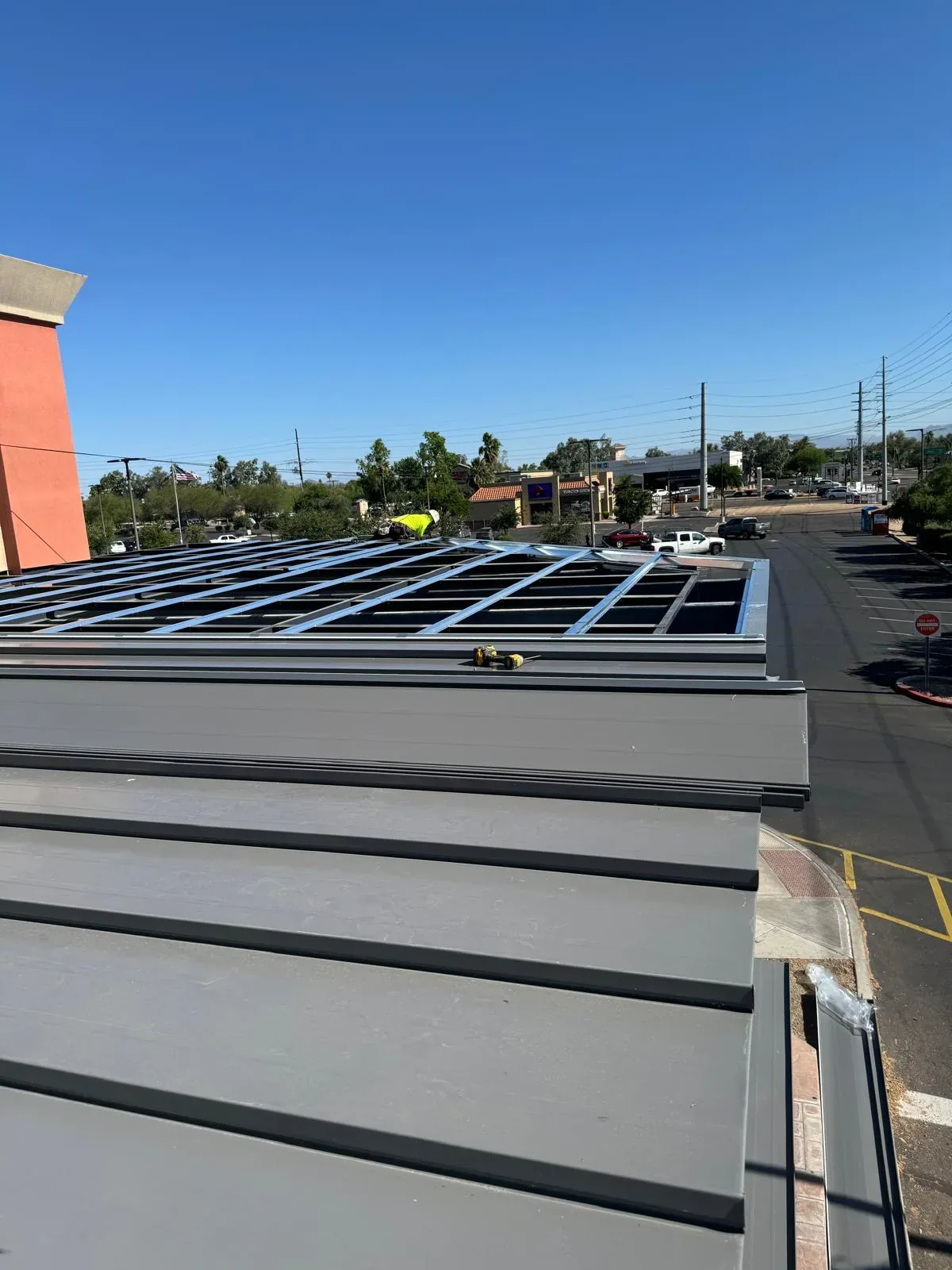
Reliable PVC seams need clean, dry contact surfaces and an appropriate welding temperature, speed, and pressure for the material and field conditions. We make trial welds when specified, allow them to cool, and verify the result before production work advances. The crew checks seam edges, corners, patches, and membrane-to-flashing transitions as it proceeds. A localized repair follows the same care at a small detail, with dimensions and closeout checks recorded for the owner.
Wind uplift, roof height, deck, and perimeter exposure influence the attachment design. League City’s commercial plan review includes wind criteria, while the responsible design professional establishes the project values and assembly. We identify attachment zones, fastening or adhesive method, and edge details before material is ordered. The roof system may change at parapets, gutters, canopies, or adjacent sections, so each transition appears on the plan rather than being treated as a field improvisation.
Coordinate exhaust, curbs, and drainage
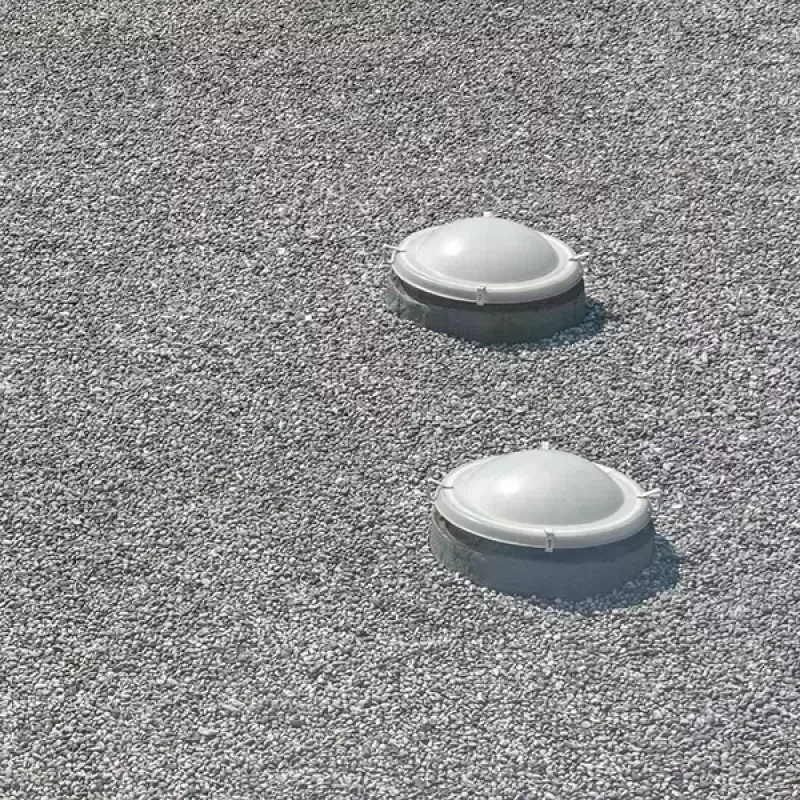
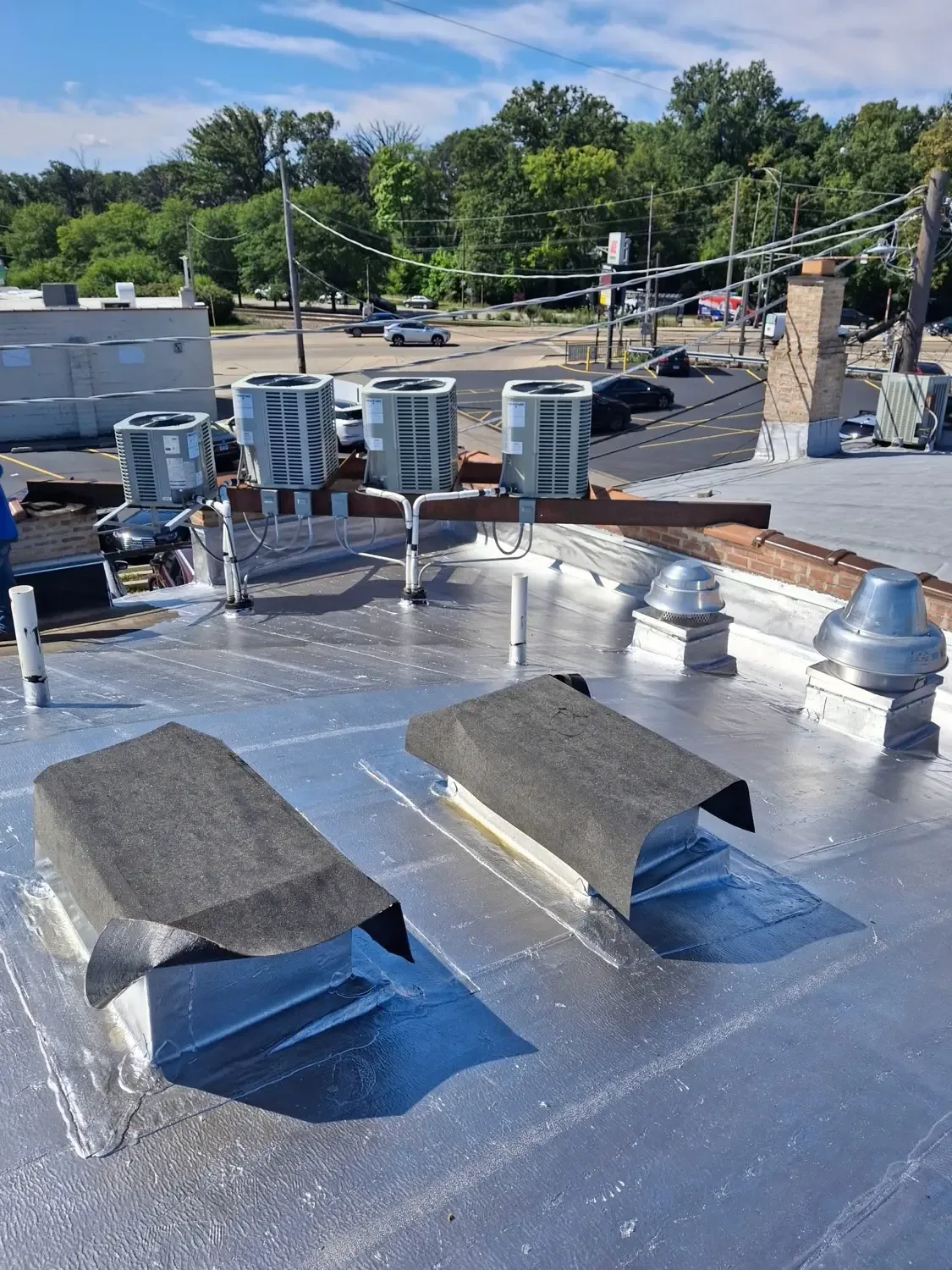
Exhaust hoods, curbs, pipes, conduit, drains, and roof access paths can affect PVC detailing. We map each penetration, identify service clearances, and confirm which trade owns the equipment disconnect or curb modification. A curb and support detail can coordinate the roofing transition with the mechanical work. Grease discharge or chemical exposure is addressed through the selected membrane and maintenance requirements, not a generic coating or sealant applied over an unidentified residue.
Water must reach drains and scuppers without being blocked by equipment or a new support. A drainage review can document low points and outlet conditions before the new roof is installed. In a mixed-use property such as Pinnacle Park, delivery and customer access are also schedule questions for the project contact. The plan identifies lift position, material staging, and any routes that need to remain clear.
Install the assembly in a controlled sequence
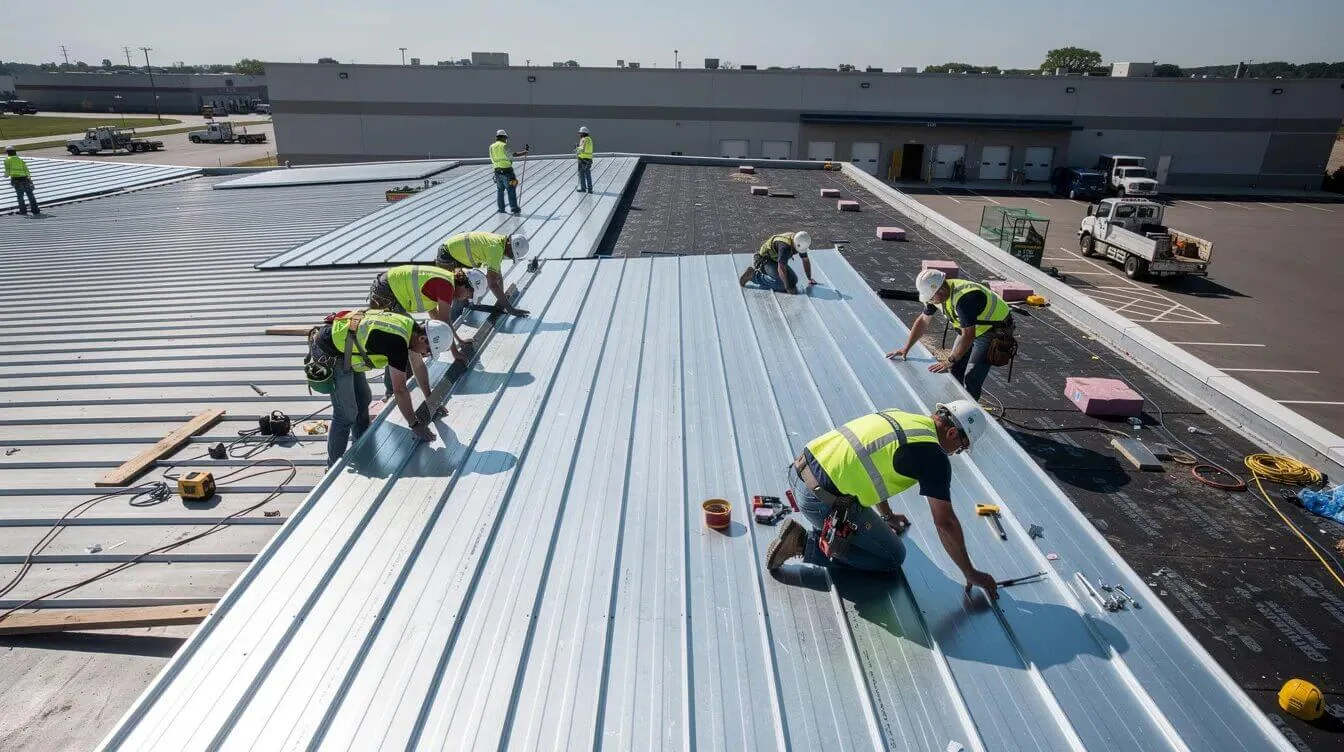
We set roof zones, daily removal limits, substrate inspection points, membrane staging, and tie-ins before crews begin. The owner receives the approval point for added removal if wet insulation or damaged deck appears. A phased work sequence coordinates interior protection, noise, equipment access, deliveries, and reopening checks for an occupied building. If rain or wind shortens the shift, the crew leaves the exposed edge secured and records the condition for the next work period.
League City’s upper-coast climate brings tropical systems and heavy rain, so weather windows can alter membrane work. We confirm the product’s application limits and use the project schedule to decide when a section can be opened. Each completed field and flashing detail is checked before the next zone is released. Photos and seam records show where the system is complete and which area remains under review.
Compare PVC with repair and replacement options
A sound PVC roof may need a localized patch, seam repair, curb detail, or preventive service rather than full replacement. We compare the observed condition, wet-material testing, attachment, and age information supplied by the owner before recommending a larger scope. A maintenance visit can record seams, exhaust areas, drains, and prior repairs. If the assembly has widespread failure or moisture, the proposal separates tear-off and replacement from a recover option.
Product performance depends on installation, substrate, detailing, maintenance, and exposure. The estimate names membrane thickness only when confirmed in the specified system and states what manufacturer data applies. We identify whether the scope includes insulation, cover board, edge metal, equipment supports, and disposal. The owner can then compare project cost and timing without assuming every PVC roof has the same construction or service life.
Close out welds, transitions, and service records
The closeout file includes product information, roof-zone map, seam checks, flashing and curb photographs, drain condition, test records, approved changes, and work left for follow-up. We note the locations of exhaust discharge and any maintenance item the owner should monitor. That helps a later service crew identify the membrane and avoid a patch that cannot be welded to the existing surface.
Send the League City address, equipment schedule, roof plan, leak history, access window, and any material records. We will inspect the existing assembly and test suspect details before selecting PVC. The proposal defines preparation, attachment, transitions, staging, and the approval point for concealed conditions so the owner can see where the material choice meets the work plan.
Frequently Asked Questions
What makes PVC different from TPO?
PVC and TPO are different thermoplastic membrane chemistries with their own material properties and installation details. We compare the building’s exposure, substrate, and project specifications before selecting either system.
Can cooking exhaust affect a PVC roof?
Exhaust discharge can expose the roof to oils or grease. We locate the hood outlet, inspect nearby membrane and flashing, and review material compatibility and cleaning needs for the specified system.
How do you confirm a PVC weld is sound?
The crew prepares the surface and checks test welds and completed seams as required by the project. We record any area needing repair before it is covered or released.
Can a PVC roof be recovered instead of removed?
That option depends on layer count, attachment, moisture, deck condition, drainage, and applicable requirements. We test the existing assembly and define the removal boundary before pricing recovery.
What project details affect a PVC roof estimate?
Roof area, attachment, insulation, edge details, exhaust exposure, penetrations, lift access, and interior protection affect cost and timing. We separate measured work from hidden conditions.