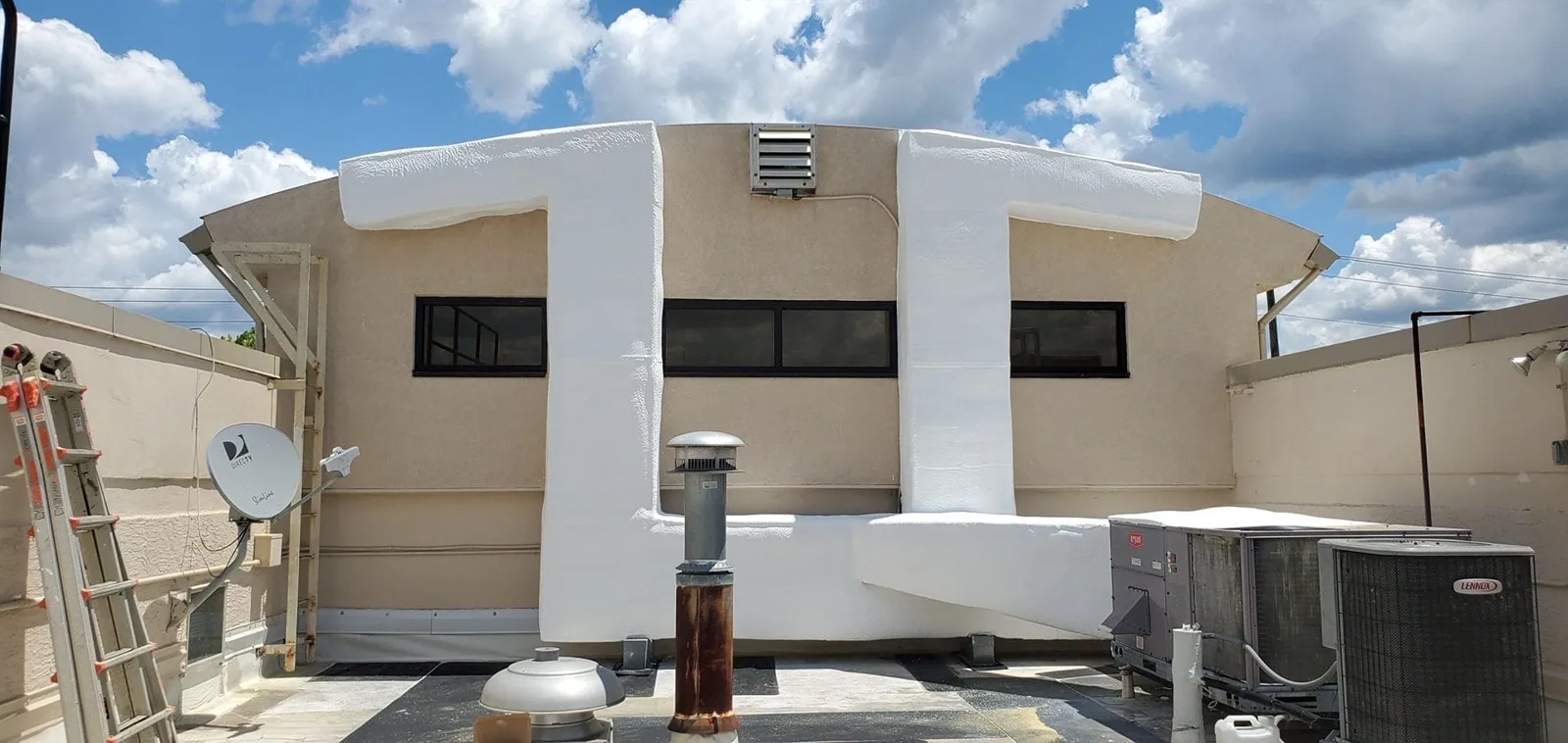
Wind Damage Roof Repair
After a squall crosses a commercial roof, the first decision is whether the perimeter, seams, and openings can remain exposed until a permanent repair is ready. League City sits on the upper Texas coast, and local weather records include damaging wind events. During Hurricane Beryl in 2024, League City observers reported gusts up to 52 mph; those readings do not establish the condition of a particular roof. We inspect the assigned building, set a safe access route, and document what needs temporary protection before measuring permanent work.
Trace wind effects from the edge inward
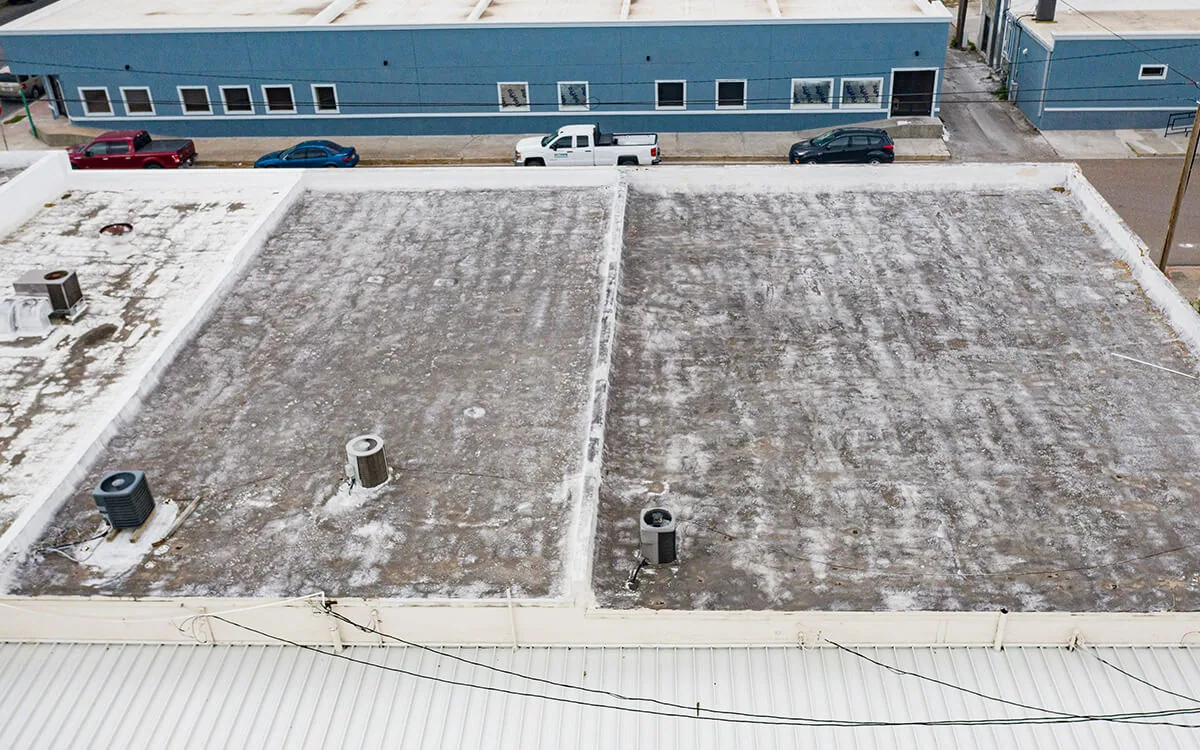
Wind can loosen perimeter metal, lift a panel edge, disturb membrane seams, or open flashing where a curb meets the roof. We inspect corners, transitions, fastener rows, parapets, rooftop equipment, drains, and penetrations as separate details. A ceiling stain may appear away from the roof opening, so we compare interior reports with slope and drainage before assigning a repair point. A commercial roof inspection can create a marked map with photographs and an observed-versus-tested boundary.
At a membrane roof, we look for displaced terminations, split laps, punctures, and a loss of adhesion at detail work. Metal systems call for checks of panel seams, clips, fasteners, ridge closures, and edge attachment. We record the affected section, nearby material, and any visible movement. If attachment strength or concealed insulation remains uncertain, the report identifies where testing or a selective opening would answer the question before a removal quantity is set.
League City's employer base includes medical, retail, petrochemical, and public-sector facilities. That range gives a local project mix, but it does not establish roof types at a named building. A roof review at Victory Lakes Town Center would begin with the specific store, building contact, and access conditions, not assumptions drawn from the wider retail district.
Water can enter where wind pushes rain beneath a lifted counterflashing or separates sealant at a wall transition. We photograph that junction from the roof and, where access allows, compare it with the interior report. A failed-flashing inspection can determine whether the repair needs new metal, compatible membrane work, or another trade's correction at the wall assembly. We keep those possibilities separate until the field detail is verified.
Secure the opening before the next weather shift
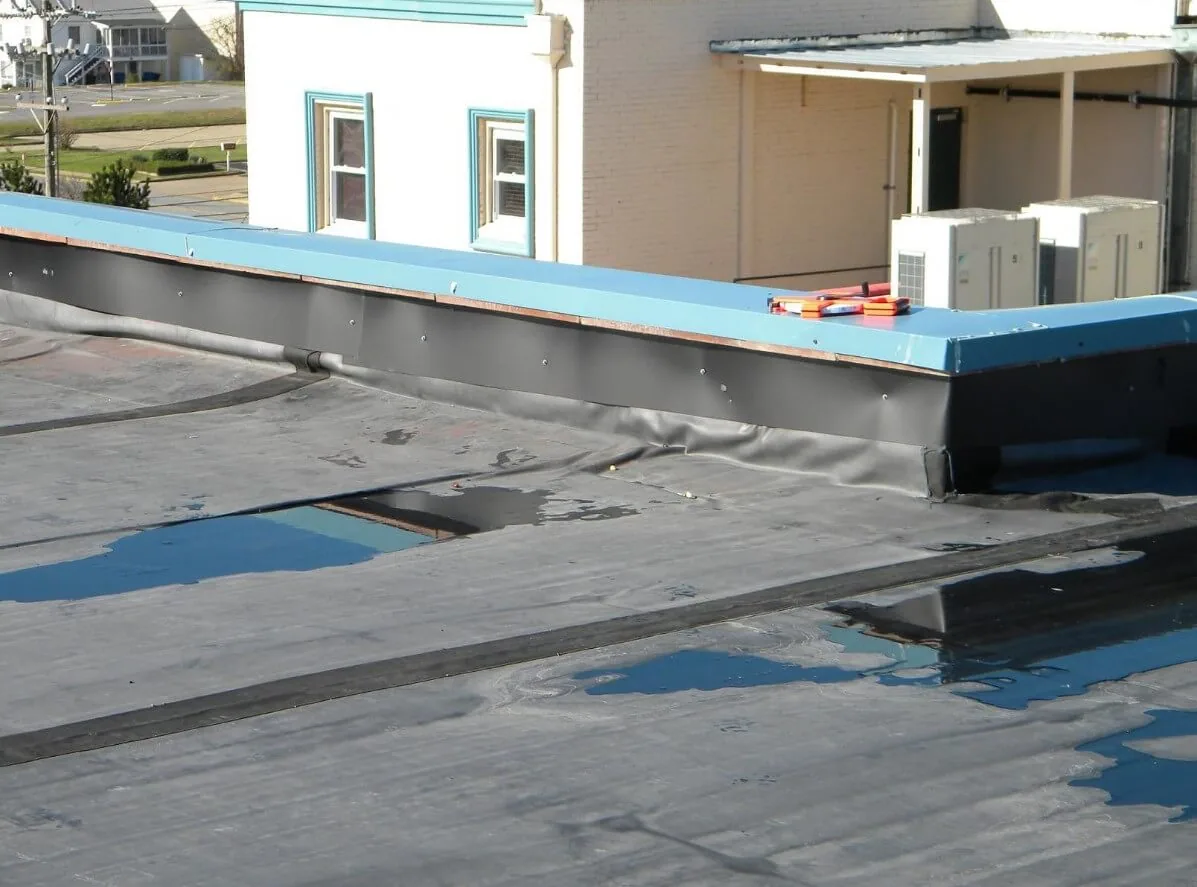
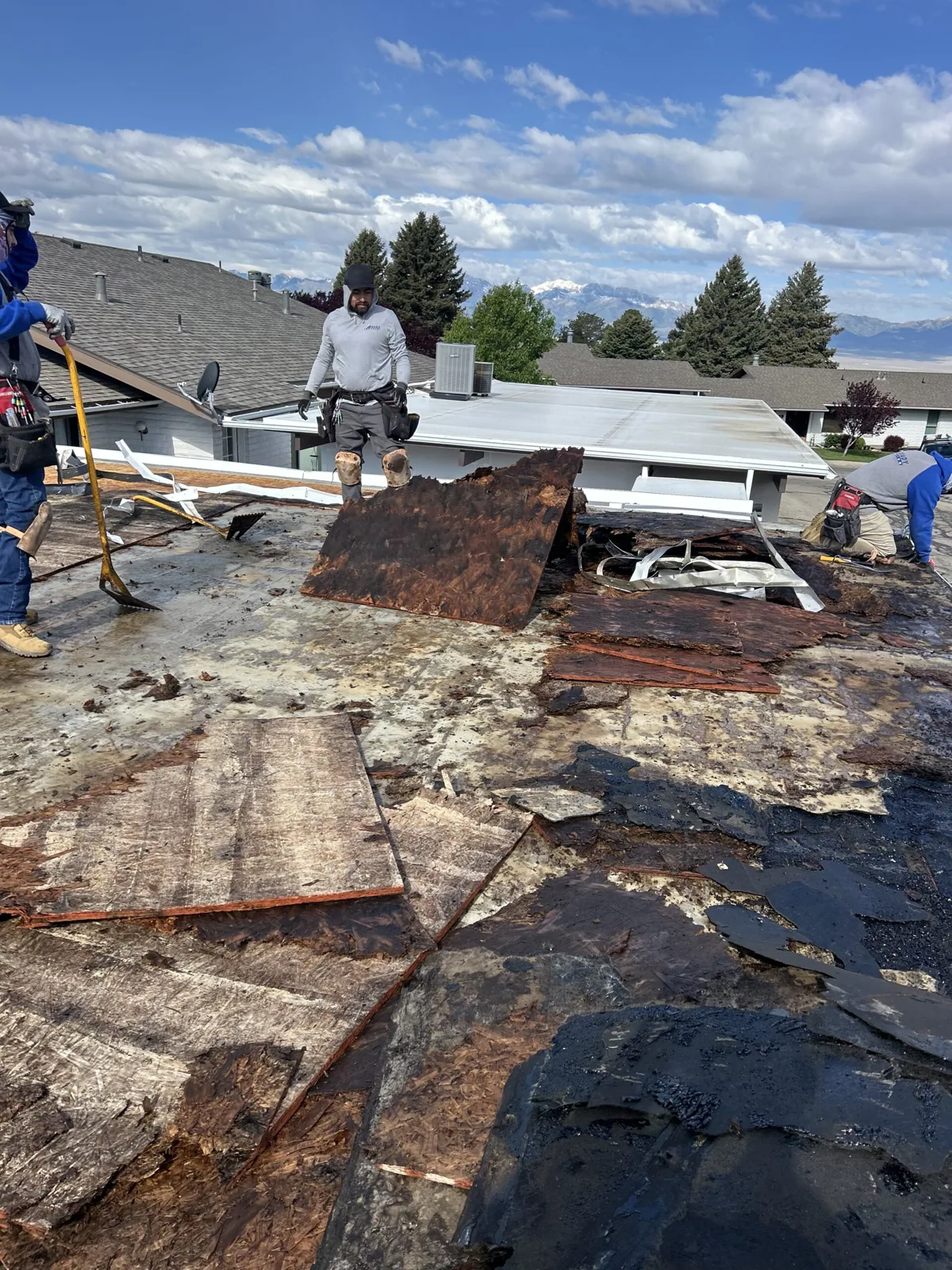
If a panel or membrane is displaced, the first field task is to protect the roof opening and the interior below it. We identify how much material can be safely exposed, the temporary cover method, the responsible lead, and the dry-in check. The site contact clears a route for crews and materials and identifies equipment, stock, or occupied rooms that need protection. When an opening cannot wait for the routine schedule, an emergency roof response can assess access and weather, then record whether a temporary dry-in is safe.
Temporary cover is not the permanent repair. The work record states its location, materials, date, and any follow-up inspection required. If wind returns or rain enters the forecast, the crew limits the open section and confirms cover before leaving. For water that collects after an edge or drain is disturbed, a ponding-water roof assessment can separate drainage correction from wind-damage work.
Work over a store, clinic, warehouse, or active office may need smaller repair zones. The owner or facility lead sets public access, tenant notices, lift placement, and staging limits. A phased work sequence can account for those conditions while keeping each roof opening tied to an approved access window.
Set the repair boundary from evidence
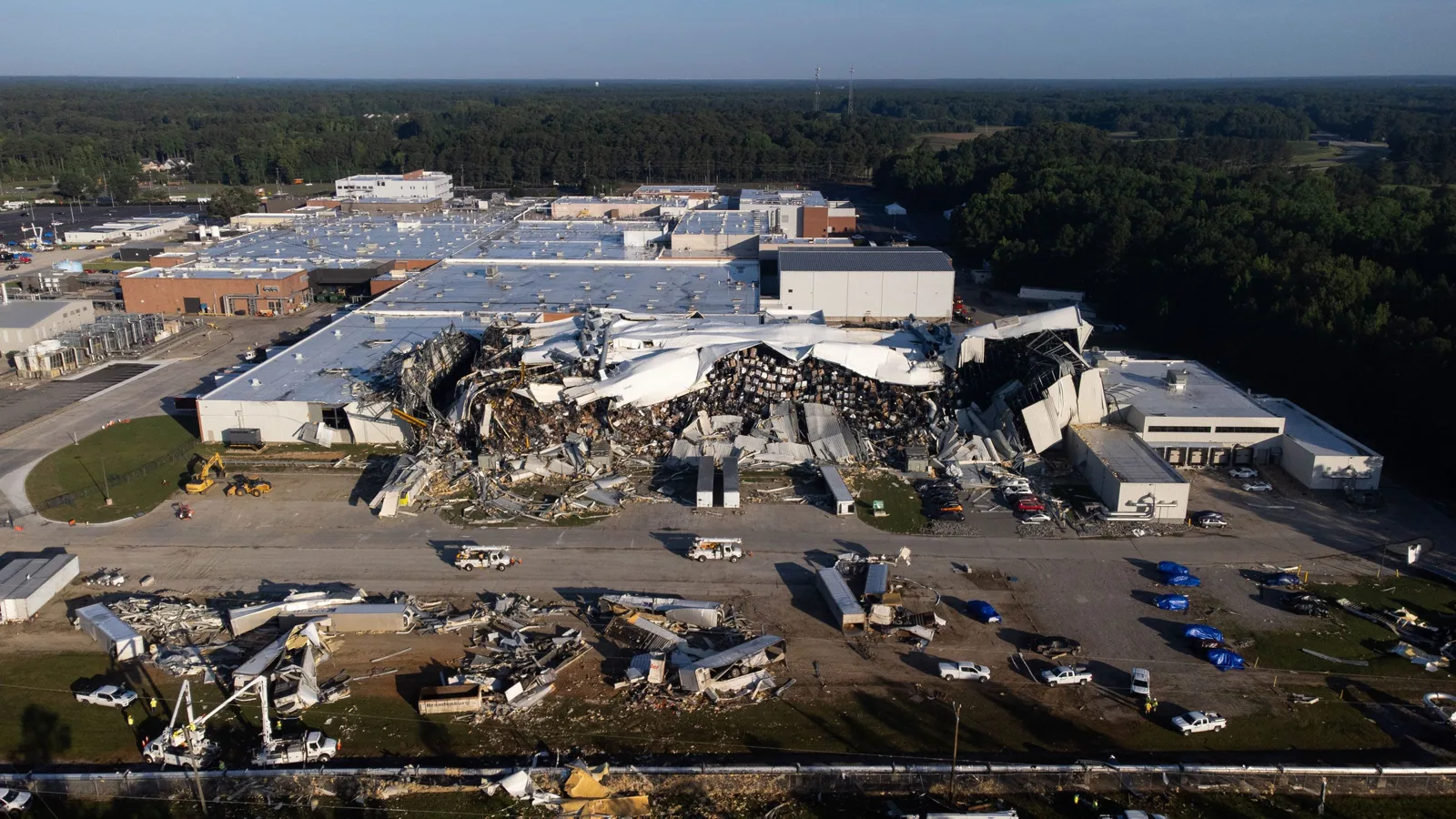
A short seam split or loose section of edge metal may be repairable if the surrounding material is sound and compatible. Several lifted areas, repeated leakage, wet insulation, broad corrosion, or failed attachment can call for a larger assessment. We define the immediate water-control work separately from permanent correction and show any test-dependent removal as an allowance. A measured commercial roof repair can state the materials, preparation, flashing detail, and closeout check for the affected zone.
Coating or recover work is considered only after reviewing existing layers, moisture, attachment, drainage, and transition details. A new surface cannot correct a weak deck or conceal unresolved water. If replacement is warranted, the proposal identifies removal, insulation, perimeter metal, tie-ins, equipment protection, disposal, and the daily opening limit. The owner can compare those options after seeing where wind-related observations end and broader roof conditions begin.
Cost and timing reflect roof height, edge length, access, testing, temporary protection, material staging, and how much area can be opened in one shift. The estimate should identify what is measured and what depends on an approved test opening. If a hidden layer changes the work, we photograph the condition and stop at the agreed approval point before expanding removal.
Keep the inspection and repair history together
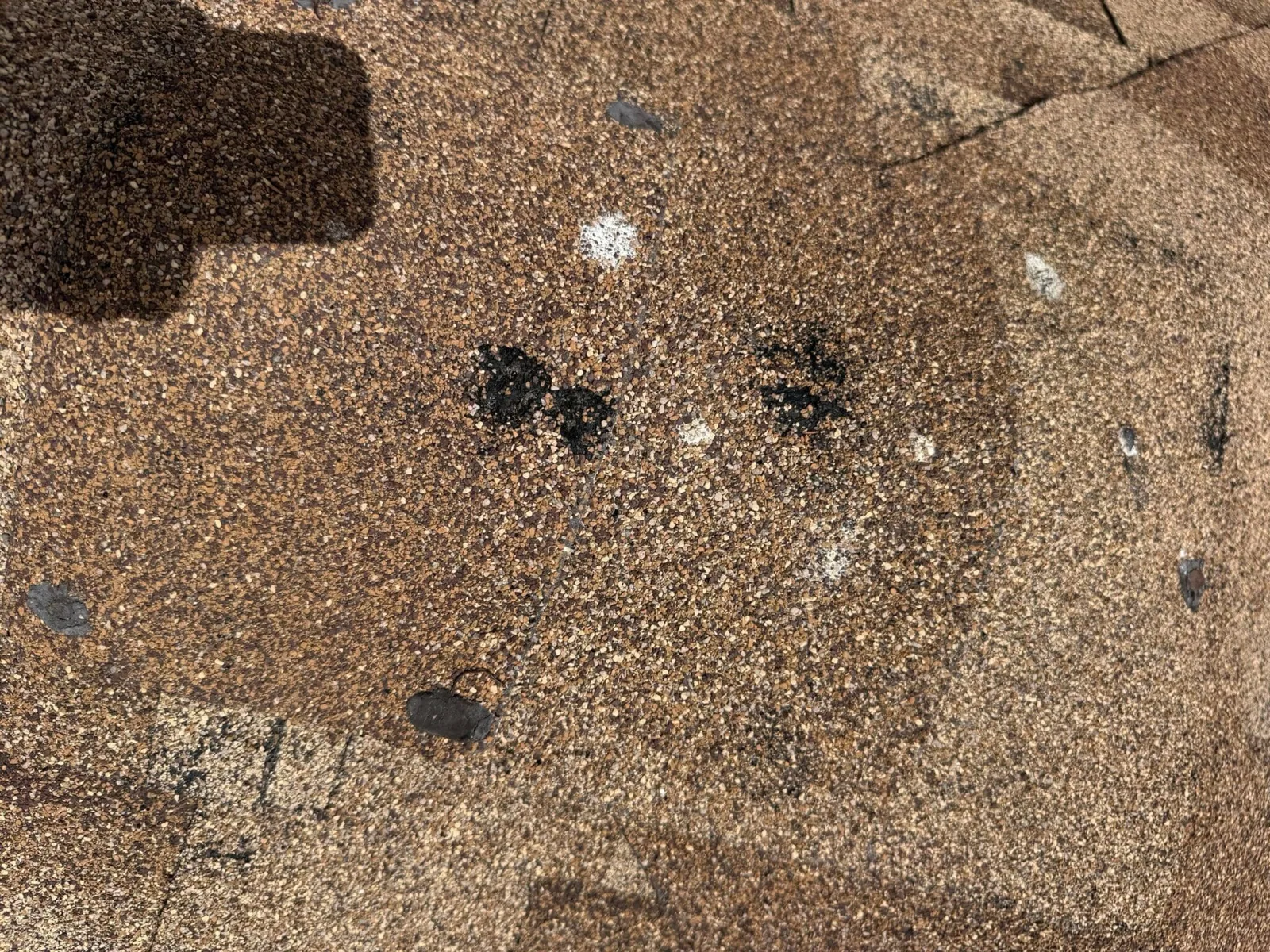
Closeout can include dated photographs, marked roof zones, attachment or flashing details, repair materials, and any condition that remains open. The property file should also note the weather report supplied by the owner, the inspection date, and whether the work was temporary or permanent. A photo-based roof condition report can preserve that record for the next maintenance review without implying that every roof area was tested.
League City requires commercial plans to meet applicable city codes and ultimate design wind speed. The designer or building authority confirms the requirements that apply to a particular project. We document observed conditions and proposed repair details so the review team can compare the field evidence with the building's approved criteria.
Send the address, roof plans, leak locations, repair history, access restrictions, and preferred inspection window. We will map the affected sections, identify any test needed, and return a scope with temporary protection, permanent repair, and approval points separated. If the property has multiple buildings, each receives its own roof-zone record.
Frequently Asked Questions
What should be checked after strong wind?
Begin with corners, edge metal, panel attachment, membrane seams, rooftop equipment, and penetrations. We compare interior reports with those roof details and record which areas were actually inspected.
Can a loose roof edge be secured during an emergency visit?
A temporary stabilization may be possible when the roof is safe to access. The report identifies the materials used, the exposed area, and what permanent detail still needs repair.
Does a regional wind report prove that my building was damaged?
No. It provides weather context only. The roof inspection documents observed displacement or water entry at the address and separates those findings from concealed conditions.
When does wind damage require replacement instead of repair?
Several affected zones, broad attachment failure, wet insulation, or recurring seam separation can justify a wider review. We measure the repairable area and explain which tests would change the recommendation.
What affects the price of wind-damage repair?
Roof height, access, edge detail, assembly, testing, protection, removal, and the work window all affect scope. We list those drivers beside measured quantities and any approval-dependent allowance.