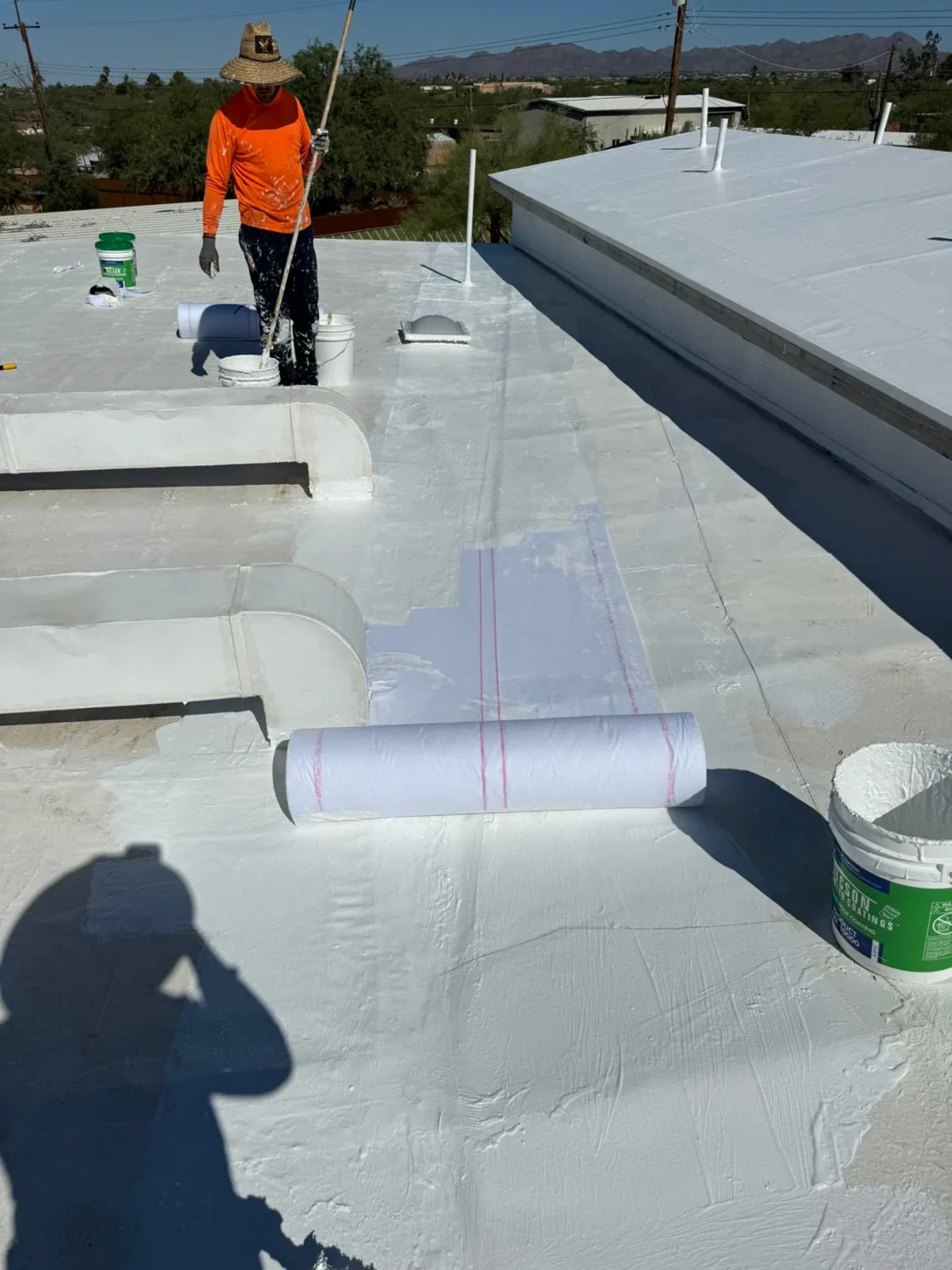
Commercial Tornado Damage Roof Repair
A concentrated wind path can leave one roof zone exposed while adjacent sections appear serviceable. The National Weather Service records an October 2004 League City severe-weather event that included an F0 tornado, damaging wind, hail, and roof damage in the area. That record supports local storm preparedness, not a conclusion about any current property. For a commercial building, we start by mapping reported interior effects against roof edges, penetrations, seams, and debris impacts, then identify what can be repaired from visible evidence and what remains concealed. The result is a defined investigation and approval sequence rather than an assumption that the entire roof needs replacement.
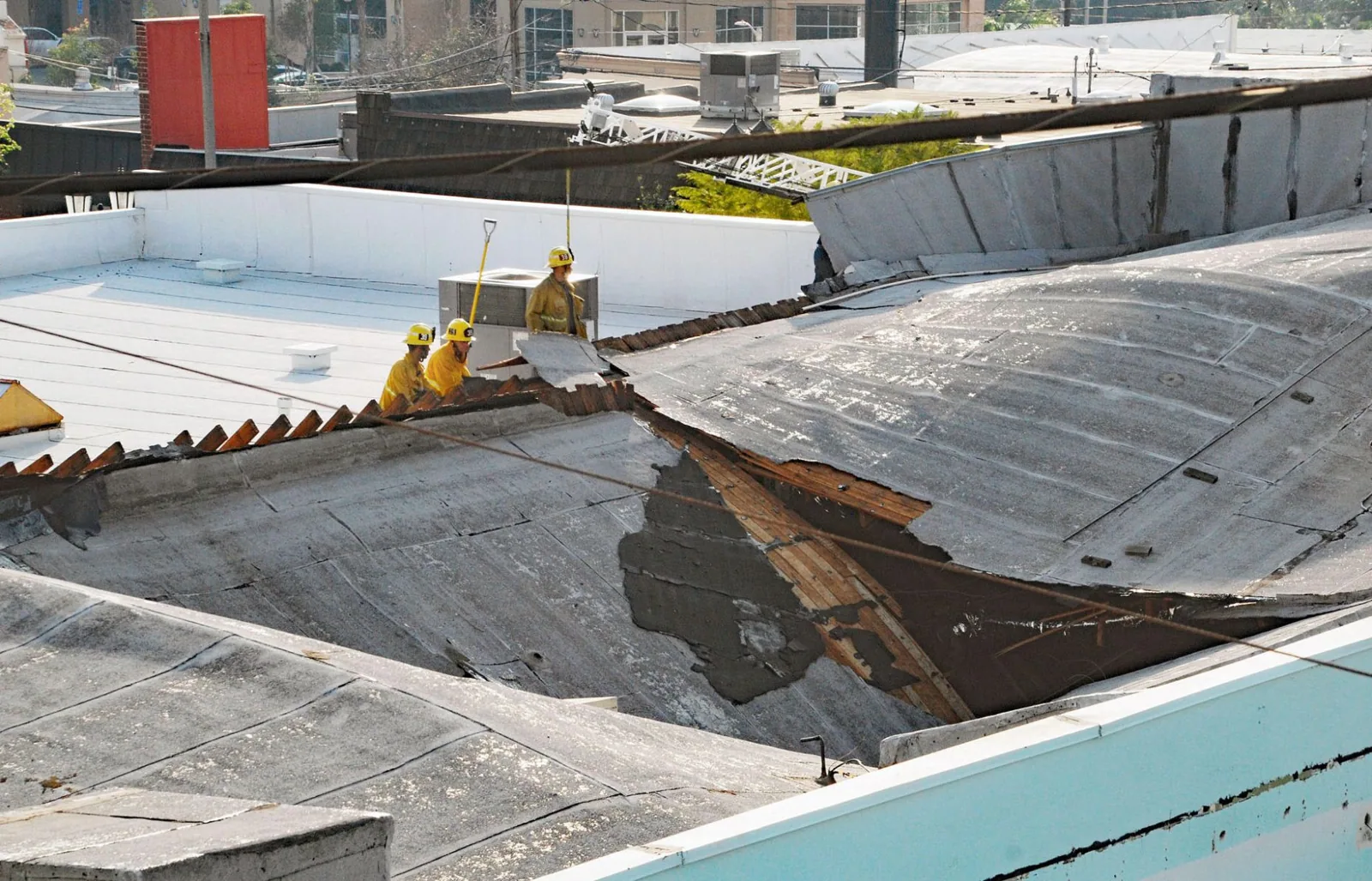
Map impact zones and inspect surrounding details
We ask where occupants first noticed water, whether power or building systems were affected, and which spaces must remain accessible. On the roof, the inspection follows the reported area outward to perimeter metal, corners, curbs, rooftop equipment, drains, seams, and transitions. Wind may lift a panel or edge without leaving a clear opening from below, while displaced debris can damage a separate section. We photograph visible conditions with a roof plan or annotated field sketch so the owner can compare each location with interior reports. A commercial roof inspection establishes those observations; where moisture extent is uncertain, infrared screening may help select locations for verification under appropriate conditions. Neither scan nor stain alone decides what material must be removed. We record roof type, prior patches, access constraints, and any saturated or unsafe area that limits the first visit. A documented wind-damage review can address related edge uplift, while the tornado scope stays tied to the specific impact locations and the assembly's actual condition.
League City's I-45 corridor carries a mix of retail, medical, and business properties. That context affects access planning, but a commercial center such as Victory Lakes Town Center is not presumed to have sustained damage because it lies in the same market. Every site receives its own roof map and findings.
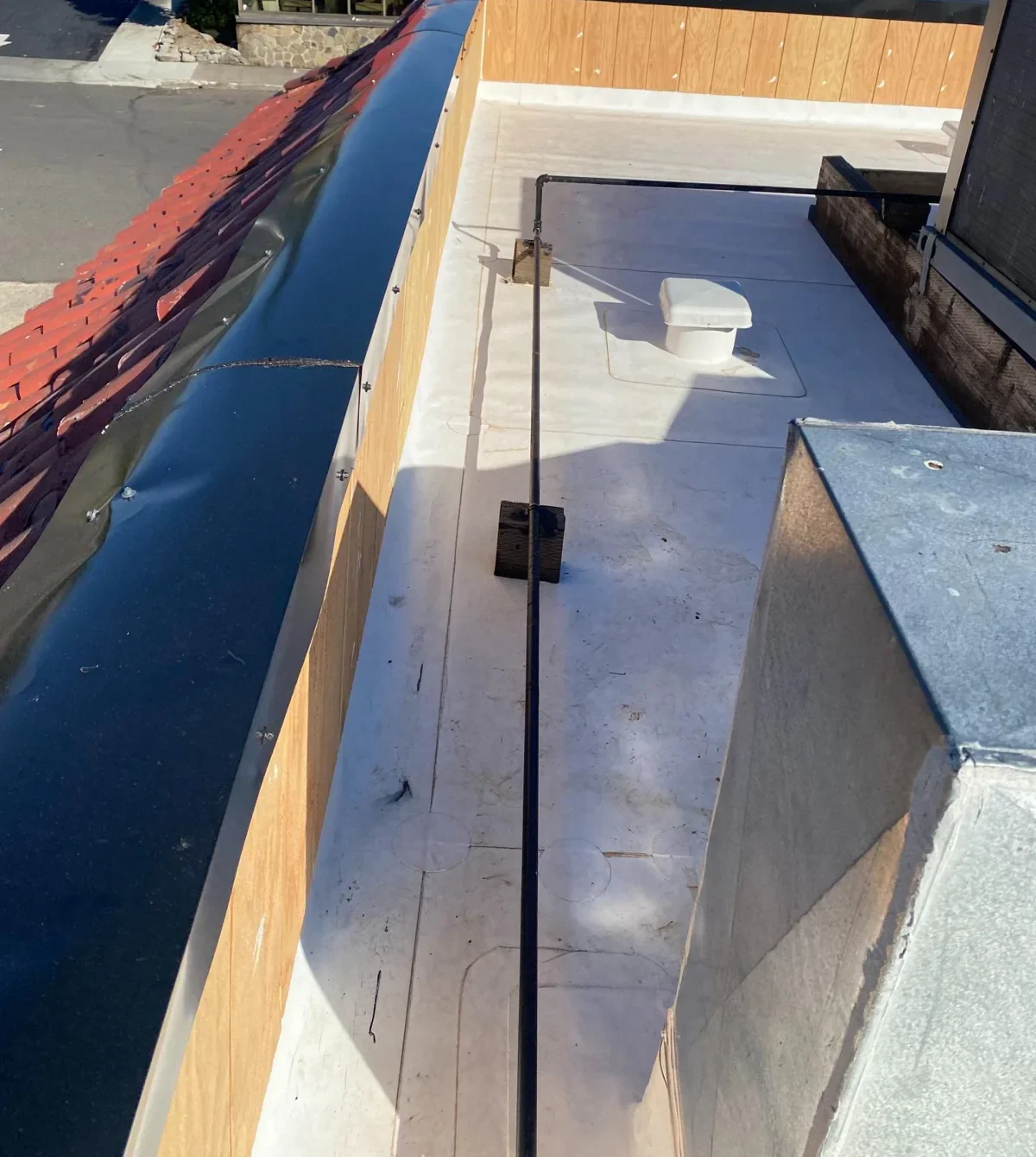
Control immediate exposure before permanent work
When a roof opening or loose component creates an active hazard, immediate stabilization takes priority over broad repair estimates. We identify whether the area can be safely reached, what temporary cover or isolation is appropriate, and how water or debris may affect operations below. A emergency roof response records the temporary action, material, location, limits, and return condition separately from permanent repairs. If rooftop equipment, electrical service, or damaged metal creates an unsafe approach, access is paused until the responsible site contact can address it. Inside, the facility team may need to protect inventory, isolate a room, or document ceiling and equipment impacts. We coordinate those steps with the owner and general contractor without representing them as roof repairs. If temporary protection is installed, the work record states what weather or inspection condition should trigger a revisit. A commercial leak repair may then address a confirmed water entry path, while structural or electrical conditions remain with the qualified trade or design professional. This order helps avoid opening a roof before staging, weather protection, and approval authority are in place.
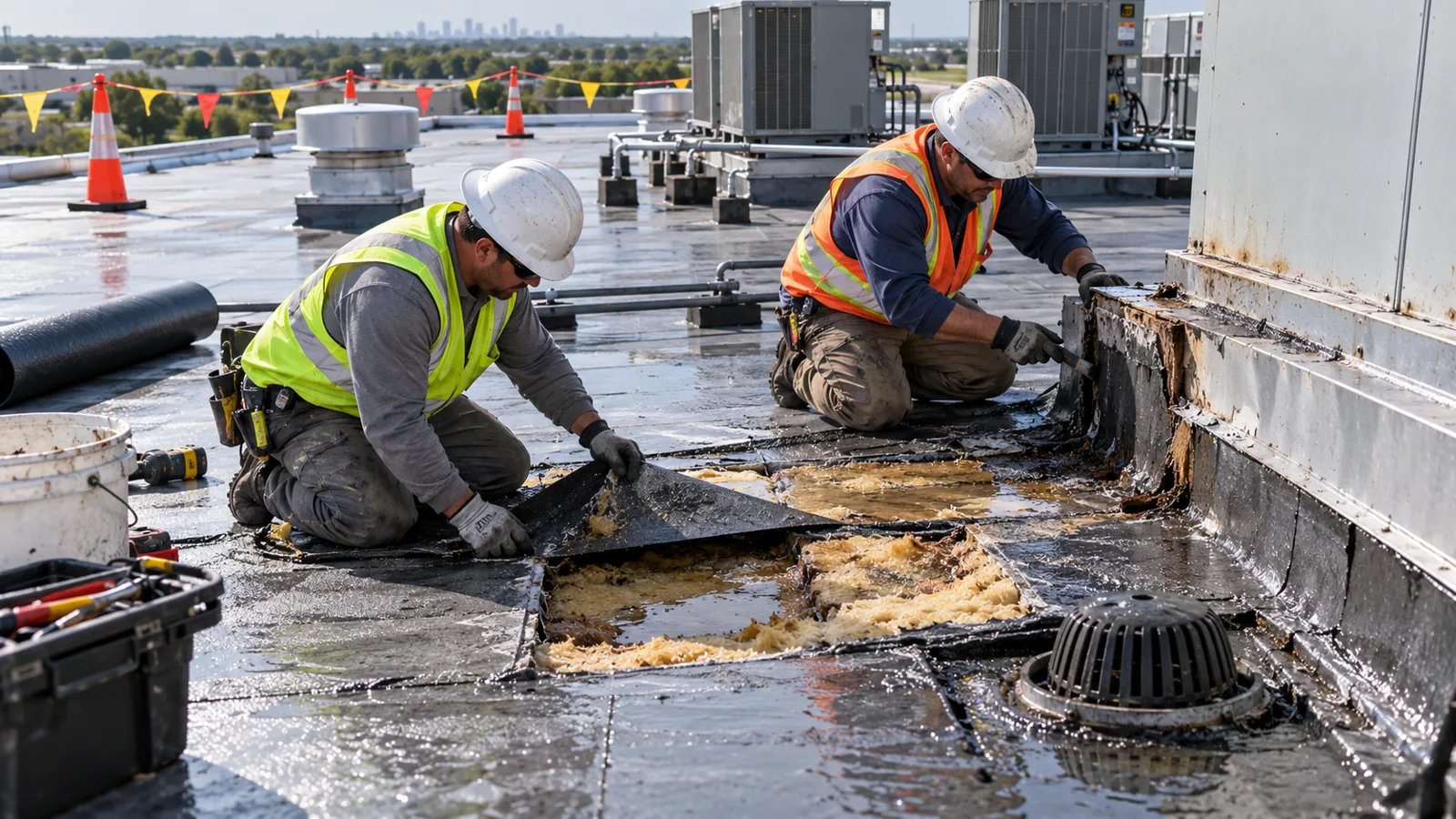
Choose repair limits from confirmed conditions
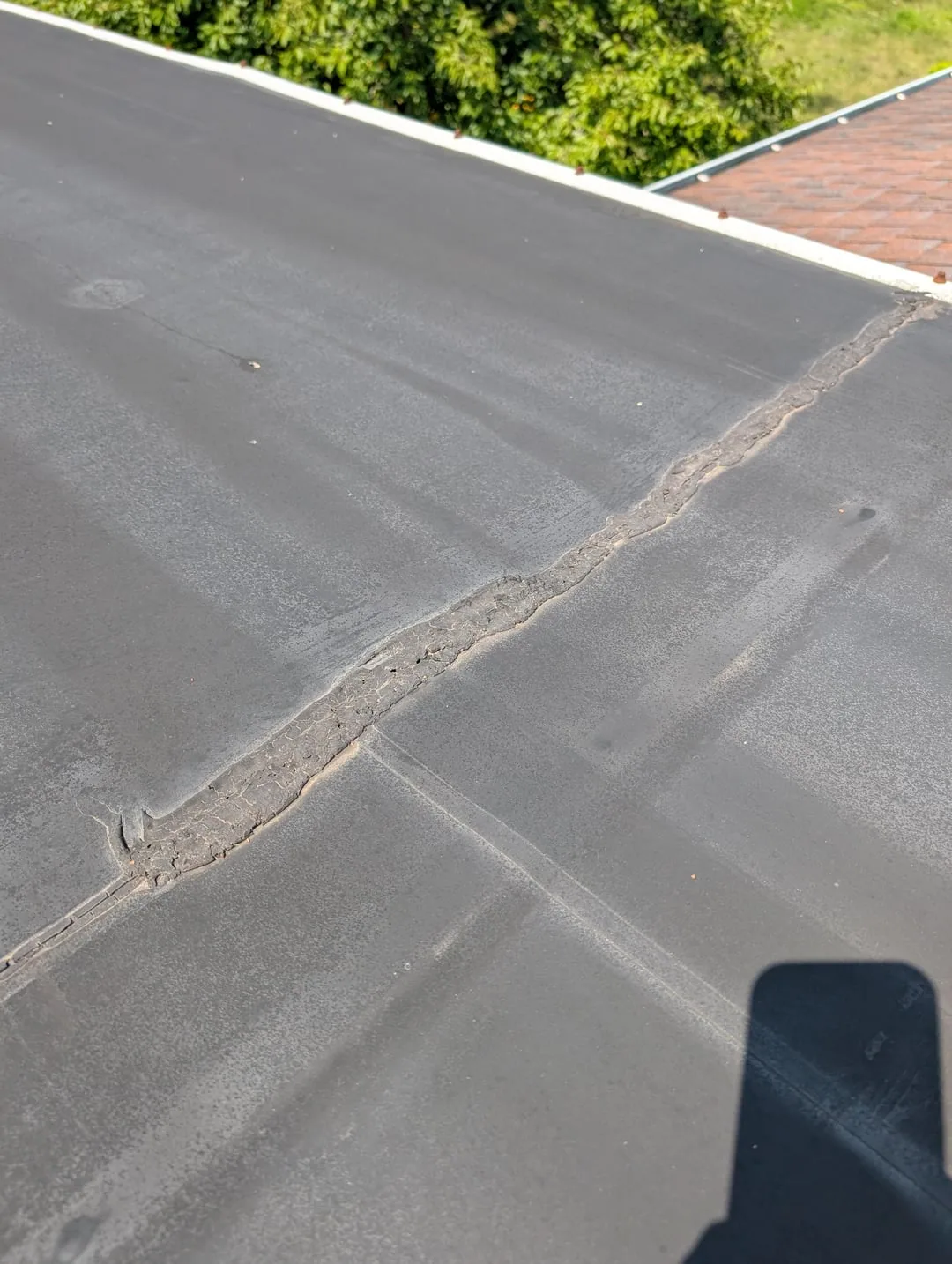
Damage can range from a puncture or displaced flashing to broad membrane failure, bent metal panels, or compromised attachment. The proposed repair should identify the affected zone, adjacent materials to be retained, preparation steps, compatible replacement material, and where a tie-in will occur. A membrane puncture repair differs from a panel or edge repair, and neither should be selected before the roof system is confirmed. For a thermoplastic roof, the TPO system details and seam condition affect the repair approach; metal assemblies require attention to panel profile, fasteners, clips, and perimeter conditions. We separate visible quantities from test-dependent removal, and identify any concealed insulation or deck issue that could change the scope once exposed. If the assembly is broadly aged or damaged beyond a reliable tie-in, we can document a comparison with commercial roof replacement after inspection supports that choice. The owner receives distinct options, assumptions, and exclusions instead of a single lump sum that hides uncertainty. Each approval point should name the decision-maker and the information still needed to release the next work phase.
Set access and sequencing with site operations
A repair may cross tenant areas, truck routes, storefront entrances, or equipment service zones. Before mobilization, we confirm roof access, material staging, lift placement, work hours, roof opening duration, and the route for removing debris. For properties near FM 646 or the I-45 frontage, the manager can identify delivery windows and areas that cannot be blocked. A retail center such as Victory Lakes Town Center illustrates the market's active retail setting, but it does not serve as a proxy for the subject building's condition. We coordinate work only from the address-specific access plan. If a roof opening is necessary, the sequence names who can approve additional removal after the assembly is exposed and what temporary cover will be maintained if weather changes. We can also align roof work with interior inspection so the property record captures both sides of a reported leak. Where the site operates across multiple buildings, multi-site roof program coordination can keep locations, repair limits, and open decisions in a common register. The individual work order still identifies the actual property and conditions observed there.
Leave the owner with a usable storm record
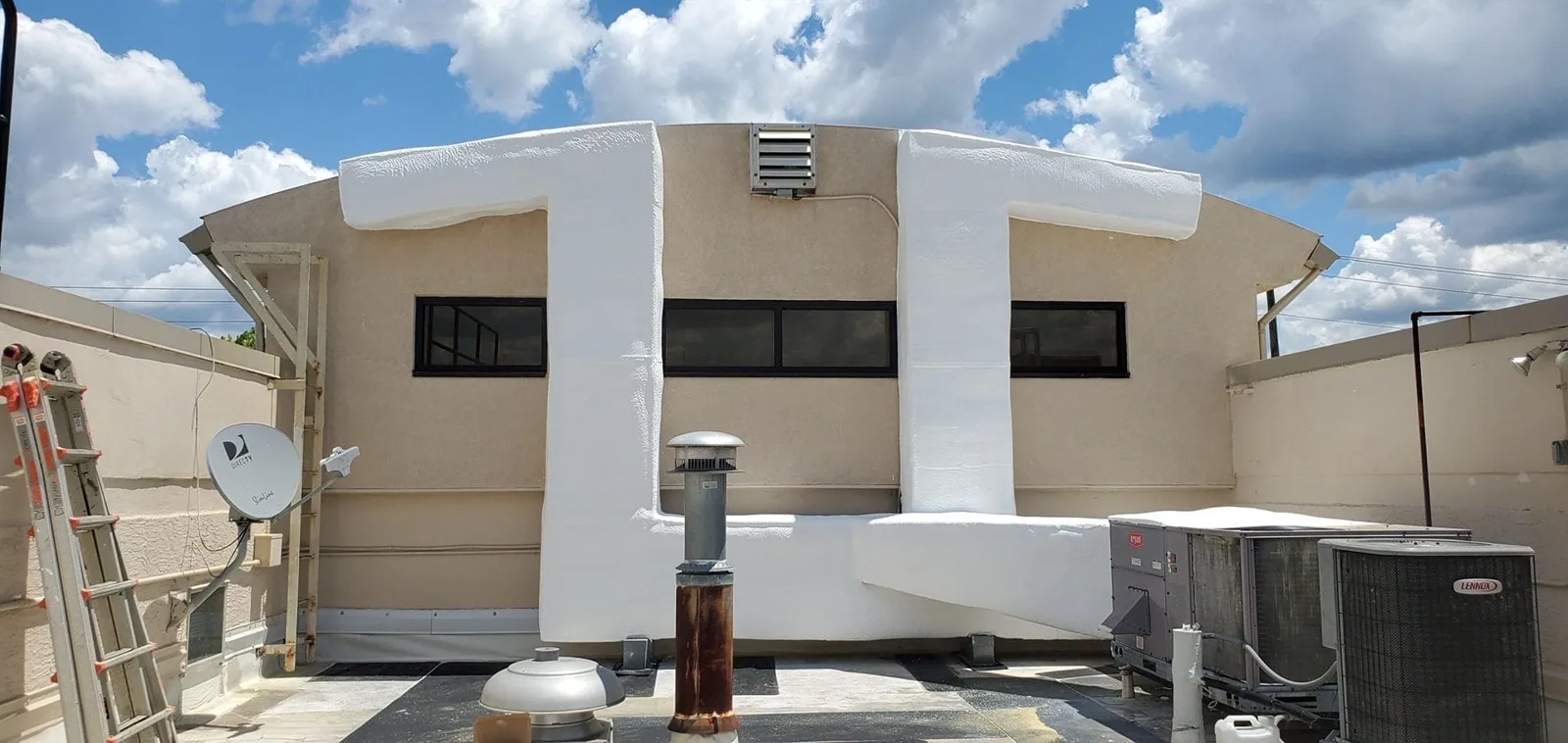
Closeout should preserve the path from report to repair. We provide dated photographs, a marked roof sketch, observed damage, testing performed, materials installed, and any remaining limitation. If the owner is reviewing insurance or capital options, the record can distinguish direct observations from interpretations and state which quantities depend on concealed conditions. The city's adopted commercial code set includes the 2021 International Building Code, and League City says commercial plans must meet applicable city code, ultimate design wind speed, and Texas Department of Insurance requirements. Those design requirements are not a field finding about storm damage; project-specific compliance questions belong with the responsible design professional and permitting authority. A roof condition report can preserve this evidence for later comparison, while capital planning can track a larger repair decision against timing and budget. To arrange an inspection, provide the property address, reported impact zone, access window, operating limits, project schedule, and any drawings or prior roof records. We will use those details to define the first visit and establish the next approval point.
Frequently Asked Questions
Does the 2004 League City tornado record confirm damage at my property?
No. It documents a local severe-weather event and roof damage in the area, but not the condition of a particular building today. We inspect the address and record its current evidence.
Should the entire roof be replaced after a tornado?
Not automatically. We map visible impacts, identify the roof assembly, and assess whether reliable repairs are possible. Broader replacement is presented only when observed conditions support that comparison.
Can temporary protection be installed before the repair scope is final?
Yes, when access is safe and a temporary measure is suitable. Its location, material, limits, and return trigger are recorded separately from permanent work.
What if water appears far from the visible roof damage?
Water can travel through or along roof components before reaching an interior space. We compare interior reports with the roof layout and mark test locations when the path cannot be confirmed visually.
What should a commercial owner have ready for an inspection?
Share the address, leak or impact reports, roof access rules, tenant or delivery restrictions, any roof plan, and available repair history. A contact who can approve access helps keep the visit productive.