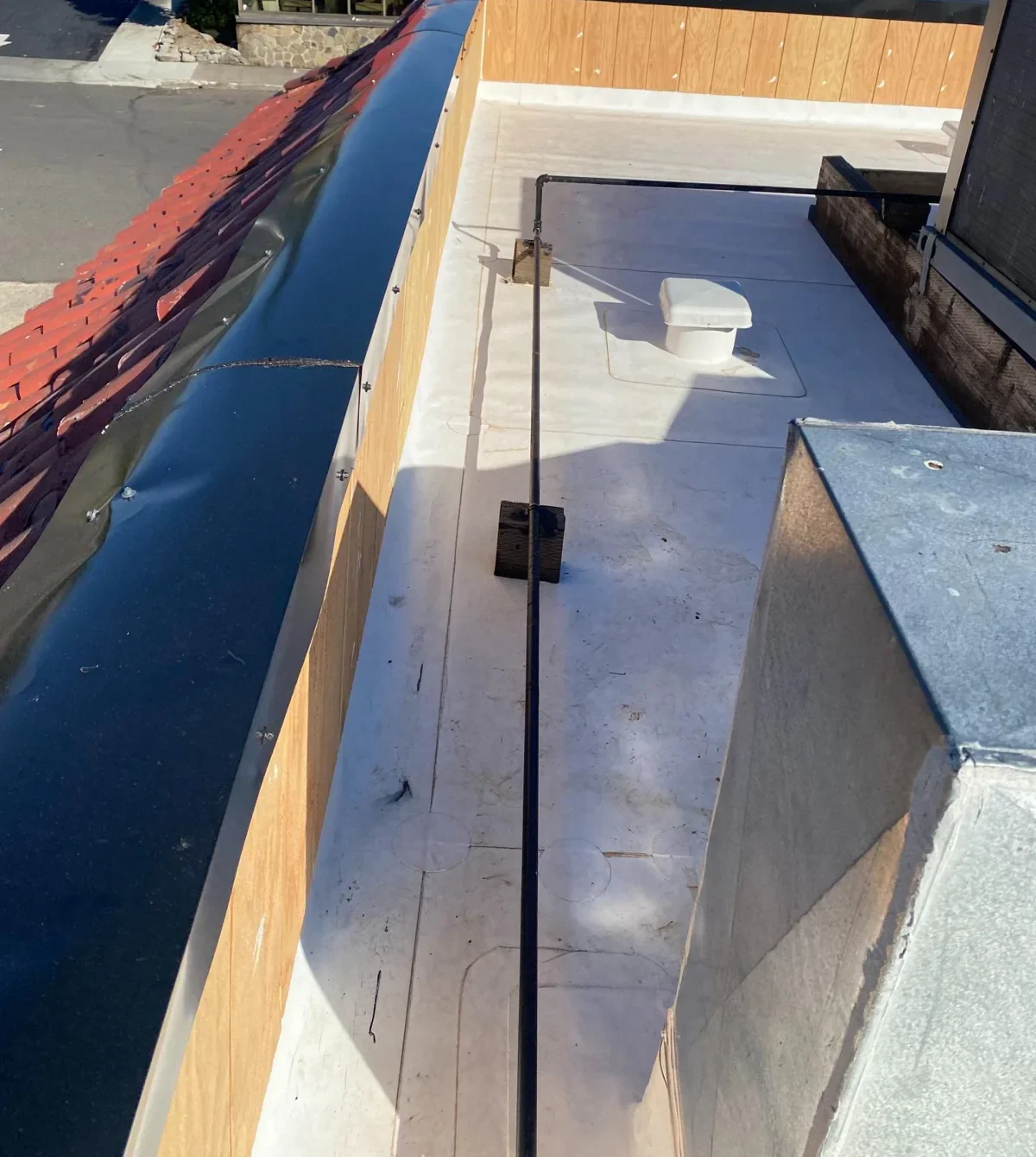
Commercial Membrane Puncture Repair
A puncture near an equipment route can be small on the surface and still expose insulation or deck to repeated rain. In League City, commercial roofs serve medical, retail, industrial, and public uses, so the repair needs to account for what sits below the membrane and who uses the access path. We locate the opening, identify the roof system, and check nearby seams and penetrations before selecting a patch. The work record states the measured damage and any concealed condition that remains unknown.
Find the cut and its path through the assembly
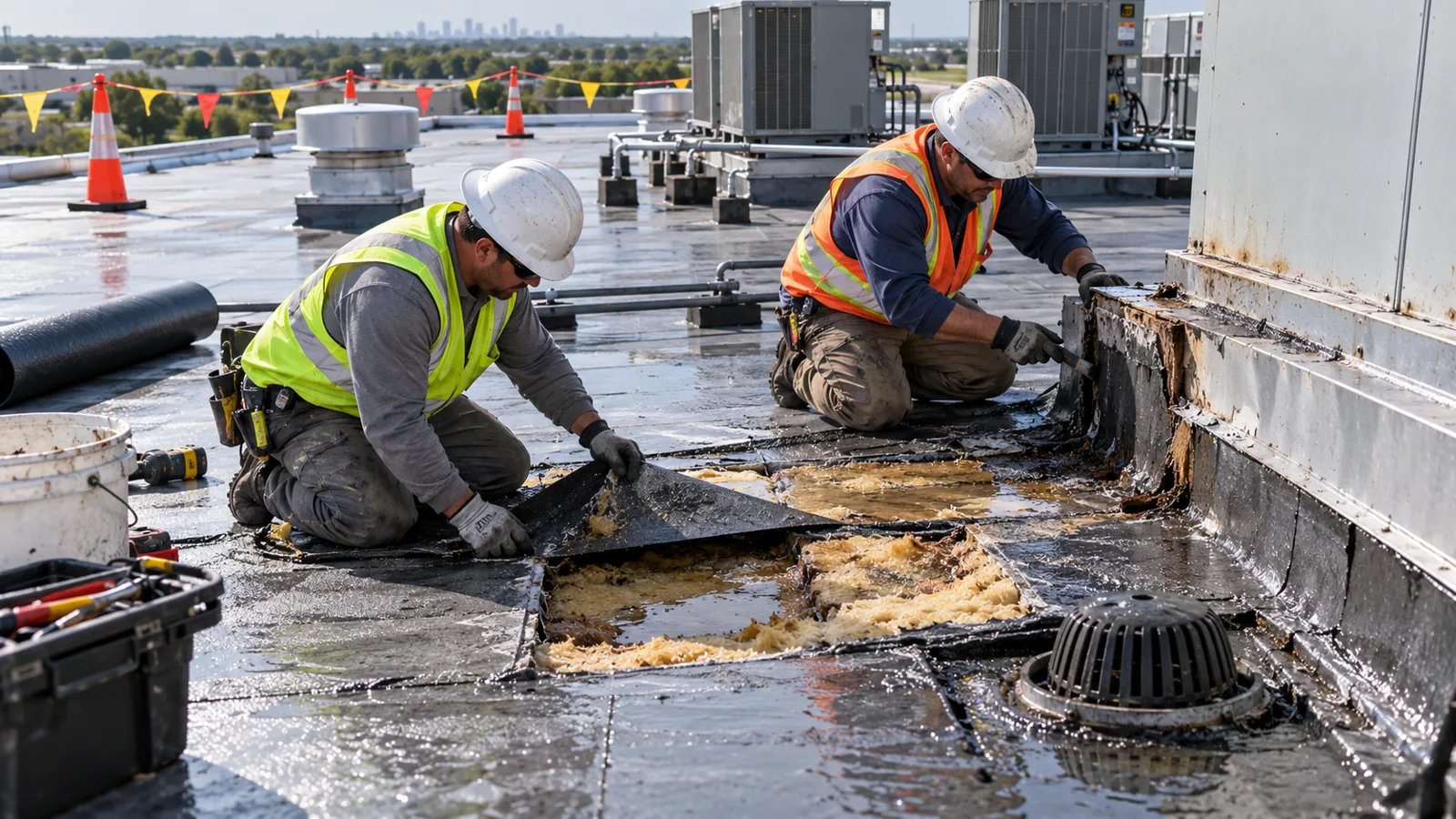
We inspect for cuts, abrasion, dropped tools, sharp debris, open fastener holes, and damage around service routes. A puncture may lie beside a walkway, curb, or drain, but the cause should be documented rather than assumed. We compare the roof opening with interior reports, nearby seams, and the direction water can move under the surface. A commercial roof inspection can map the defect and note whether the membrane is adhered, mechanically attached, or part of another assembly.
After identifying the material, we check the surface around the opening for moisture, contamination, wrinkles, loose edges, or previous repair work. A patch needs sound material beyond the damaged spot. If readings suggest water beneath the membrane, a selective opening may be needed to confirm insulation and deck condition. We state the test size and location before asking the owner to approve it; a small puncture does not automatically justify broad removal. If interior finishes were wet, the building contact identifies what was dried or replaced below the roof so that interior work is not mistaken for the membrane correction.
NASA Johnson Space Center occupies a large campus in the Clear Lake area, and League City's commercial corridor includes I-45 and FM 646. Those local institutions and routes help identify the regional setting, not roof access or conditions at an individual property. A Clear Lake area still begins with the requested building, its roof plan, and approved access procedure.
Control foot traffic around the repaired area
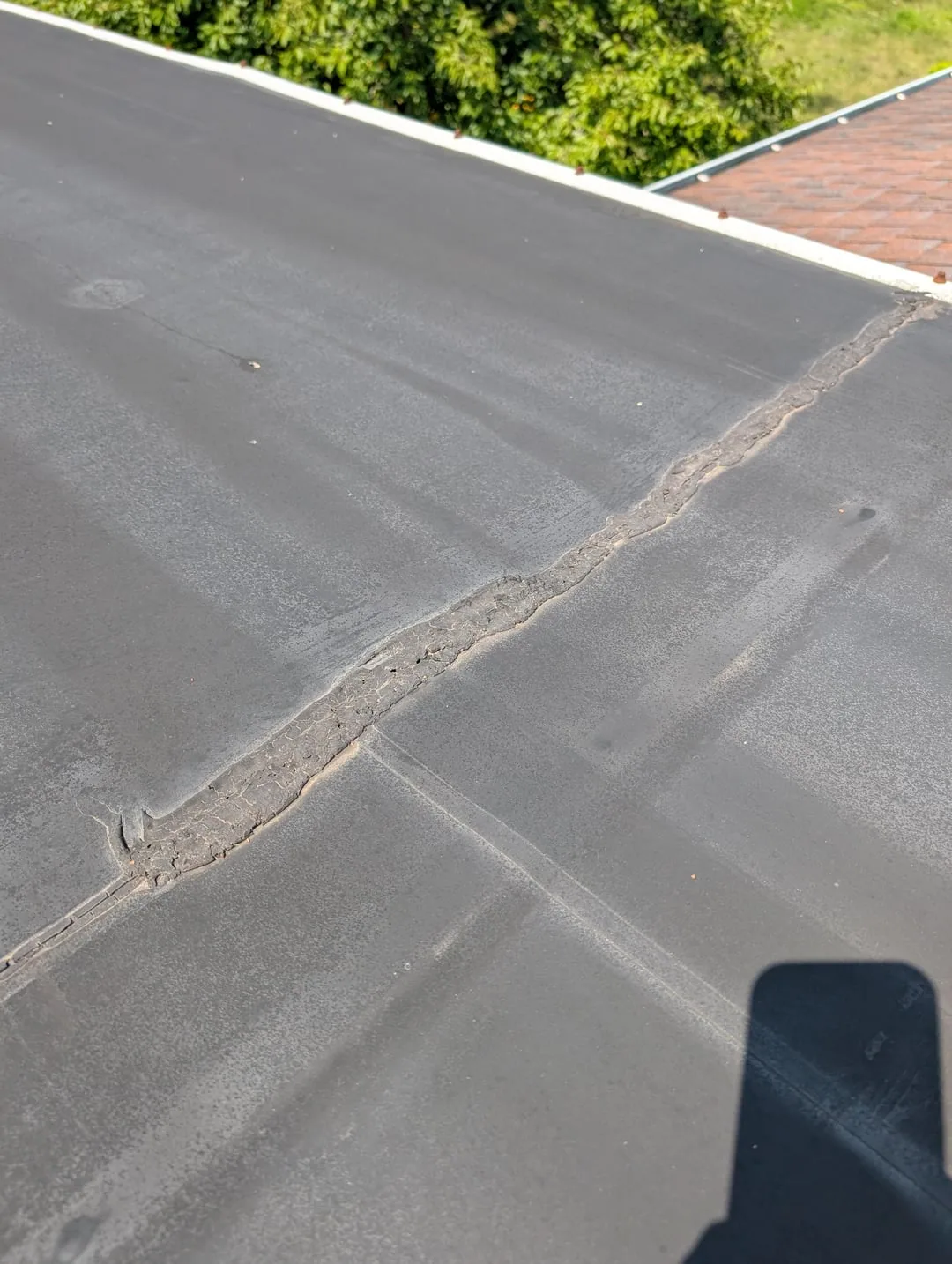
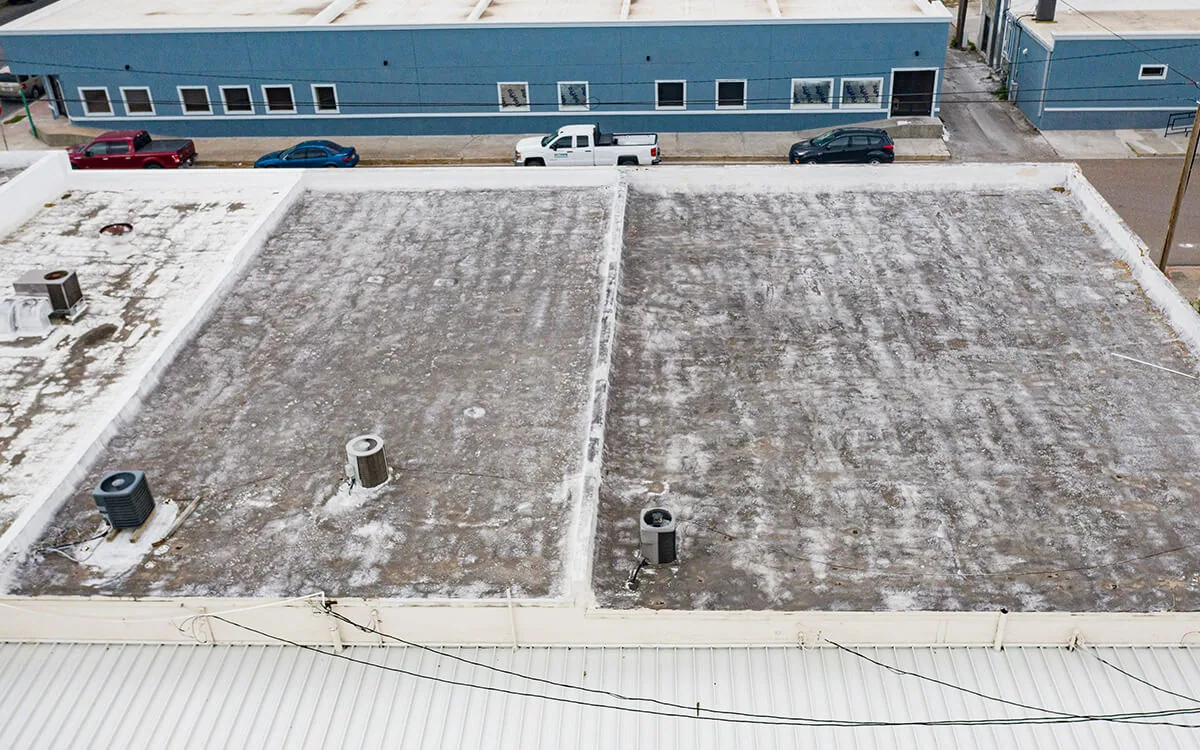
Repeated service visits can create damage if technicians cross the roof without an approved path. The facilities contact identifies HVAC access, antenna or solar service, ladder points, and areas that need protection. We can mark a route or propose walkway pads when compatible with the roof system and project requirements. A rooftop equipment detail review can help coordinate new work so its supports and service access do not force traffic across vulnerable membrane.
If a tenant or maintenance contractor needs a temporary route during repair, we define where tools and materials can sit and how the patch area stays clear. The membrane must be dry and prepared as the product system requires. A seam condition check can separate a puncture from a nearby opened lap when both defects appear in the same service zone.
League City's upper-coast setting brings rain and wind exposure. A new patch needs an installation window that allows the surface to be prepared and checked before water returns. If active leakage requires immediate protection, a 24-hour emergency visit can stabilize the opening, with permanent correction recorded separately.
Wind-driven rain can expose a puncture that remained unnoticed during dry weather; the crew measures the opening and checks adjacent details to set the repair boundary. We check nearby edge metal, seams, and flashing to see whether the opening is isolated or part of a wider disturbance. A wind-damage roof assessment can document that broader perimeter review when the inspection finds more than one affected detail.
Choose a patch or a broader repair
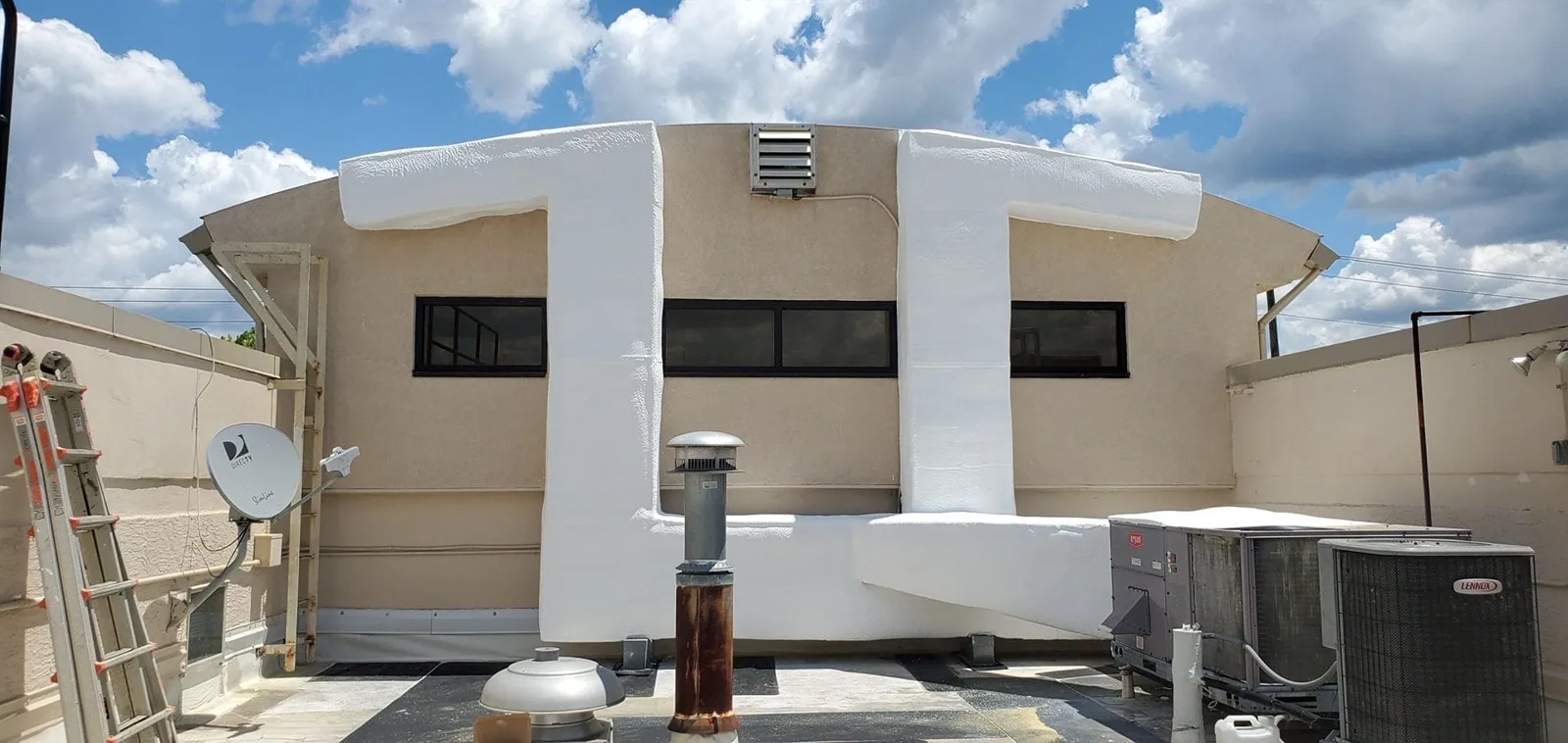
A single puncture can often be repaired when the membrane around it is stable and compatible. Multiple openings, cuts that cross a seam, wet insulation, or damage extending under a curb may need a larger assessment. We mark each opening, note the repair materials, and set the boundary for any test-dependent removal. A commercial membrane repair scope should describe preparation, patch size, tie-in, and the field check.
Recover or coating work does not make an active puncture disappear. The opening and any wet material must be addressed first, then the owner can review broader restoration or replacement based on assembly condition. Cost depends on roof access, membrane type, surface preparation, the number of punctures, testing, and the level of interior protection required.
If more than one contractor uses the same roof, the closeout should state who may walk through the repaired zone and how new penetrations are approved. A puncture repair is not a blanket release for future equipment work. We document the condition and any route guidance that the facilities contact approves.
Keep repair photos with the access plan
Closeout should include a wide photograph showing the repair location and a closer view of the patch, material, date, and adjacent seam. If testing was completed, we identify the opening and what it revealed. A photo-based roof record can connect future service calls with the same roof zone and protect against repeating an old assumption.
Victory Lakes Town Center lies at I-45 and FM 646, and Texas City's port channel links Galveston Bay with the Gulf. These named regional places help locate commercial activity around League City, but do not dictate the access route for a separate building. If the property is near an industrial delivery corridor, the owner supplies the gate and staging rules for the repair crew.
Send the address, roof system information, reported puncture locations, service history, and access rules. We will inspect the membrane, identify compatible repair options, and state whether moisture testing or a selective opening is needed. For repeated damage, we can also document the traffic path so the property team can decide whether protection or route changes should be considered.
Frequently Asked Questions
Can a small roof puncture be patched without replacing the membrane?
Often, if the material around the opening is sound and the patch can tie into compatible membrane. We inspect adjacent seams and moisture evidence before confirming the repair limit.
How do you identify what caused the puncture?
We document the cut, abrasion, nearby service path, tools, or debris that are visible. If the cause is not established, the report records the location without assigning an unsupported source.
Could water be trapped below the puncture?
Yes, but the surface opening alone does not show how far moisture traveled. Readings or a selective opening can confirm the assembly condition after the owner approves the test.
Can equipment technicians use the roof after the repair?
The facilities team controls access. We can mark an approved route or discuss walkway protection compatible with the roof system, then document the boundary for future visits.
What records should I keep after a puncture repair?
Retain the roof-zone photo, patch material, repair date, test result, and any access route note. The file should identify which conditions were repaired and what remains untested.