
Multi-Site Commercial Roof Programs
A multi-site roof program should make reporting consistent without pretending every property has the same assembly or condition. For an owner with League City buildings, we organize locations, inspection windows, service history, approvals, and closeout records under one process while retaining a separate roof map and scope for each address. A portfolio summary can show trends and pending decisions, but every repair quantity remains tied to field evidence at its own site. That gives facilities, finance, and project teams one way to track the work without losing the detail needed to approve an individual roof opening or repair.
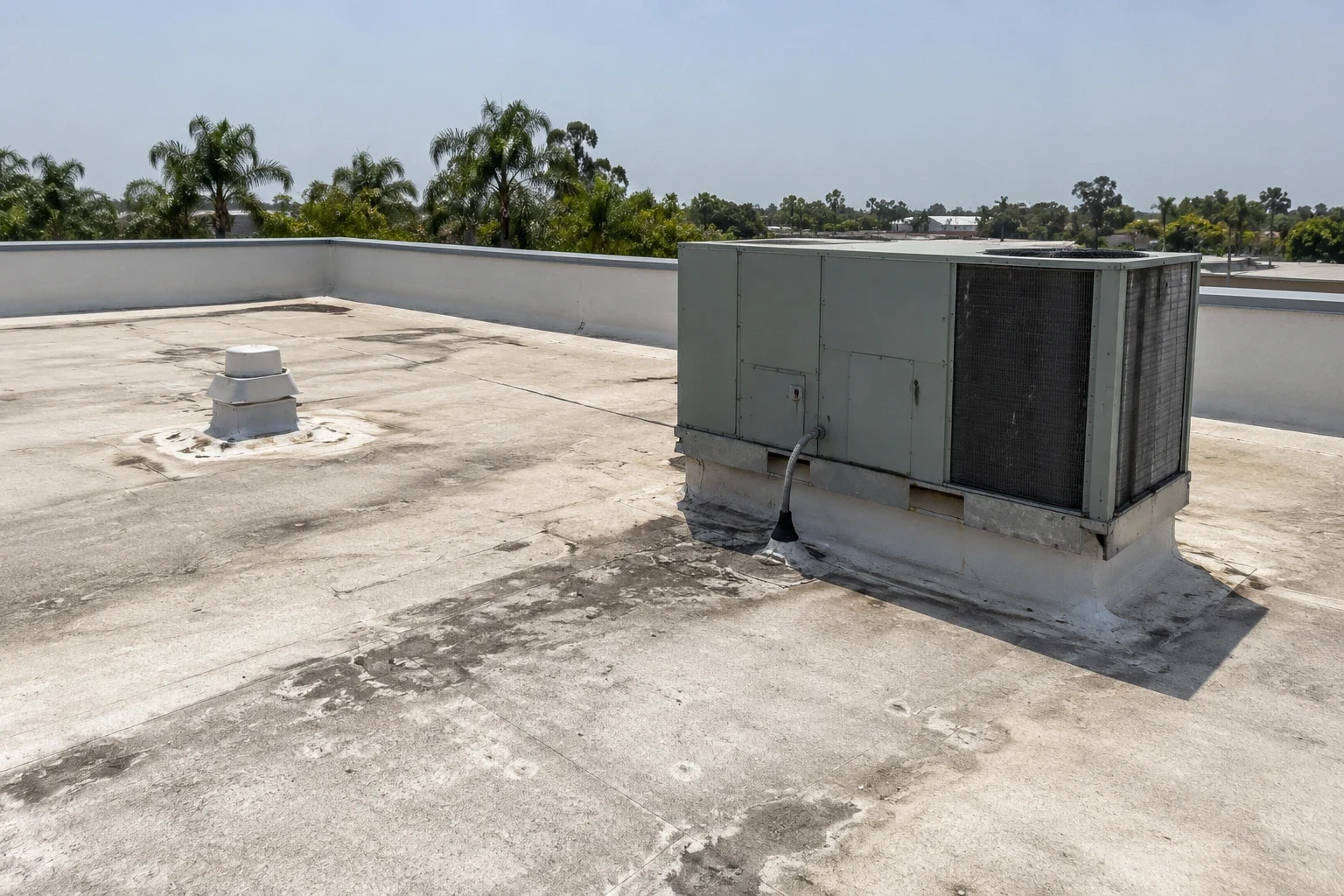
Set shared program rules and site-specific records
We begin by confirming the property list, local contacts, roof plans, system history, open leak reports, service windows, and approval roles. Shared rules can define naming, photo labels, report format, emergency routing, and who receives closeout packages. Each building retains its own address, roof zones, access notes, observed conditions, and work history. A roof asset register can keep those records connected, while a condition report captures the dated observations for an individual property. Properties along the I-45 corridor may share a regional service plan but have different tenant hours and gate procedures. The program keeps separate site records for UTMB's League City campus and Victory Lakes Town Center; each site's contact confirms its route, access window, and approval authority. These are examples of site context, not claims about a roof condition. The program should preserve the person who confirmed each property's route, access window, and approval authority.
Schedule inspections by need and access
We group site visits where it helps travel and reporting, then sequence them according to active leaks, safety concerns, maintenance timing, and property availability. A recurring commercial inspection can use a shared checklist, but findings and photos are filed under the correct roof and building. A current water entry report may require an earlier visit than a dry surface-aging concern. The schedule records which sections were inspected, inaccessible, or deferred and why. If the owner manages a spread of properties near FM 646, I-45, and League City Parkway, the visit plan can account for gate access and material or equipment routes. Weather and rooftop activity can change the order, so a field contact confirms access before mobilization. An infrared survey may be scheduled for selected roofs when construction and conditions make it useful; results identify possible test areas rather than a portfolio-wide moisture diagnosis. The owner receives a list of completed locations, next visits, missing drawings, and decisions needed to release testing.
Route service calls through clear approval steps
A program needs one intake path for service requests and a site-specific response. Each call records the property, affected space, date reported, access contact, water or safety status, and requested action. We prioritize active entry and unsafe conditions, then assign maintenance, inspection, repair, or testing. Temporary protection is documented separately from permanent work. The record names who can approve access, a test opening, additional removal, material changes, and final repair. When the property requires urgent stabilization, an emergency visit can be routed through the program while retaining its own work order and closeout. A wind-damage review or localized leak repair remains linked to the building where conditions were observed. We do not carry one site's findings to another roof because a similar issue appears in the portfolio. The shared process makes status visible; it does not collapse independent scopes or transfer approvals from one property to another.
Build a portfolio view without averaging away risk
Portfolio reports can group open work by urgency, property, roof system, approval status, or budget period. They should also show which inputs are measured, test-dependent, or based on owner records that have not been field verified. An item with a confirmed opening differs from a screening observation, even if both appear in a dashboard. A capital planning review can organize future spending while preserving property-specific assumptions. A warranty file can track maintenance and submittal dates according to each property's actual agreement. League City's employer base spans medical, education, retail, petrochemical, and public-sector operations, which may influence access and continuity requirements; it does not establish condition or urgency for any roof. We capture operating restrictions supplied by each contact and flag records that require confirmation. The owner can then compare planned work without relying on a single average age, generic life estimate, or unverified replacement quantity.
Close out each property and update the program
After each visit or project, the closeout file includes address, roof zone, date, photos, material installed, work completed, tests, open questions, and the person who accepted the work. The program summary updates the site's status and next due date without rewriting its field findings. Deferred tasks remain visible with a reason, interim action, and responsible approver. New buildings can be added with their initial records and any gaps clearly marked. The process should also define who receives reports, where documents are stored, and how emergency calls reach the right site contact. To start a League City program, send the property list, facility contacts, existing roof plans, active concerns, service history, warranty information, access restrictions, and preferred reporting cadence. We will propose a shared operating format and identify the first property-level inspections or approvals needed. Each resulting scope will state its own condition evidence and boundary so portfolio visibility does not substitute for an address-specific construction decision.
Frequently Asked Questions
Can a shared roof program cover buildings with different systems?
Yes. Shared intake and reporting can be used across the portfolio, while each address keeps its own system record, inspection details, repair limits, and approval history.
Does one inspection cadence fit every property?
Not necessarily. The schedule can consider current condition, active leaks, maintenance needs, access, system, and open questions. The basis for each interval should remain visible in the property record.
Can you prioritize emergency calls across several sites?
A shared intake path can capture the property, active exposure, safety status, access contact, and requested action. The response and work order still belong to the site where the condition was reported.
How do portfolio reports handle uncertain quantities?
They label measured amounts separately from test-dependent allowances and identify the approval needed to verify concealed conditions. An uncertain quantity should not be presented as a confirmed portfolio cost.
What is needed to start a League City multi-site program?
Provide the property list, contacts, plans, leak and repair history, warranty files, access rules, open proposals, and reporting preferences. We will identify data gaps and propose a site-by-site first review.