Hospitality Groups
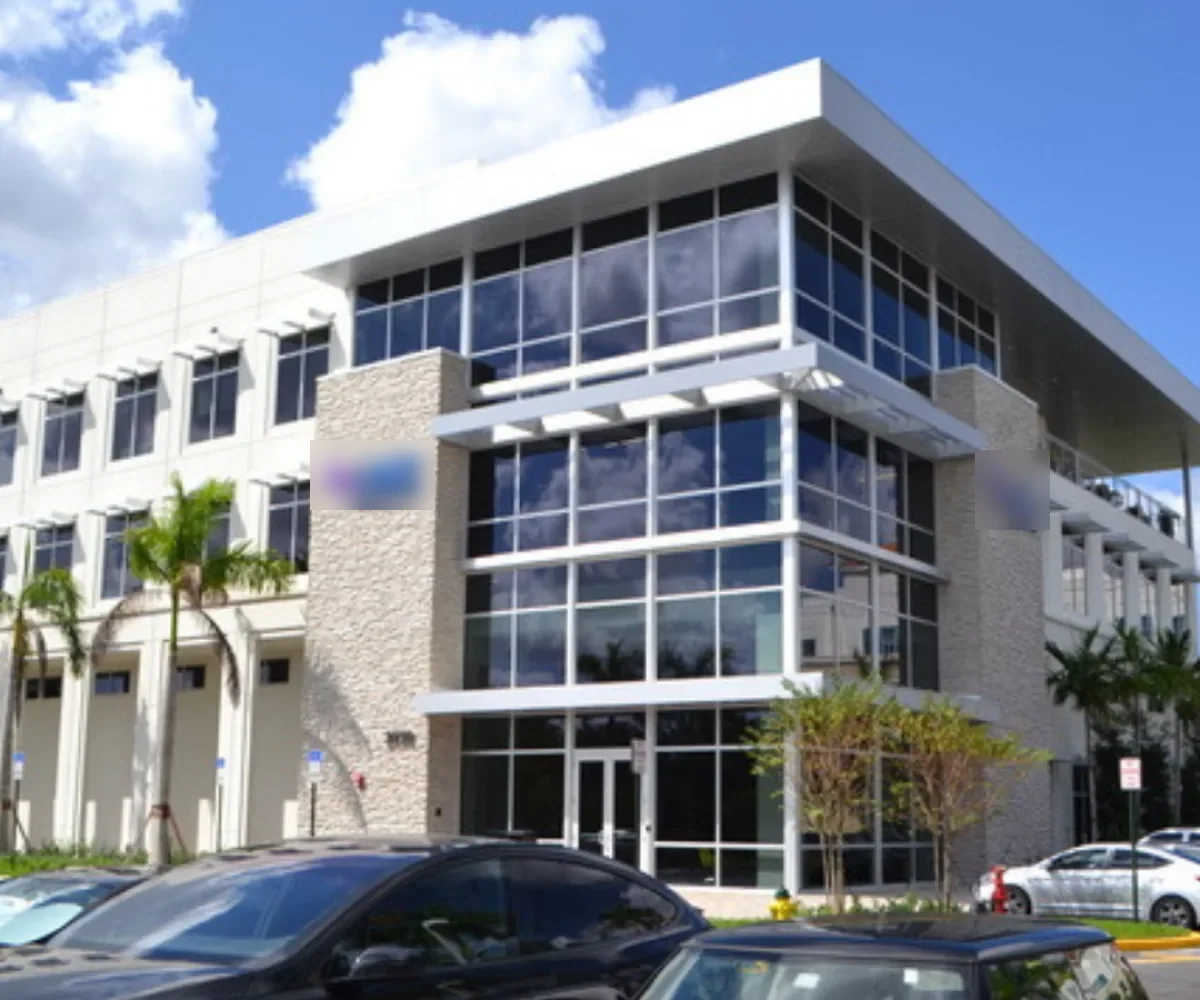
A hotel roof project has to fit around guest arrivals, housekeeping, food service, and scheduled events. In League City, South Shore Harbour Resort sits on Clear Lake beside marina and waterfront amenities. The Kemah Boardwalk also combines restaurants, rides, retail, and a boutique hotel. Those are different properties and operating patterns. We scope the requested building by roof zone, guest access, weather protection, and the work windows the operator can release.
Schedule the work between guest activity
The hotel contact identifies room blocks below the roof area, event dates, loading access, pool or terrace hours, delivery routes, and noise restrictions. We coordinate material staging and lift placement before arrival, then define the daily opening limit and the person who confirms dry-in. If a meeting room or guest entrance sits below the work, the plan states its protection and any temporary reroute before the roof is opened. The front office receives the agreed schedule, while facilities retains authority over roof access and weather holds. For ballroom work, the operator can release a test area after event teardown and confirm when room protection may be removed.
South Shore Harbour Resort lists a Marina Plaza Ballroom and multiple meeting rooms alongside guest rooms and waterfront amenities. The event calendar sets access windows, while the inspection documents the roof assembly and current condition at the property. A roof inspection in Galveston confirms its own building and access contact. A phased hotel reroof schedule can separate noisy tasks from booked event periods.
When the work affects a restaurant, marina building, or entertainment venue, entrances and public paths can shift by hour. Kemah Boardwalk includes dining, rides, shops, festivals, and seaside events, so the operator confirms the current access plan. A Kemah Boardwalk roof review should be scheduled to the identified building rather than generalized across the district.
Trace water entry above rooms and venues
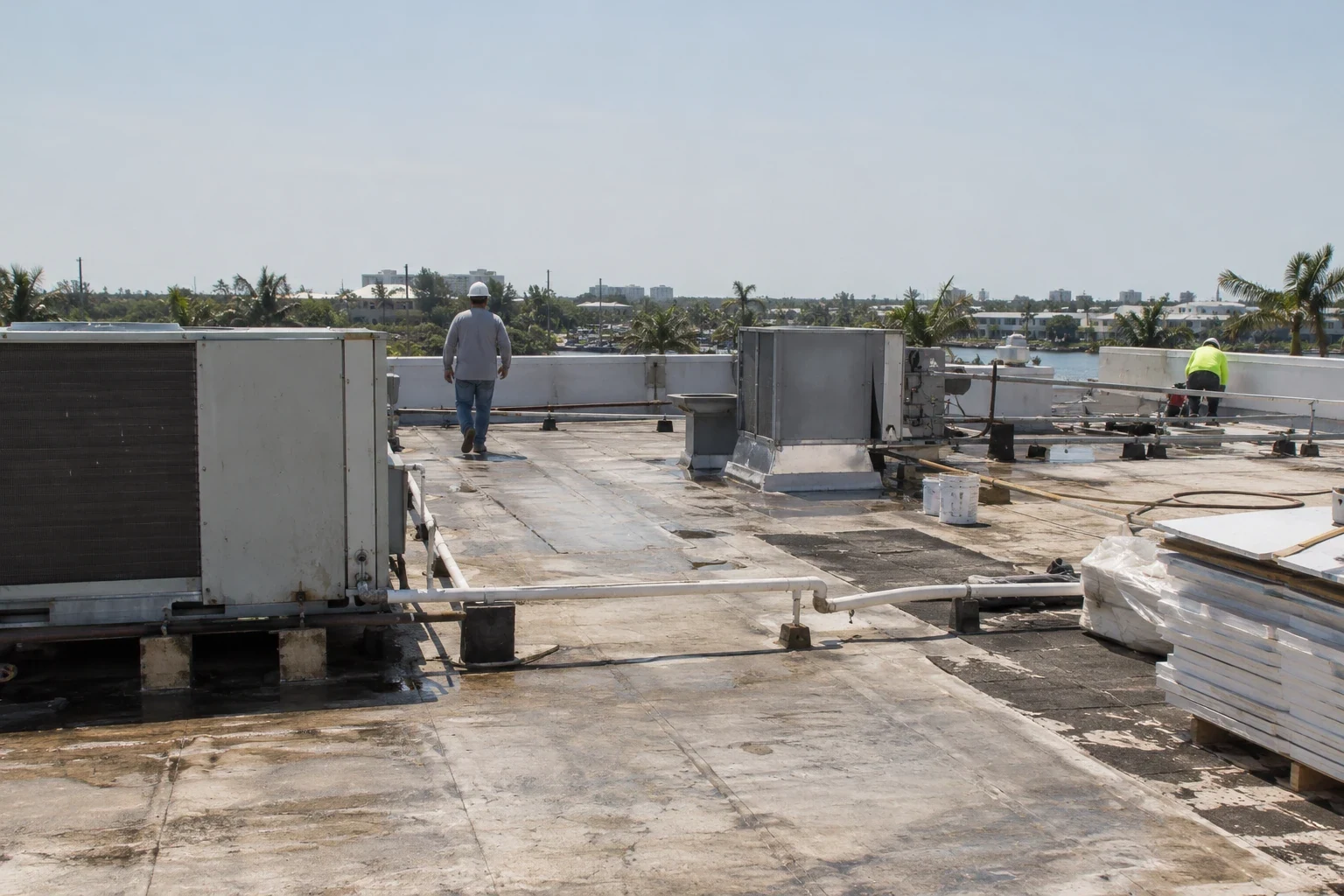
We compare reported leaks with roof slope, drains, seams, curbs, skylights, and perimeter details. Water can travel before it appears in a guest room or meeting area, so the report marks the likely path and distinguishes it from confirmed conditions. A commercial roof inspection can provide photographs, roof-zone locations, and test recommendations for the property manager.
League City sits on the upper Texas coast, where tropical systems can bring wind-driven rain. Beryl's July 2024 passage produced League City observer gust reports peaking at 52 mph. We record the date and inspect each property's seams, edges, and penetrations. The maintenance file ties each observation to the building and roof zone. We inspect the named roof for loose edge metal, open seams, displaced fasteners, punctures, flashing separation, and drainage issues rather than inferring damage from a storm report.
Infrared images can help locate a possible test area, but they do not confirm wet insulation on their own. Before a core or selective opening, we identify the room or venue below, the proposed protection, and what the test can establish. The closeout marks the tested section and any area that remains unverified. A photo-based condition record can follow the property through later maintenance and ownership changes.
Select repair work without overextending the closure
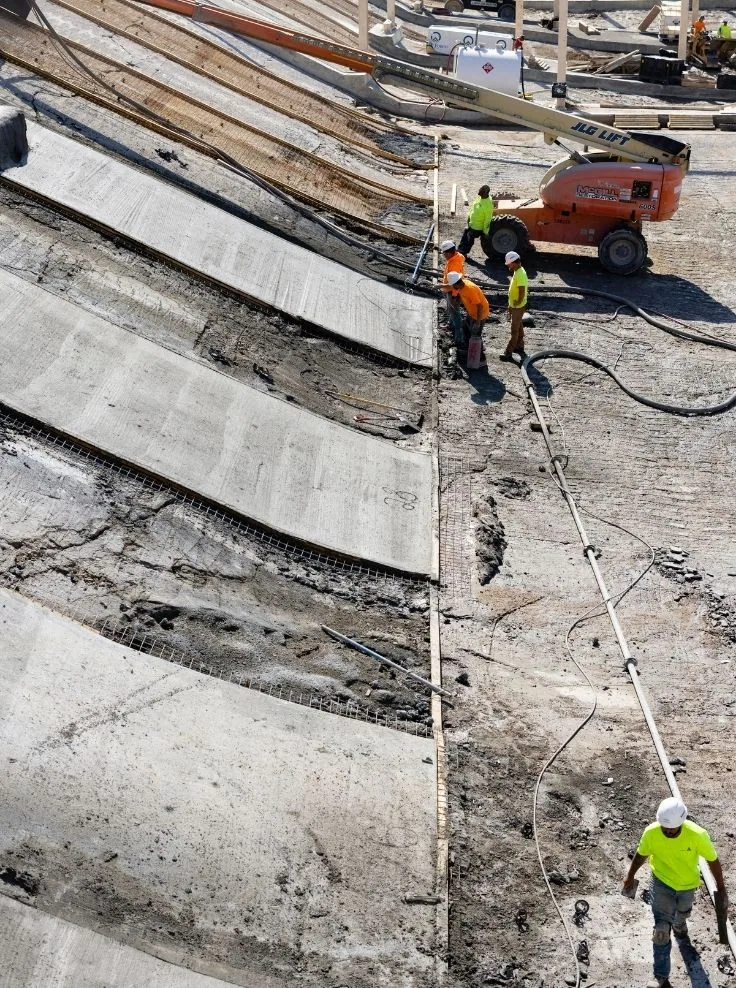
A failed flashing detail or isolated leak may allow a targeted repair when surrounding materials remain serviceable. If multiple zones show wet insulation, seam separation, corrosion, or poor drainage, broader investigation may be justified. We define the immediate water-control work and the permanent correction separately. A hotel roof repair scope can identify guest protection and the approval required if concealed conditions widen the repair boundary.
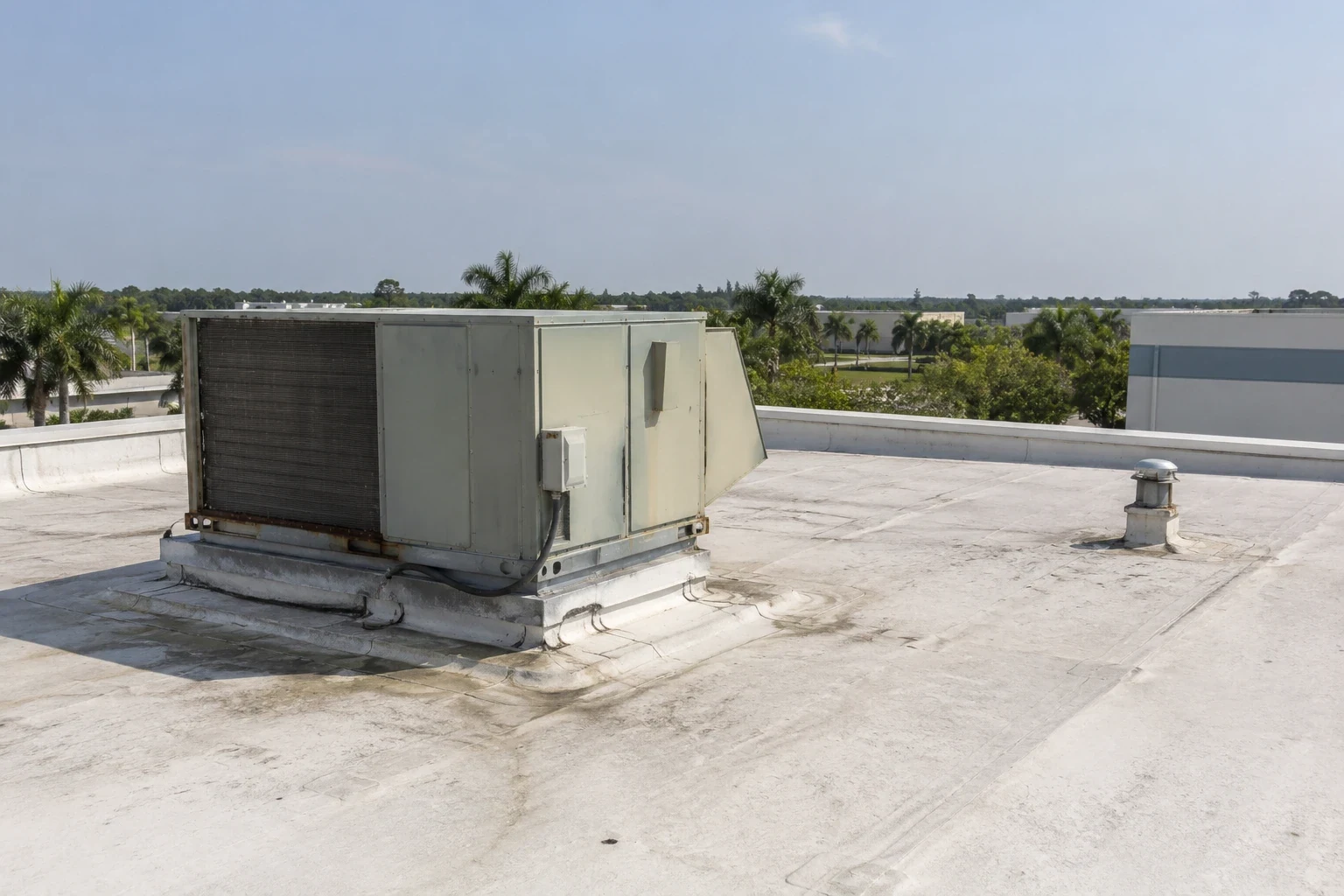
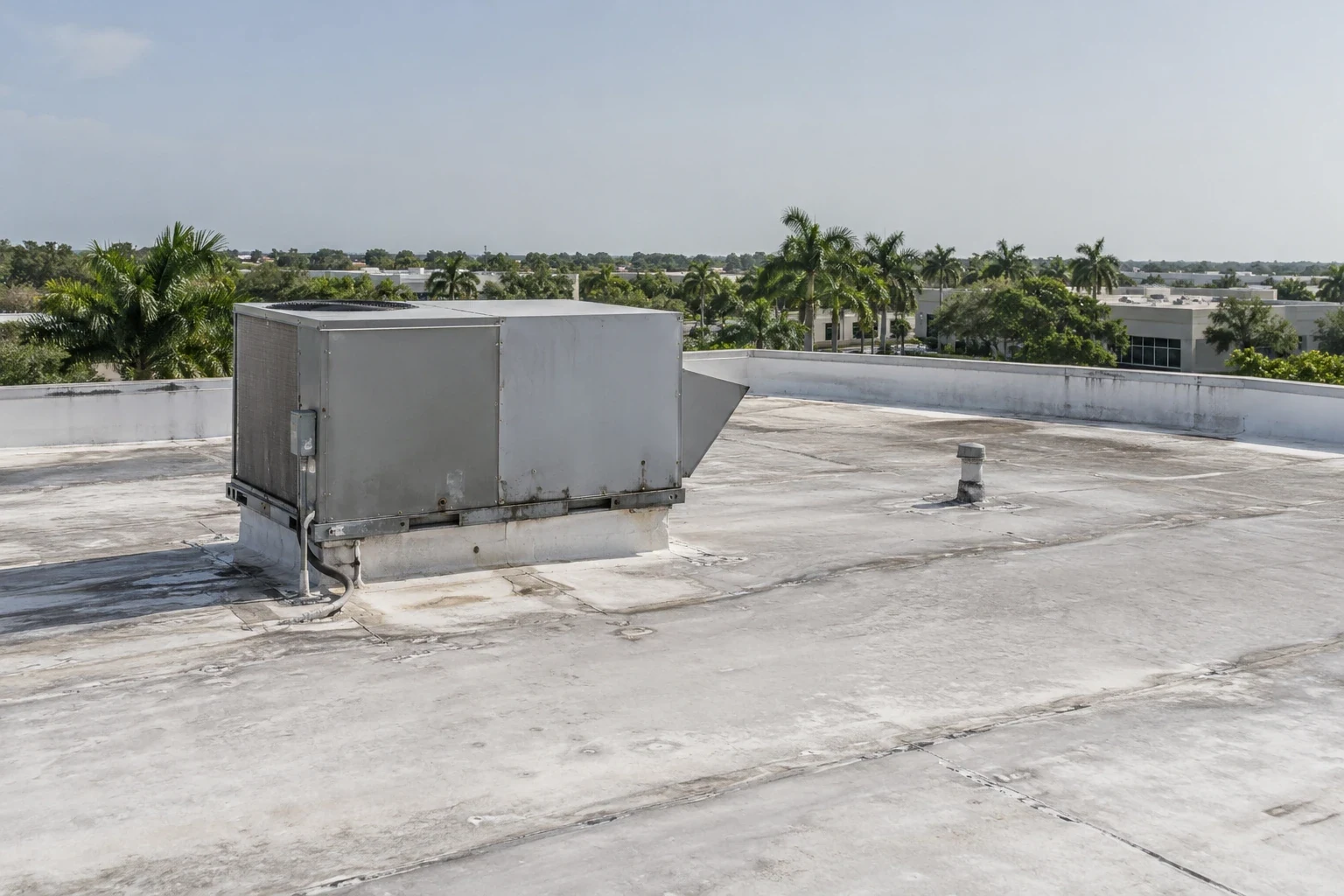
Recover and coating options depend on the existing assembly, attachment, moisture, drainage, and surface preparation. A roof restoration review tests whether those conditions support an overlay. Replacement planning lists tear-off, insulation, perimeter metal, rooftop equipment details, tie-ins, disposal, and temporary cover. The operator can review those tasks against room availability and event revenue without assuming the project can close every area at once.
Price and duration reflect roof height, staging distance, work hours, room protection, testing, material delivery, weather, and the size of the approved daily opening. If a storm or sudden leak needs urgent attention, a 24-hour emergency roof response can stabilize the area outside typical business hours when access is safe and approved. The record identifies the temporary measure and remaining permanent work.
Keep the property record ready for the next season
Closeout can include dated photographs, roof-zone marks, repair details, material data, access notes, and open items. The hotel can file those with guest or event impacts, maintenance requests, and any approved access restrictions. A property-management roof file can carry building-side decisions while the operator retains room and event scheduling notes.
Hospitality ownership may include a single resort, a hotel group, or a mixed-use waterfront property. League City's Harbourside district includes a marina, resort hotel, office campus, and restaurants. We coordinate event, guest, and service access with the property contact before setting roof work hours. If the request involves more than one site, each address receives its own map, inspection limit, and repair recommendation. A retail and restaurant roof sequence can coordinate adjacent tenant scopes without combining their records.
Send the address, roof plans, leak history, event calendar, room restrictions, and site access procedure. We will mark inspection needs, define temporary protection, and return repair or replacement options by building. If the work touches a guest route or event area, include the contact who can approve a temporary reroute.
When a leak affects a room block, the operator may need to move guests before a permanent repair can be completed. The roof report should record the date, affected zone, temporary cover, and later correction separately. That gives maintenance and front-desk teams a shared account of which room or event area can return to normal use, subject to the hotel's own release decision.
Frequently Asked Questions
Can roof work proceed while guests are in the hotel?
The operator identifies rooms, entrances, amenities, and events that can remain open. We divide work into approved zones, plan interior protection, and confirm dry-in before the crew leaves each shift.
How do you schedule around a conference or wedding?
The event calendar guides deliveries, noise, lift placement, and any closure below the roof. We agree on the released area with the venue contact before setting the work sequence.
Will an infrared scan show exactly where a hotel leak starts?
It can identify a possible area for further testing, but does not establish the source by itself. We compare the pattern with roof details and interior reports before proposing an opening.
What if a leak starts during a holiday weekend?
A 24-hour response can stabilize an opening when site access and safety permit. We document the temporary cover, affected zone, and follow-up correction so the permanent scope remains clear.
What information helps price hotel roof work?
Share roof drawings, guest and event schedules, access rules, room restrictions, prior repairs, and leak reports. Height, staging, testing, removal, protection, and work hours then can be scoped separately.