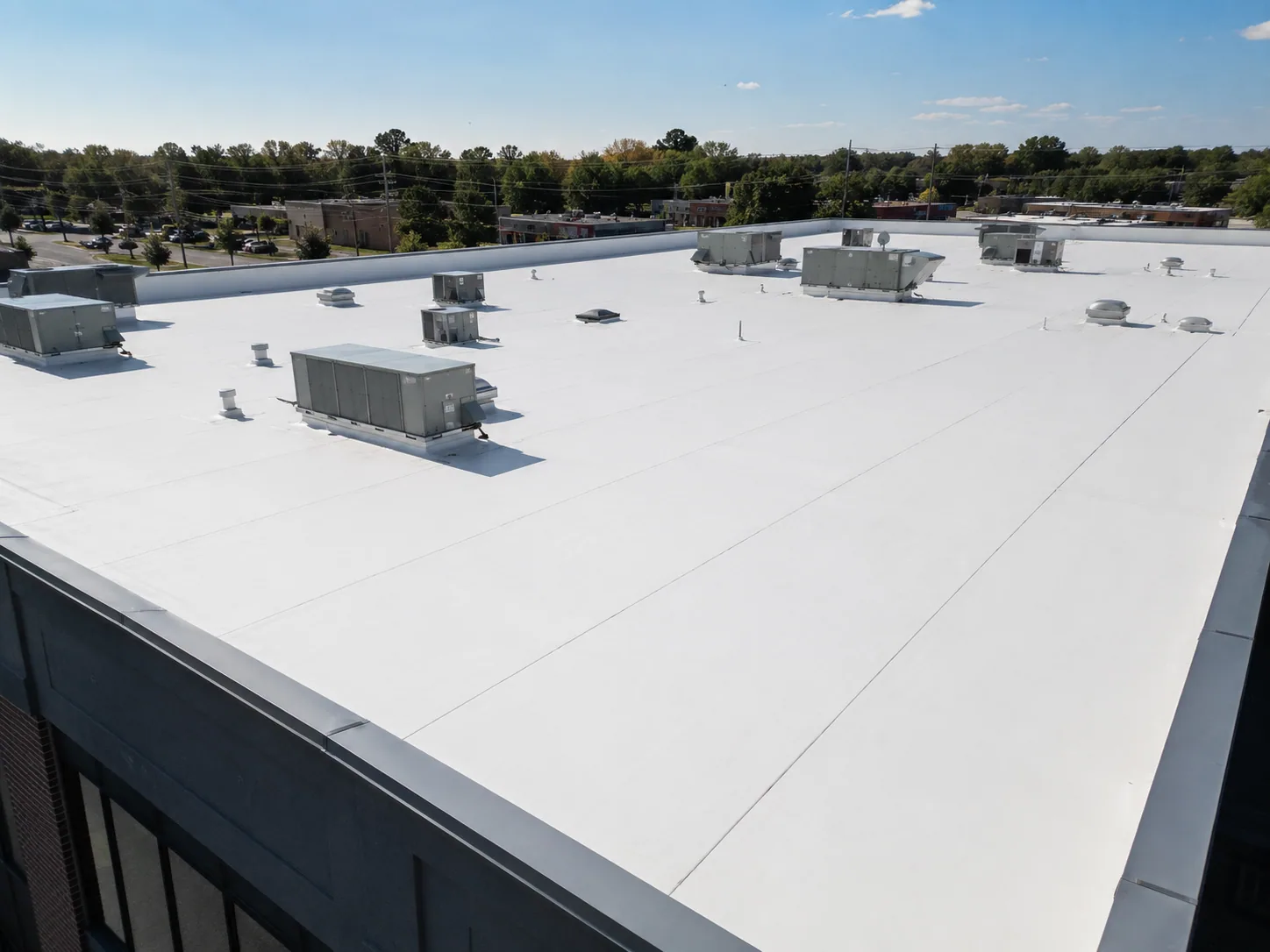
Spray Polyurethane Foam Roofing
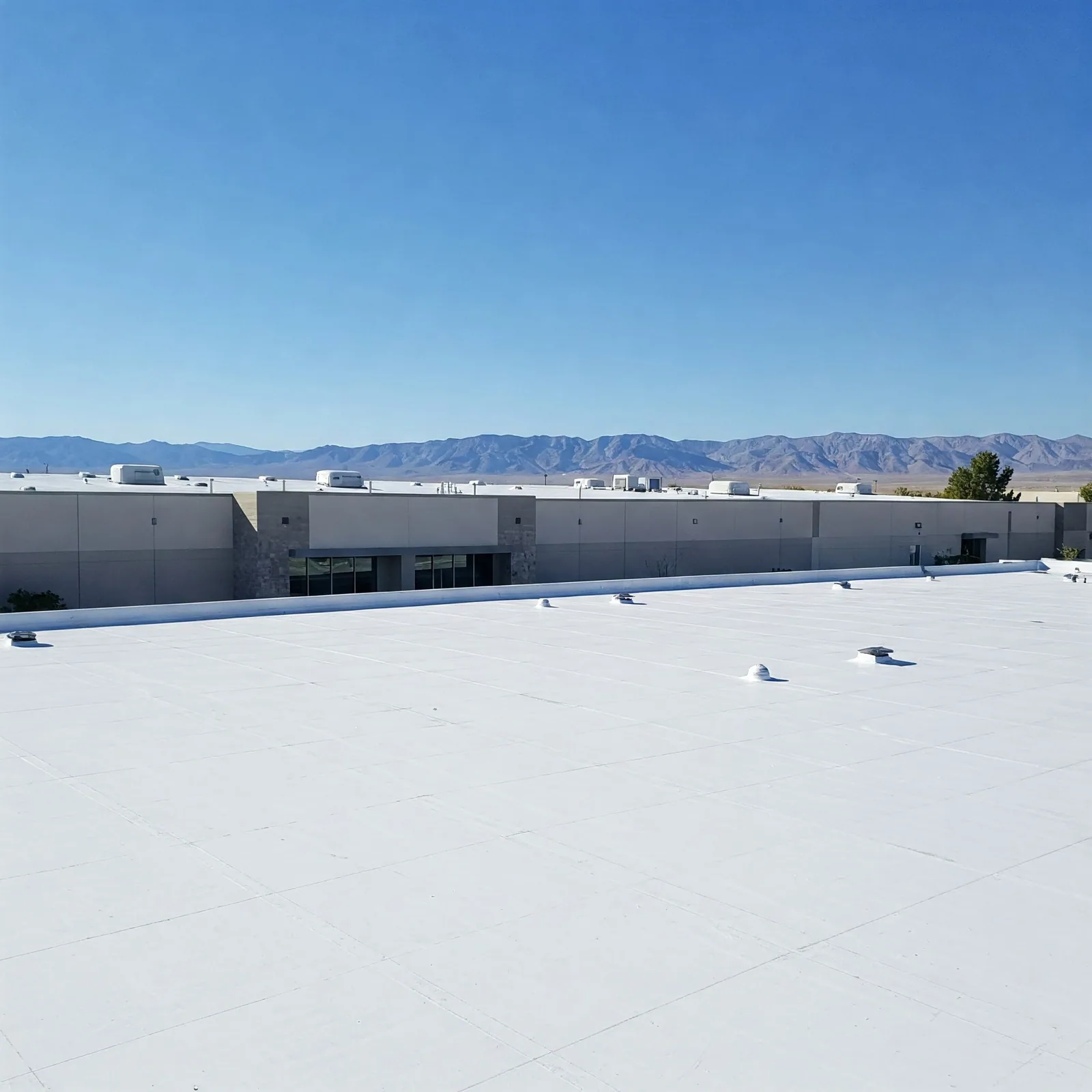
Spray polyurethane foam roofing creates a continuous insulated layer that must be protected by a compatible coating. Its service life depends on substrate preparation, foam quality, drainage, and keeping the coating intact. We inspect the entire assembly before proposing restoration or replacement. La Marque is a waterfront visitor district with restaurants, retail, events, and rides. That operating mix illustrates why project access matters, but it says nothing about a particular roof.
Confirm the foam and protective coating system
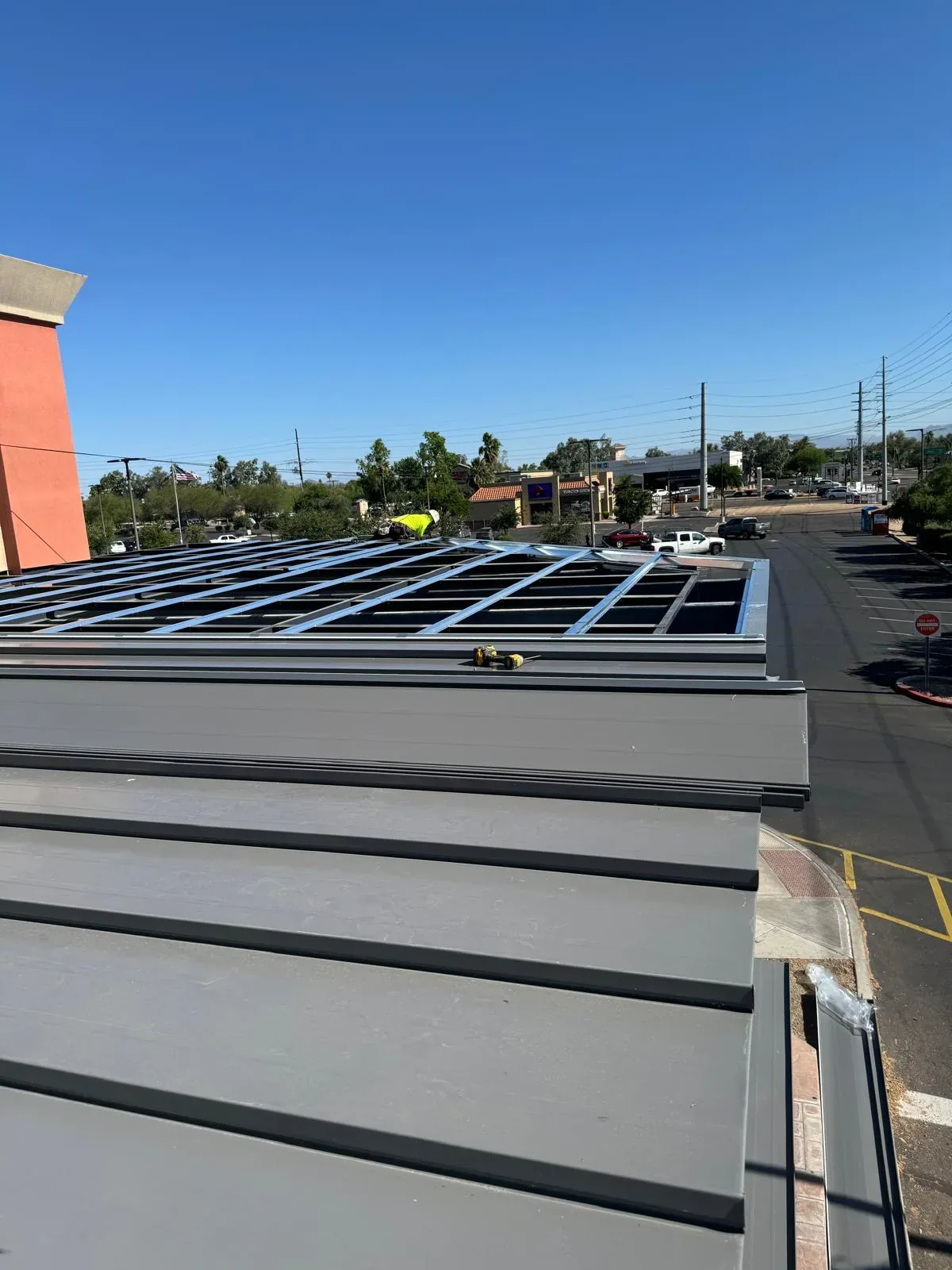
We identify the foam type, approximate thickness, coating product, application history, and any documented warranty. Roof records help establish how the substrate was prepared and whether the coating was renewed. If documentation is incomplete, representative openings or adhesion tests may be considered. A visual inspection can show erosion or exposed foam, but it cannot confirm hidden adhesion or moisture in every roof area.
Coating products differ in chemistry, reinforcement, and approved substrates. A silicone coating may behave differently from an acrylic coating, and compatibility must be verified. We keep the selected product aligned with existing coating and project conditions. The proposal identifies required preparation, repairs, reinforcement, application rate, and cure limitations before work begins.
Map coating wear, foam damage, and drainage
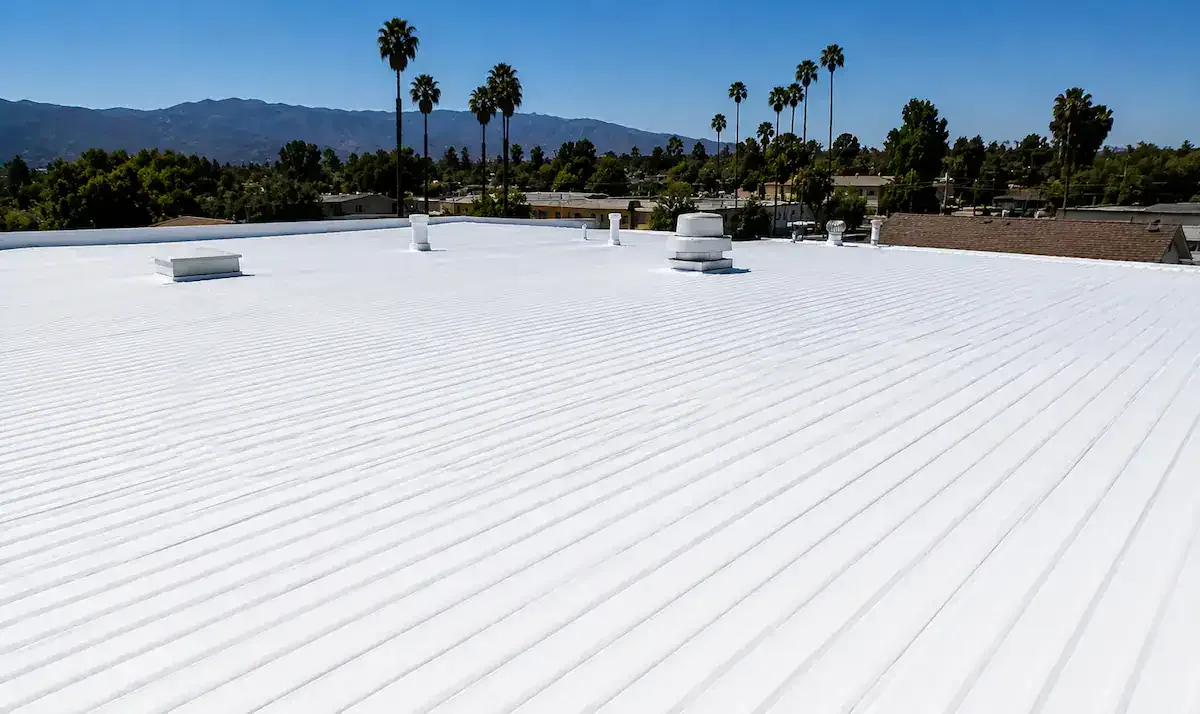
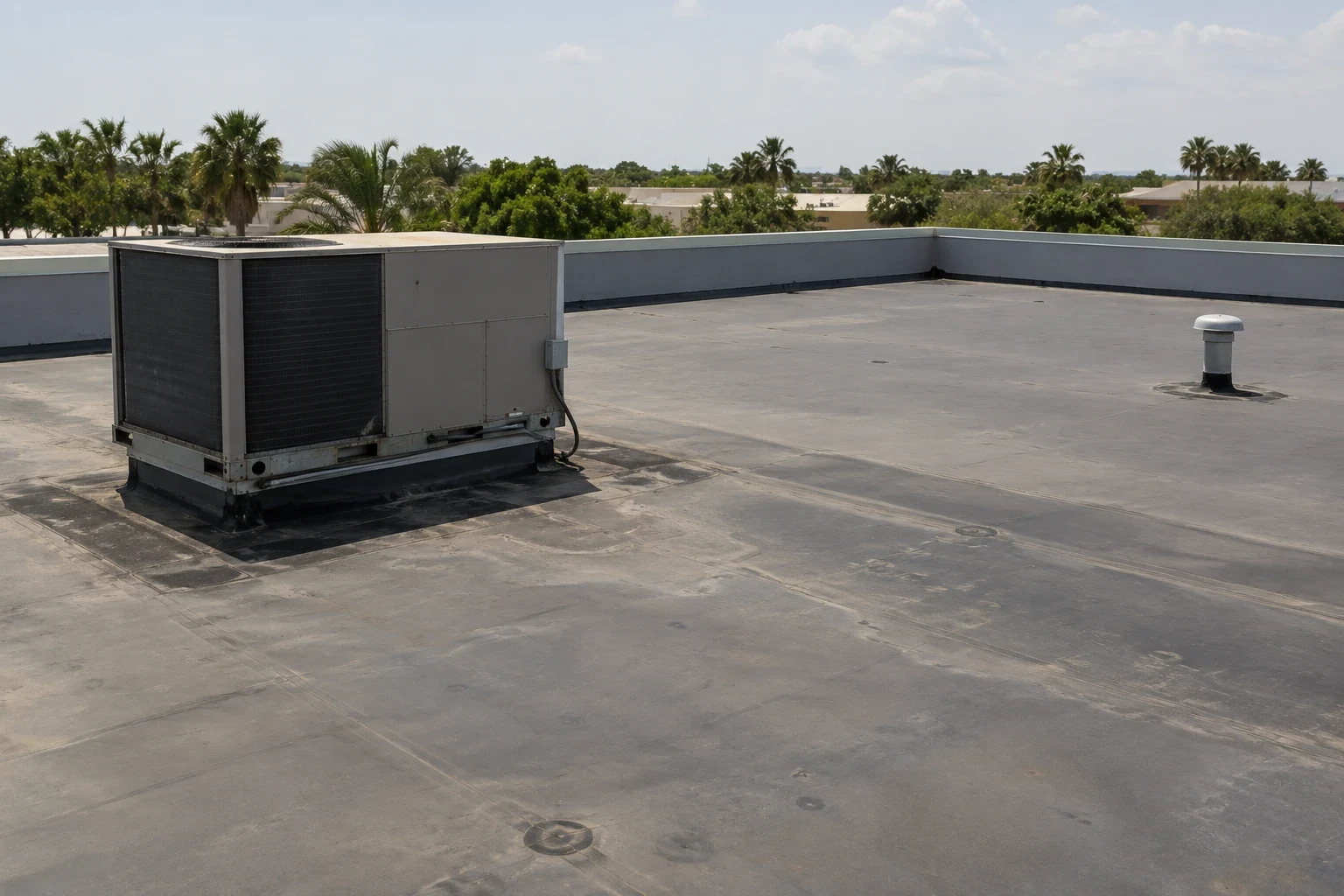
Inspection looks for bare or chalking coating, blisters, splits, punctures, exposed foam, soft spots, and erosion at drains or roof edges. We trace ponding and check transitions at curbs, penetrations, parapets, and equipment supports. Foot traffic can damage the protective surface, so we ask how service technicians reach rooftop units and where walk pads are present.
Because the foam surface is shaped during application, thickness and slope can vary. We check whether water is directed toward outlets and whether transitions leave vulnerable thin areas. Equipment service, cable work, and later penetrations can cut through the protective layer. The condition report identifies such modifications so the owner can arrange compatible repair before another coating pass makes the area harder to review.
Interior leak reports are compared with foam condition, slopes, drainage, and roof openings. A roof condition report marks the observed issue and the area requiring further evaluation. Moisture scans can guide selective testing; they do not independently verify the foam’s bond or the insulation below. Any proposed core or adhesion test lists sample locations and restoration of the test opening.
Repair the substrate before recoating
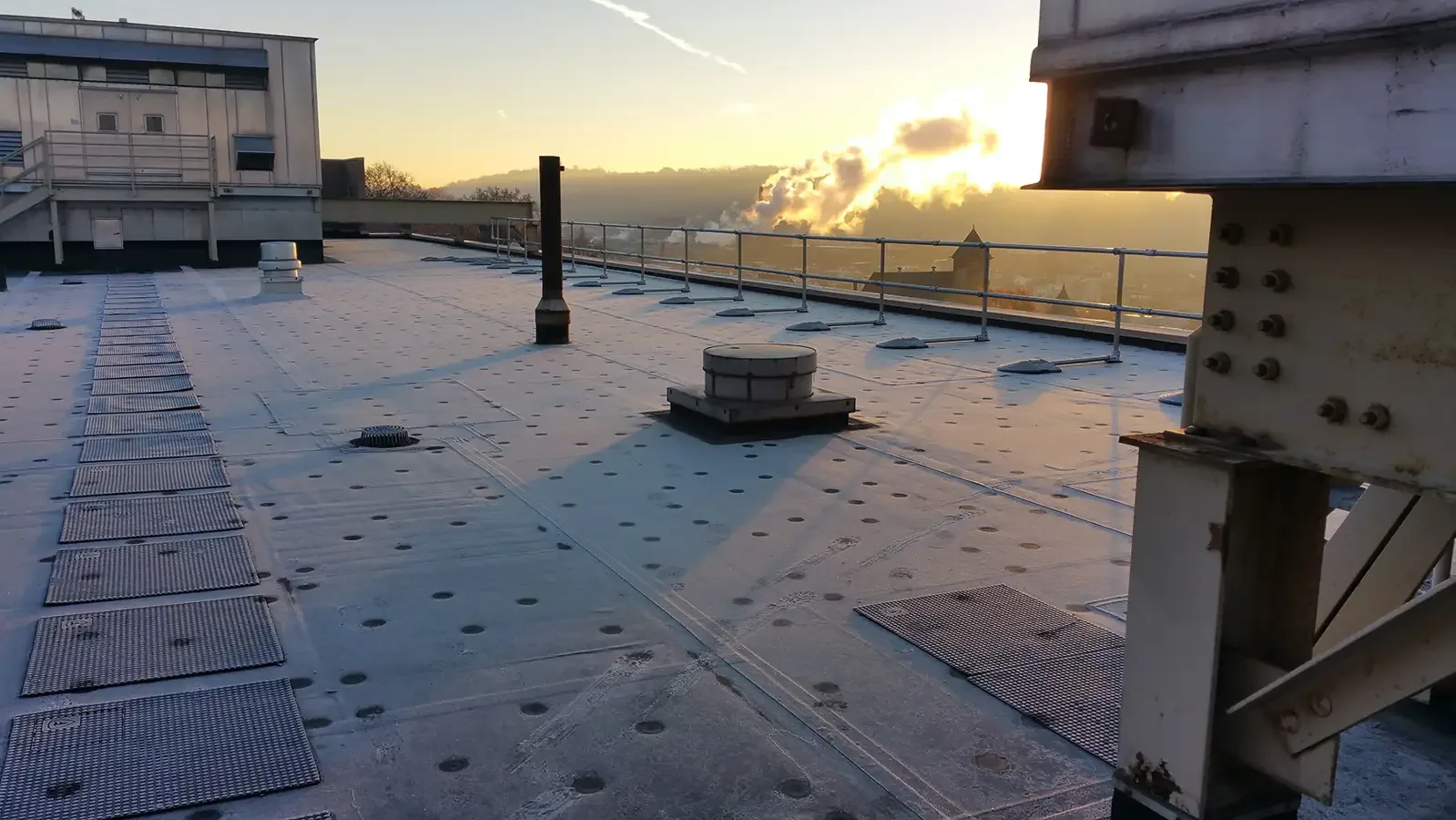
Coating over a weak or wet substrate can conceal rather than correct the underlying problem. Repair may require cutting out damaged foam, replacing material, shaping transitions, reinforcing cracks, or correcting drainage before a new protective layer is applied. We define preparation and repair quantities separately from the coating area. A roof coating restoration scope identifies cleaning, surface preparation, reinforcement, and target application rate.
At penetrations, coating and reinforcement must continue over a sound, properly shaped transition. Roof drains must remain open and at the intended low point. We protect equipment, drains, and adjacent surfaces during preparation and application. The closeout check records coverage, repaired locations, and any area that could not be coated because access or weather conditions prevented completion.
Schedule application for coastal weather
After Beryl in 2024, we set foam repair and coating work around the property's forecast, substrate moisture, and product cure window. Heat, humidity, rainfall, and wind can affect cleaning, application, and curing conditions. The crew checks the selected product’s limits and the actual forecast before mobilizing. We do not assume a coating can be applied simply because the roof is dry at the start of the day.
UTMB Health League City Campus opened in 2016 on a 64-acre site, and the city later described a larger campus footprint and long-range medical-space plans. Those planning facts do not establish an individual building’s current work schedule. For an occupied site, management confirms access and critical operations. A phased roof plan can protect entrances, equipment, and interior functions while coating work is staged.
Choose restoration or a new roof assembly
Restoration can be considered when the foam remains well bonded, dry, and suitable for preparation. Widespread moisture, poor adhesion, deteriorated foam, or recurring drainage problems may require removal or another system. A acrylic roof coating is not a generic substitute; coating selection follows substrate testing, exposure, slope, and product requirements. The proposal should explain why the chosen route fits the verified condition.
League City lists adopted commercial building and energy codes. Project review determines how those requirements apply to the specific alteration. We identify code, drainage, and structural questions for confirmation and keep them separate from measured roofing work. The estimate states whether foam replacement, coating, testing, walk pads, drain correction, and disposal are included or carried as allowances.
Protect the coating after project closeout
Keep coating labels, application records, thickness checks, repairs, and warranty requirements in the roof file. Staff should report punctures or equipment work promptly so exposed foam can be protected. Routine checks can look for coating erosion, open flashings, blocked drains, and impact damage. A maintenance visit can log findings by roof zone and identify conditions that need a focused repair.
Before recoating, crews need a clean, dry, sound surface within the product’s application limits. Dust, oils, loose coating, or damp foam can interfere with adhesion. We state how preparation is verified and how wet weather or a missed cure window changes sequencing. Those controls protect the finish and give the facilities contact a realistic closeout schedule.
Pricing depends on roof access, existing coating, required cleaning, testing, foam replacement, reinforcement, and application conditions. We separate those factors so the owner can compare a maintenance restoration with larger replacement work. Send the League City address, roof records, coating history, photos, and reported leak locations. We will inspect the assembly and define a scope that reflects the observed substrate and application requirements.
Frequently Asked Questions
How does spray foam roofing work?
Sprayed polyurethane foam creates a continuous insulating layer. A protective coating shields it from weather and wear, so both layers and their transitions need inspection.
Can an SPF roof be recoated?
A recoat depends on foam condition, bond, moisture, existing coating, preparation, and product compatibility. Testing may be needed before work is priced.
What happens if foam is exposed?
The exposed area should be assessed and protected with a compatible repair. The crew checks whether damage extends beyond the visible spot.
Does ponding water rule out an SPF roof?
Not by itself. We evaluate drainage, duration, coating, and product requirements, then determine whether correction or testing is needed.
How often should an SPF roof be inspected?
Follow the system and warranty requirements, and inspect after roof work or significant weather. Keep observations and repairs in a consistent roof record.